La Jolla Hiking & Nature
Torrey Pines State Natural Reserve
Last updated: May 26, 2026
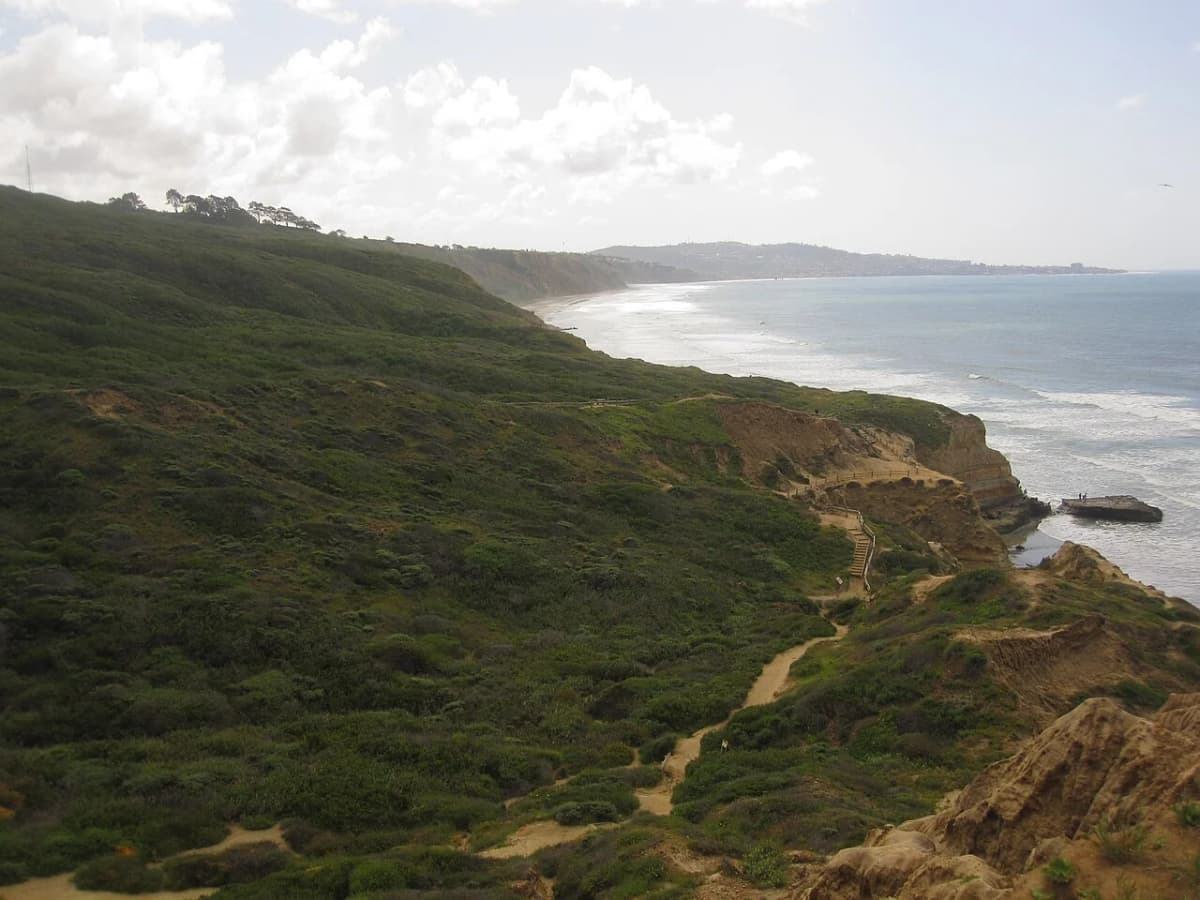
Torrey Pines State Natural Reserve is San Diego's most spectacular coastal wilderness — a 2,000-acre preserve of eroded sandstone canyons, wind-sculpted blufftops, and one of the rarest trees on Earth. Fewer than 9,000 Torrey Pines survive in the wild anywhere in the world, and this reserve on the northern edge of La Jolla protects the largest mainland grove. Six trails ranging from a gentle 0.7-mile loop to a full 3.5-mile coastal circuit lead through canyon overlooks, along dramatic cliff edges, and down to the wild sand of Torrey Pines State Beach below. Entry to the reserve is free — only parking costs money, and there are well-known strategies to avoid even that.
| Address | 12600 N. Torrey Pines Road, La Jolla, CA 92037 |
| Phone | (858) 755-2063 |
| Hours | 7:15 AM to sunset daily · Visitor Center 9 AM–5 PM |
| Parking Fee | $10–$25 per vehicle (demand-based) · Walk-in FREE |
| Free Parking | Street parking on N. Torrey Pines Road & S. Camino Del Mar — walk in for free |
| Dogs / Pets | Not allowed anywhere in the reserve — ADA service dogs only |
| Guided Walks | Free docent walks Fri / Sat / Sun / holidays at 10 AM — no reservation needed |
| Accessibility | Discovery Trail is ADA accessible · Free beach wheelchairs at parking kiosks |
| Drones | Not permitted in the reserve |
| Last Updated | May 2026 |
Reopened March 2, 2026 — What Visitors Need to Know
Torrey Pines State Natural Reserve was closed from November 2025 through February 2026 for ADA compliance upgrades and utility infrastructure improvements. The reserve fully reopened on March 2, 2026, with all trails, the Visitor Center, and parking facilities restored to normal operation. Visitors arriving now will find newly improved accessible infrastructure on the Discovery Trail and updated parking kiosk systems.
Phase II construction is currently planned for August–September 2026 and may result in partial trail closures. If your visit falls in that window, check the California State Parks website for current conditions before you go.
Torrey Pines Trails — Full Guide
The reserve has eight trails covering every experience level from a short accessible loop near the Visitor Center to a 3.5-mile full circuit combining cliff-top hiking and a beach return. All trails radiate from the main parking area and Visitor Center at the top of the bluff — no out-of-the-way trailheads to navigate. Water is the only thing permitted on trail (no food); bring at least 16 oz per person even on the shorter loops.
| Trail | Distance | Difficulty | Gain | Est. Time | Highlight |
|---|---|---|---|---|---|
| Guy Fleming Trail | 0.7 mi | Easy | 45 ft | 30–45 min | 2 ocean overlooks, best wildflower display in reserve |
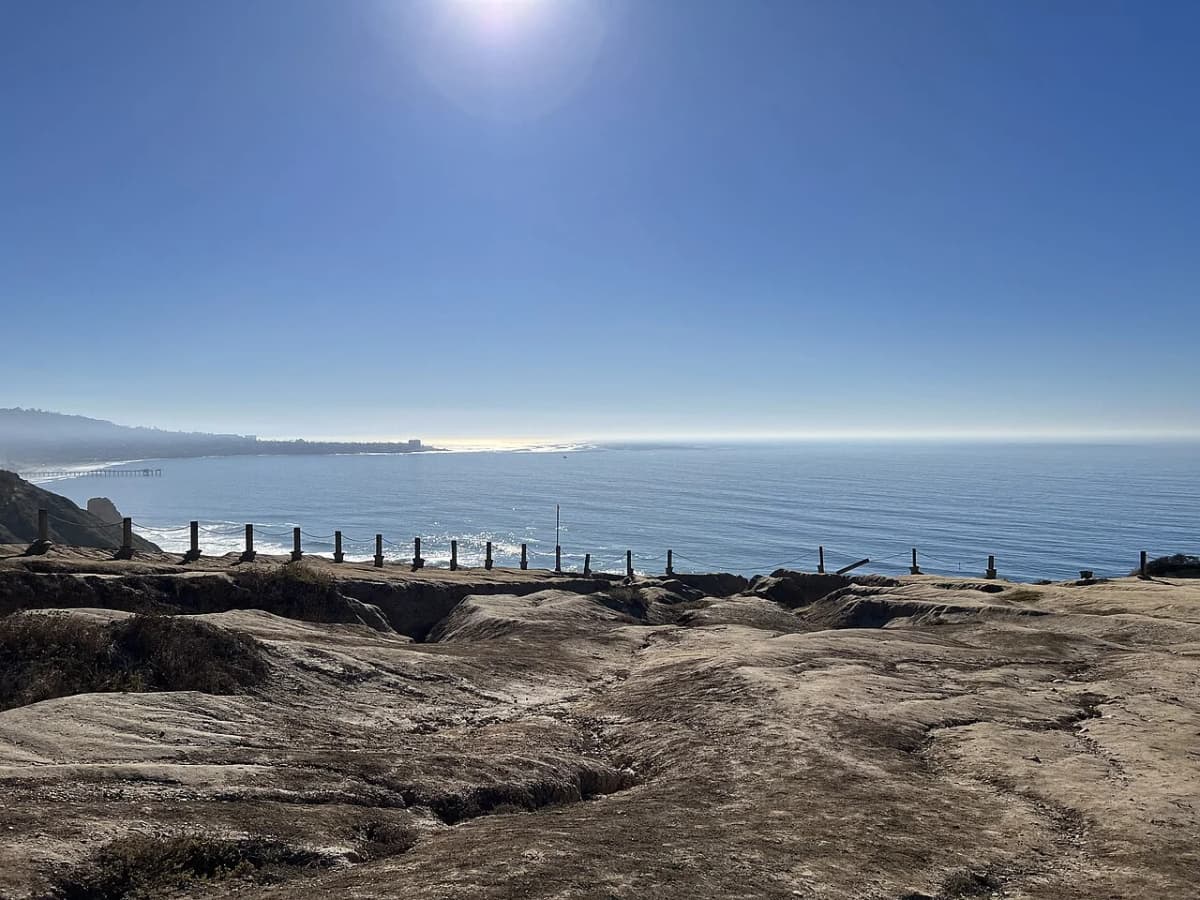
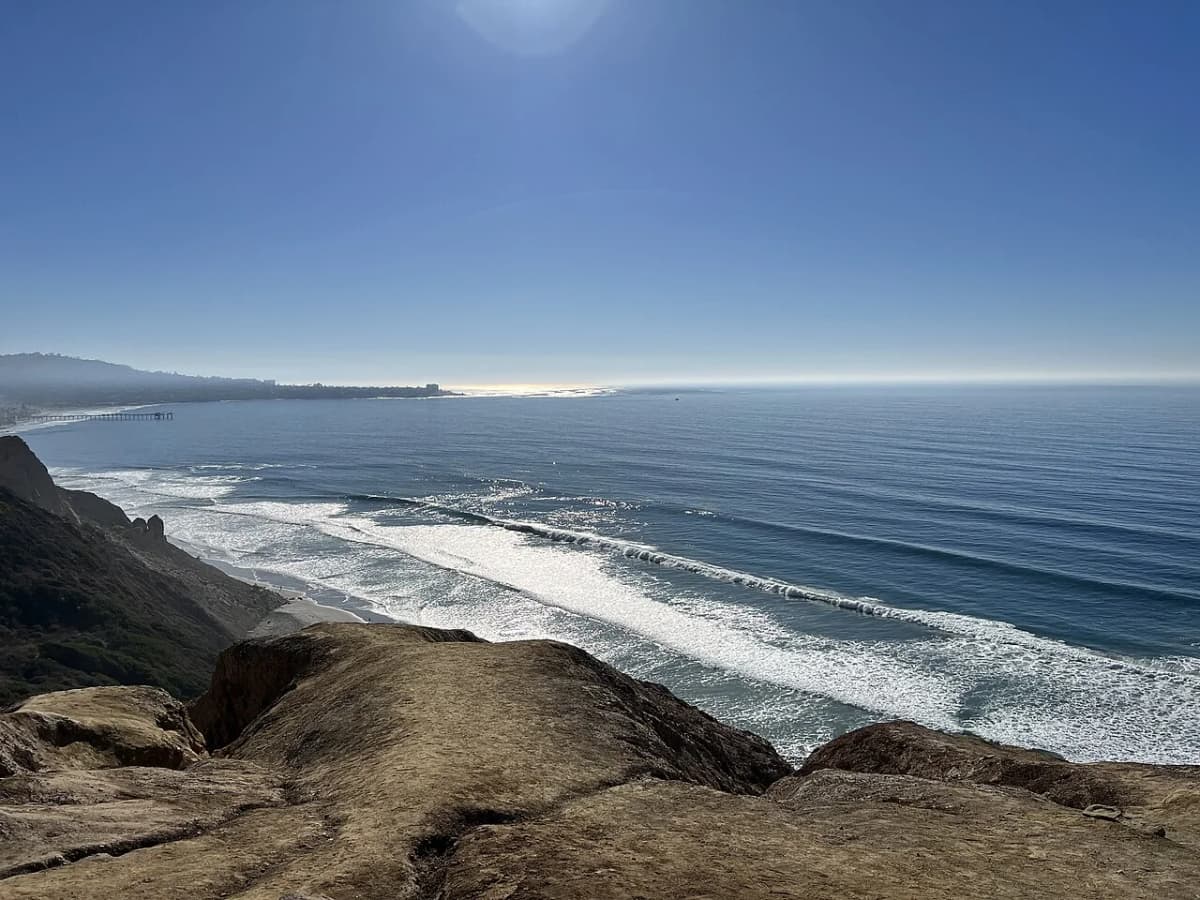
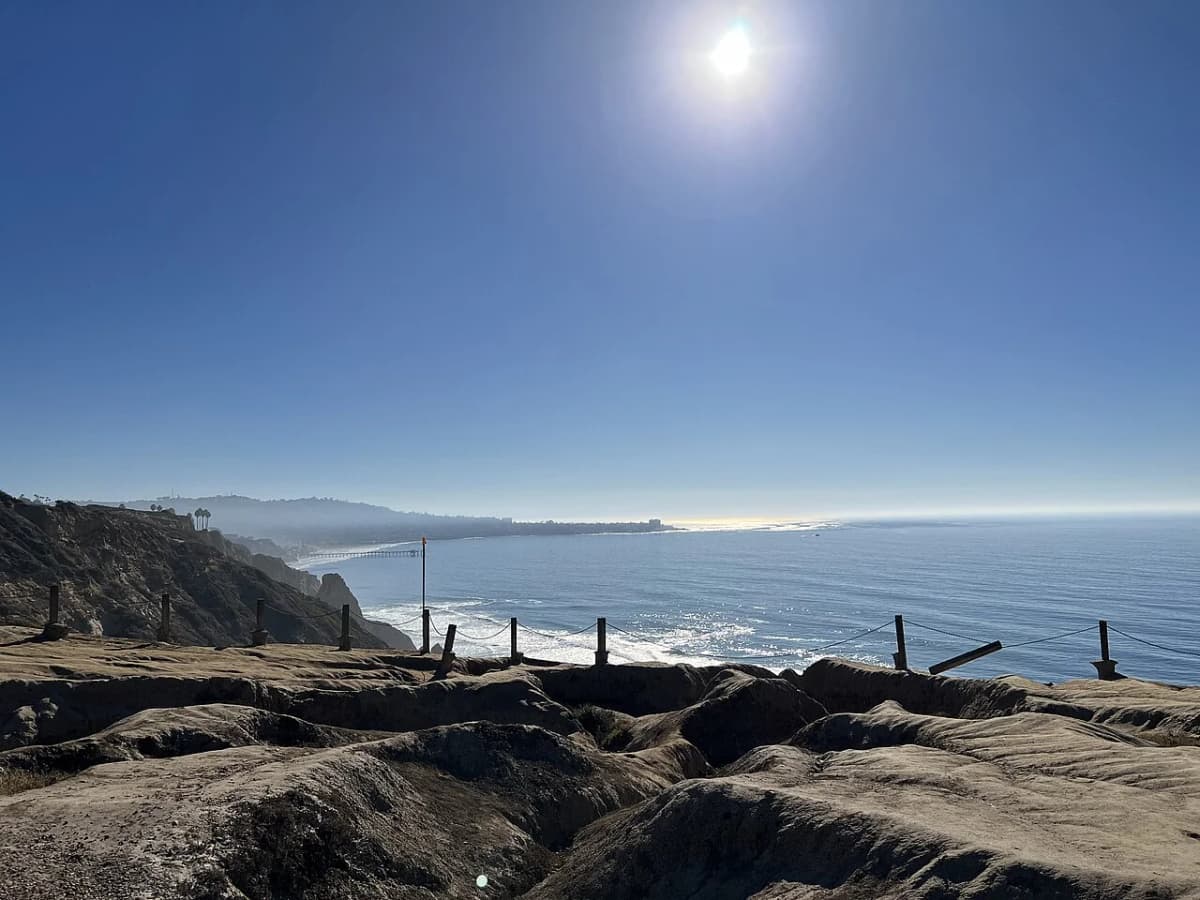
| Razor Point Trail | 0.7 mi | Easy | 177 ft | 30–45 min | Most dramatic eroded cliff and canyon views in the reserve |
| Parry Grove Trail | 1.3 mi | Easy / Moderate | ~180 ft | 45–60 min | 118-step stone staircase, dense grove of Torrey Pines |
| High Point Trail | 0.81 mi | Moderate | ~200 ft | 30–45 min | Highest elevation point in the entire reserve |
| Broken Hill Trail | ~1.25 mi | Easy / Moderate | ~150 ft | 40–60 min | Canyon + coastal views, connects to Beach Trail |
| Beach Trail Loop | 2.3 mi | Moderate | 341 ft | 1.5–2 hrs | Cliff descent to Torrey Pines State Beach — best combo hike |
| Full Loop (Beach & Broken Hill) | 3.5 mi | Moderate | 406 ft | 2.5–3.5 hrs | Complete reserve experience — every terrain type |
| Discovery Trail | ~0.3 mi | ADA Accessible | Minimal | 15–20 min | Paved, accessible loop near Visitor Center |
Trail Descriptions in Detail
Guy Fleming Trail — 0.7 mi Loop
Guy Fleming is the go-to introduction to Torrey Pines and the easiest trail in the reserve. The loop stays at the top of the bluff and visits two dedicated ocean overlooks — South Overlook and North Overlook — with wide Pacific views across the reserve coastline. With only 45 feet of elevation gain, it is gentle enough for most fitness levels and the best trail in the reserve for wildflower viewing from February through May. The north overlook is also a reliable vantage point for whale watching in winter. Start here if you have never been to Torrey Pines and want a complete overview of what the reserve offers before committing to a longer route.
Razor Point Trail — 0.7 mi Out-and-Back
Razor Point delivers the most visually dramatic scenery in the reserve for its length. The trail descends into a landscape of deeply eroded sandstone fins and gullies before arriving at a narrow blufftop point with sheer drops to the beach below and panoramic views north and south along the coast. The 177 feet of elevation gain is largely concentrated in a short descent and return climb near the point — more than the Guy Fleming trail, but still accessible to most hikers. This is the trail most photographers choose for its textured geological backdrop. Combine Razor Point with the Yucca Point connector for a slightly extended loop that adds another overlook without significant extra effort.
Parry Grove Trail — 1.3 mi Loop
Parry Grove is the reserve's most distinctive structural hike — its centerpiece is a 118-step stone staircase descending through the side of the bluff into a dense canyon grove of Torrey Pines. The staircase itself is a historic feature of the reserve and gives visitors a close-up perspective on how the pines root into the crumbling sandstone. The loop returns on a canyon floor path before climbing back to the blufftop. The 1.3-mile distance makes it the longest single trail in the reserve outside the Beach and Full Loop routes, and the staircase section provides more of an aerobic return than the easy rating suggests.
High Point Trail — 0.81 mi Out-and-Back
High Point Trail leads to the highest elevation in the reserve and the most expansive 360-degree view — ocean to the west, inland valleys to the east. The trail sees significantly less foot traffic than the popular blufftop loops, making it a good choice for those who prefer a quieter experience. The ascent is the steepest in the reserve relative to its short distance. At the summit, on clear days, you can see from La Jolla south to Point Loma and north toward Oceanside.
Broken Hill Trail — ~1.25 mi Out-and-Back
Broken Hill traverses the north side of the reserve and offers canyon and coastal views from a perspective distinct from the Razor Point and Guy Fleming trails. The trail connects to the Beach Trail at its far end, making it an essential component of the Full Loop route. Hiked as a standalone out-and-back it provides solid canyon scenery without the beach descent, and it is noticeably less crowded than the two most popular blufftop loops. The combination of Broken Hill plus the upper section of the Beach Trail is a natural mid-length option for visitors who want more than 1.3 miles but are not committed to the full 3.5-mile loop.
Beach Trail Loop — 2.3 mi
The Beach Trail Loop is the consensus best hike at Torrey Pines and the most rewarding use of two hours in the reserve. The route descends 341 feet from the blufftop to Torrey Pines State Beach via a dramatic cliff-face path, then returns along the beach before climbing back up to the parking area. The combination of coastal canyon hiking, exposed sandstone formations, and a beach finale is unlike anything else in the San Diego region. The beach descent section uses loose, sandy footing — trail runners or hiking shoes outperform sandals significantly here. The descent to the beach is best done at low tide; check tide charts before your visit and aim for a low-tide window in the morning.
Full Loop (Beach + Broken Hill) — 3.5 mi
Combining the Beach Trail and Broken Hill Trail into a single 3.5-mile circuit is the most comprehensive way to experience the reserve. This route covers the coastal canyon views, the dramatic Broken Hill perspective, the cliff descent, and the beach return — every terrain type the reserve offers in a single outing. Allow a full 2.5 to 3.5 hours at a comfortable pace. Start early on weekends; the trailhead area becomes congested by 10 AM in summer and the beach section at low tide is significantly more enjoyable. Bring at least 32 oz of water per person — there is no water on trail and the sun exposure on the open blufftop is considerable.
Which Trail Should You Pick?
The Rare Torrey Pine — Science, Geology, and Survival
The Torrey Pine (Pinus torreyana) is the rarest native pine species in the United States. Fewer than 9,000 trees exist in the wild anywhere in the world — and they grow in exactly two locations: this coastal reserve in La Jolla, and a separate population on Santa Rosa Island, one of California's Channel Islands approximately 175 miles to the northwest. The two populations have been genetically isolated for thousands of years and have diverged subtly in response to their different environments.
The pines here survive at the extreme edge of what a tree can endure. San Diego's coastal climate delivers minimal rainfall — most years under 10 inches — and the sandy sandstone ridges the trees grow on hold almost no water. The Torrey Pine's primary survival mechanism is fog condensation: its distinctive five-needle bundles are shaped to collect coastal marine fog and channel the droplets down the needles to the ground, effectively harvesting water from clouds. On foggy mornings, you can watch this process in real time — moisture dripping from needle tips onto dry ground beneath the canopy.
The trees' growth forms are largely shaped by the ocean wind. Trees closest to the cliff edge are dramatically sculpted — horizontal canopies that sweep inland away from the persistent onshore breeze. Farther from the bluff, individual trees grow more vertically, and the contrast between the wind-trained cliff-edge specimens and the more upright interior trees tells the story of the reserve's wind exposure gradient across just a few hundred feet.
Geology of the Reserve
The sandstone the reserve is built on — the Del Mar Formation — dates to roughly 50 million years ago, when this part of California was a seafloor. As the land rose and the ocean retreated, wind and water erosion began sculpting the soft stone into the dramatic fins, gullies, and canyon walls visible from every trail today. The coloration varies from pale cream to deep red-orange depending on iron oxide content. The erosion is ongoing — the cliff faces are actively crumbling, and the reserve landscape looks measurably different decade over decade.
Climate change poses a significant risk to the grove's long-term future. Bark beetles, drought stress, and warmer average temperatures have already killed portions of both wild populations in recent decades. The California State Parks system and researchers at UC San Diego have ongoing programs to monitor individual trees and study assisted migration and genetic diversity strategies. Visiting this grove is, in a real sense, an encounter with a species on the edge.
Whale Watching and Wildlife
The blufftop trails at Torrey Pines are among the best land-based whale watching points on the Southern California coast. Gray whales migrate past this coastline twice a year — southbound from their Arctic feeding grounds to Baja California lagoons (December through January) and northbound with calves (February through April). The south-facing overlooks on Guy Fleming and Razor Point put you roughly 300 feet above the migration corridor. On calm winter days, spouts and breaches are visible from the blufftop without any optical equipment, though binoculars dramatically improve the experience.
The reserve and adjacent Peñasquitos Lagoon (see Reserve Extension section below) together support over 200 bird species, including many rare migrant and shore species. The lagoon at the reserve's eastern edge is a key stop on the Pacific Flyway — birders with binoculars can work a morning between the lagoon's free extension trails and the blufftop trails for an unusually diverse San Diego birding outing. Spring and fall migration periods (March–May and August–October) bring the greatest species diversity.
The Reserve Extension — Free Parking, Quieter Trails
Across N. Torrey Pines Road from the main reserve entrance, on the east side of Peñasquitos Lagoon, lie the reserve's extension trails — a frequently overlooked section of the park that is free to access, has free parking, and draws a fraction of the weekend crowds that the main blufftop trailheads see.
DAR Trail (Daughters of the American Revolution Trail)
A flat, quiet trail along the lagoon's edge that is excellent for birding. The lagoon shore provides unobstructed views across the water — bring binoculars for shorebirds and wading birds in the mudflats. The trail connects to the Margaret Fleming Nature Trail for a combined loop.
Margaret Fleming Nature Trail
A self-guided nature trail on the extension side that passes through coastal sage scrub and lagoon habitat. Named for Margaret Fleming, an early advocate for the reserve. Signage identifies native plant species throughout. Combined with DAR Trail, this makes for a low-key 1.5–2 mile loop with 200+ potential bird species in season.
Parking Strategy — How to Avoid the Fees
Torrey Pines uses demand-based parking pricing — the fee goes up as the lots fill, ranging from $10 on quiet weekdays to $25 on busy summer weekend mornings. The lots frequently reach capacity by 9 AM on peak days, after which visitors are turned away until spaces open. Understanding your options makes the difference between a smooth visit and a frustrating one.
| Parking Option | Cost | Notes |
|---|---|---|
| Main Reserve Lot (North Torrey Pines Rd) | $10–$25 | Demand-based pricing — higher on weekends and busy mornings. Fills by 9 AM on peak days. |
| Free Street Parking — N. Torrey Pines Road | FREE | Limited spaces on the shoulder near the entrance. Short walk to trailheads. Popular — arrive before 8 AM on weekends. |
| Free Street Parking — S. Camino Del Mar | FREE | Del Mar-side street parking. Slightly longer walk but reliably available earlier than the reserve lot fills. |
| Extension Trails Lot (East side of lagoon) | FREE | Free parking for the DAR Trail and Margaret Fleming Nature Trail. Not connected to main trailheads by trail — walk across road. |
| Walk/Bike In | FREE | Walk-in access is always free regardless of the parking fee. Walk from Del Mar, from the Gliderport area, or from the beach access path. |
Best Parking Strategy by Day Type
- →Summer weekends (peak): Arrive before 7:30 AM. Park on N. Torrey Pines Road street spots or pay the lot fee early before dynamic pricing rises. Do not arrive after 9 AM expecting parking.
- →Weekdays (any season): Street spots are usually available until 9–10 AM. Lot pricing stays lower. Arriving by 8:30 AM leaves good options.
- →Budget visit: Park free on S. Camino Del Mar in Del Mar, walk the short distance to the reserve entrance. Walk-in is always free.
- →Beach-focused visit: Access Torrey Pines State Beach from the south end via Carmel Valley Road — different access point with separate parking, often less crowded.
Torrey Pines Gliderport — A Natural Add-On
Half a mile north of the reserve entrance, atop 300-foot sandstone cliffs, sits one of the most unique spots in San Diego: the Torrey Pines Gliderport. This is the oldest active gliderport in the United States and one of the premier paragliding sites on the West Coast. The cliff-edge location generates reliable afternoon lift as ocean air rises against the bluff face — conditions that have attracted sport flyers for over a century.
Watch for Free
Watching paragliders and hang gliders launch and soar above the cliffs is completely free. The Gliderport has a small outdoor area near the launch ramp where visitors can stand and watch pilots take off literally at eye level, then soar out over the ocean. On afternoons with good wind conditions, there can be 10–20 aircraft in the air simultaneously. Sunset sessions on calm evenings are particularly spectacular, with pilots silhouetted against the orange Pacific sky.
Tandem Paragliding — from $175
Tandem paragliding flights are available for visitors with no experience. You fly strapped in front of a certified pilot, launch off the 300-foot cliff, and soar over the reserve and beach for 15–25 minutes. Flights start at approximately $175 and should be reserved in advance — the Gliderport books out on weekends. Weight limits apply (typically 90–240 lbs). This is one of the most accessible tandem paragliding experiences on the California coast.
Wildflower Season at Torrey Pines
February through May is the reserve's wildflower season, with peak bloom timing varying each year depending on winter rainfall. After wet winters — when the region receives significantly above-average precipitation — the reserve can produce genuinely spectacular blooms: bright orange California poppies, purple lupines, yellow bush sunflowers, pink sand verbena, and the endemic red-brown buckwheat that grows on the sandstone ridges. The Guy Fleming Trail is the most reliable trail for wildflowers, particularly around the south overlook where sun exposure and wind protection combine to favor dense low-growing species.
Drought years produce sparser blooms, but even in dry years the coastal sage scrub species flower reliably. The free docent walks held on weekends are particularly valuable during wildflower season — docents identify species and explain the ecological relationships between the pines, the flowering plants, and the soil chemistry of the sandstone substrate.
Accessibility at Torrey Pines State Natural Reserve
The reserve completed significant ADA infrastructure improvements as part of its November 2025–February 2026 closure, making accessibility at the reserve better in 2026 than at any previous point in its history.
The Discovery Trail near the Visitor Center is the reserve's ADA accessible trail. It is paved, relatively flat, and provides access to interpretive signage about the Torrey Pine and the reserve ecosystem. Suitable for wheelchairs, mobility aids, and strollers.
Free beach wheelchairs are available at the parking kiosks on a first-come basis. These off-road wheelchairs are designed for sandy beach terrain and allow visitors with mobility limitations to access Torrey Pines State Beach, which otherwise requires a steep sandy trail descent.
The Visitor Center building is ADA accessible with restrooms. Staff and docents are available to assist visitors with mobility limitations in planning an accessible visit.
The reserve's blufftop hiking trails (Guy Fleming, Razor Point, etc.) involve unpaved surfaces, loose sand, and significant elevation changes — they are not suitable for standard wheelchairs. The Discovery Trail is the accessible alternative.
Torrey Pines State Natural Reserve FAQ
What are the hours for Torrey Pines State Natural Reserve?+
How much does it cost to visit Torrey Pines State Natural Reserve?+
Is there free parking at Torrey Pines State Natural Reserve?+
Are dogs allowed at Torrey Pines State Natural Reserve?+
What is the best hike at Torrey Pines State Natural Reserve?+
Can I bring food on the trails at Torrey Pines State Natural Reserve?+
What is the best time to visit Torrey Pines State Natural Reserve?+
Are there guided tours at Torrey Pines State Natural Reserve?+
Is Torrey Pines State Natural Reserve wheelchair accessible?+
Can I swim at Torrey Pines?+
Is Torrey Pines State Natural Reserve open in 2026?+
What is the Torrey Pines Gliderport?+
Insider Planning Tips
Weekend morning demand for Torrey Pines is intense. The lots can reach capacity by 9 AM in summer and on holiday weekends. Arriving at 7:15 AM when the reserve opens means an empty parking lot, cooler temperatures, better wildlife activity, and the reserve largely to yourself for the first hour.
The Beach Trail descent to the beach is dramatically better at low tide — the sandy beach is wider, the descent is easier, and you can walk farther along the base of the bluffs. At high tide the beach narrows significantly and can be impassable at extreme tides. NOAA tide charts are free online.
The sandy slopes on the Beach Trail descent and the loose surface on the Razor Point trail are significantly safer and more comfortable with trail shoes or hiking sneakers. Flip-flops are permitted but genuinely uncomfortable on these trail surfaces.
Cell signal in parts of the reserve is inconsistent. Download the AllTrails map or the California State Parks trail PDF before arriving so you have it available offline. The trails are well-marked but the download saves frustration.
There is no water on trail and no vendors in the reserve. Even on overcast days, the sun exposure on the open blufftop is significant. Bring at least 16 oz per person for the short loops, 32 oz+ for the Beach Trail and Full Loop.
Torrey Pines and La Jolla Cove are 15 minutes apart by car. A natural full-day itinerary: morning hike at Torrey Pines (arrive early), followed by a La Jolla village lunch, then an afternoon at the Cove. This covers two of San Diego's strongest natural experiences in a single day without significant driving.
Trail erosion is the primary threat to the reserve's sandstone ecosystem and Torrey Pine habitat. The reserve enforces stay-on-trail rules and docents actively redirect visitors who step off the path. Do not cut switchbacks, do not climb on the sandstone formations, and do not pick anything. The erosion you accelerate cannot be undone.
The Visitor Center has an excellent free exhibit on Torrey Pine ecology, reserve history, and the geology of the sandstone formations. It is the best orientation to what you are seeing on the trails — particularly valuable for the first-time visitor. Staff and docents there can recommend which trail best fits your group's fitness level and time.
How Torrey Pines Fits Into a San Diego Trip
Torrey Pines is located on San Diego's north coast between La Jolla and Del Mar — a geographic sweet spot that makes it easy to combine with several other strong San Diego experiences in a single day or multi-day itinerary. If you are spending multiple days in San Diego and wondering how to structure your time, the reserve is most naturally paired with La Jolla Cove (15 minutes south) for a full north La Jolla coastal day.
For first-time visitors building a San Diego itinerary, Torrey Pines is a strong Day 2 morning anchor: complete the reserve hike early, drive south to La Jolla for lunch and an afternoon at the Cove, then extend into the broader La Jolla experience. For a longer day trip from downtown San Diego, see how Torrey Pines integrates into a north coastal day trip.
For visitors building their first San Diego trip, the first-time visitor guide covers how to prioritize Torrey Pines among all the city's major options. The 5-day San Diego itinerary places the reserve on Day 2 morning, which allows the earliest possible arrival to beat the parking crowd.
Torrey Pines State Beach, accessible from the reserve via the Beach Trail, is also featured in the guide to the best beaches in San Diego — it is among the wildest and least-developed ocean beaches in the city despite being within the metropolitan area.
Related San Diego Guides
Planning Your Torrey Pines Visit?
Arrive before 8 AM on weekends to avoid parking congestion. Walk-in access is always free. Bring water, wear trail shoes, and download an offline map before you arrive. The Beach Trail Loop (2.3 mi) is the best single hike for most visitors.