Booking Guide
Whale Watching in San Diego
Last updated: April 27, 2026
San Diego is one of the best places in North America to watch whales from the water. More than 20,000 gray whales pass within miles of shore each winter during their Mexico-Alaska migration, and blue whales feed in the offshore waters each summer. Choosing the right season, operator, and departure time makes a significant difference in what you see.

San Diego Whale Watching Season — Month by Month
San Diego has year-round whale watching opportunities, but the species and sighting rates change significantly by month. Gray whales are the most reliable sighting December through April, typically within 2–5 miles of shore.
| Month | Species | Sighting Rate | Notes |
|---|---|---|---|
| December | Gray whale, fin whale | High | Migration south begins |
| January | Gray whale | Peak | Peak southbound migration |
| February | Gray whale | Peak | Busiest month — peak gray whale |
| March | Gray whale, humpback | High | Northbound migration begins, humpbacks appear |
| April | Gray whale, humpback, blue whale | Good | Transition month, best variety |
| May–June | Blue whale, humpback | Good | Summer feeding season begins |
| July–August | Blue whale, humpback, common dolphin | Moderate–Good | Blue whale season peak offshore (15+ miles) |
| September–November | Humpback, fin whale | Good | Return migration, October especially good |
Gray whale sightings are most reliable December–April, typically within 2–5 miles of shore.
Types of Whales You'll See in San Diego
Gray Whales (December – April)
More than 20,000 gray whales pass within miles of San Diego annually during their Mexico-Alaska migration — one of the largest whale migrations on Earth. Adults reach 40–50 feet long and weigh 30–40 tons. During the southbound leg (December–January), they hug the coastline closely and move at a slower pace, making them particularly easy to spot from boats and shore viewpoints alike.
The northbound migration (February–April) is faster, and mothers are often spotted with newborn calves — a uniquely memorable sight. Many San Diego whale watching operators offer a whale guarantee: if no whale is sighted on your tour, you receive a free reboarding voucher. Gray whales are also visible from shore at Cabrillo National Monument, which is free with park admission.
Humpback Whales (Year-round, peak March–May and Sept–Nov)
Humpbacks are known for spectacular breaching behavior and complex songs. At 40–50 feet, they are more acrobatic than gray whales and put on a more dramatic show when they break the surface. Humpbacks are seen in San Diego waters year-round, with peak activity during transit in spring and fall. For land-based sightings during the right season, the elevated viewpoints at Cabrillo National Monument are your best option.
Blue Whales (May–October)
Blue whales are the largest animals on Earth — up to 100 feet long — and they feed in the deep offshore waters 10–25 miles from San Diego each summer during the warm California Current upwelling. Seeing a blue whale requires a longer tour (4–5 hours) and a larger, faster vessel. They are rare enough that sightings feel genuinely special — a bucket-list wildlife encounter by any standard. If blue whales are your goal, target June through September and choose operators who specifically advertise blue whale routes.
Also Common: Dolphins
Common dolphins often travel in pods of hundreds — a spectacular sight that can rival the whale sightings themselves. Bottlenose dolphins frequently accompany whale watching boats, riding the bow wake within arm's reach of passengers. Dolphins are seen year-round on most San Diego whale watching tours regardless of whale season.
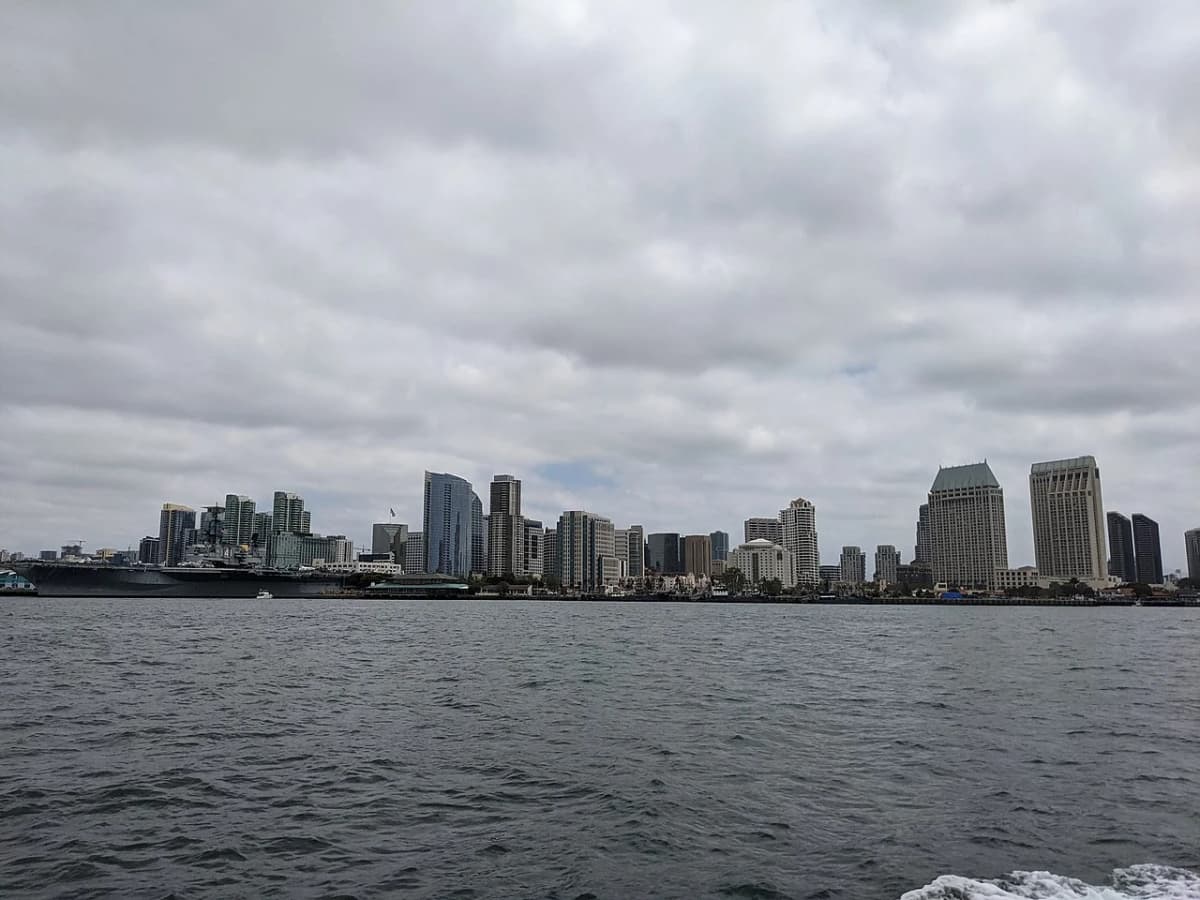
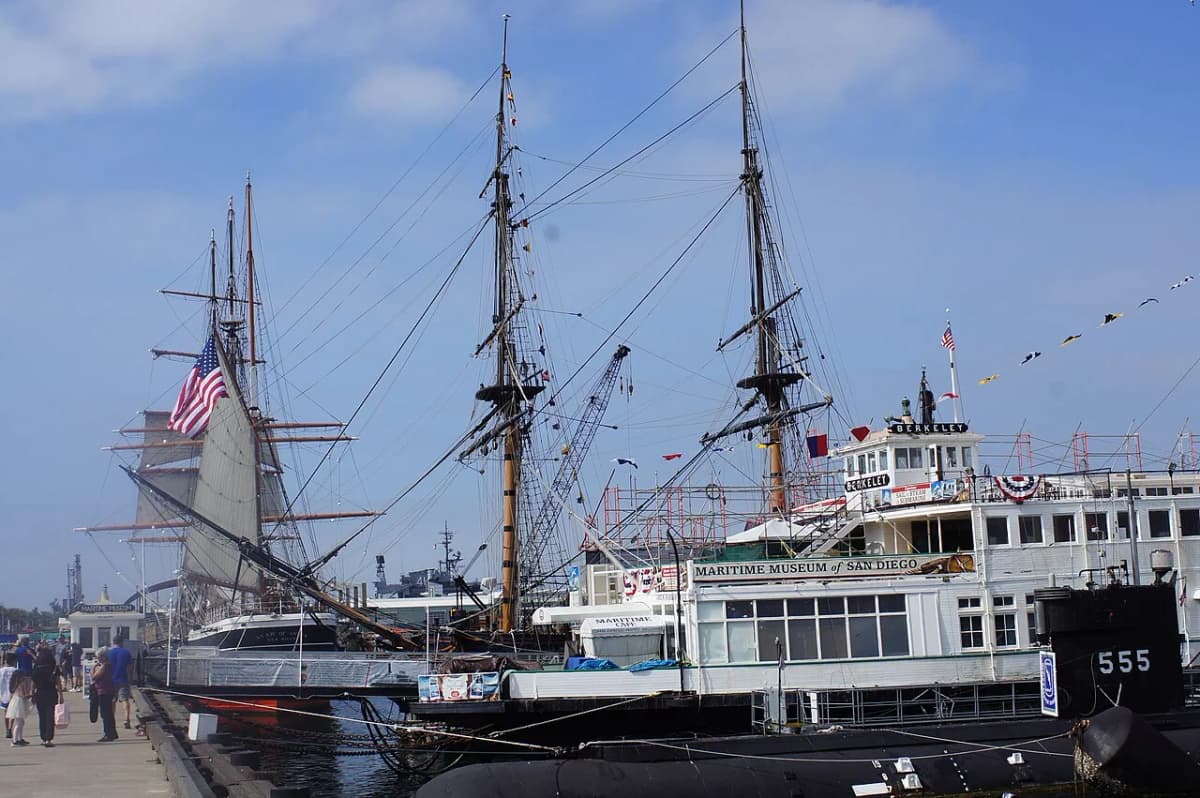
Top Whale Watching Operators in San Diego
Flagship Cruises & Events
Flagship operates large vessels (150+ passengers) departing from Broadway Pier in downtown San Diego. Their whale watching tours are family-friendly, stable in open water, and include naturalist narration. Best for first-timers who want a comfortable, reliable experience. Price range: $45–65 adults, $35–45 kids. Book at flagshipsd.com.
San Diego Whale Watch
San Diego Whale Watch operates smaller vessels with PhD naturalists from Scripps Institution of Oceanography. The emphasis is educational — guides provide detailed wildlife commentary and marine biology context that larger boat tours rarely match. They offer a 100% whale guarantee with a full rebooking policy if no whale is sighted. Departs from Point Loma. Best for those who want a more in-depth wildlife experience.
Hornblower Cruises
Hornblower operates mid-size vessels with consistent quality and multiple departure times throughout the day. Easy downtown access and a reliable experience make them a solid choice when flexibility in scheduling matters.
Best Whale Watching Tips
- Morning departures: Calmer seas and better light for photography. Afternoon swells tend to build as wind increases.
- Dress in layers: Bay and open-ocean temperatures run 10°F cooler than inland San Diego — a T-shirt day onshore can mean jacket weather on the water.
- Motion sickness: Take Dramamine or a scopolamine patch at least 1 hour before boarding. Do not wait until you feel ill on the water — by then medication is too late to help.
- Best seats: Bow (front deck) for spray and the most dramatic views; upper deck for wide-angle visibility; midship for the most stable ride if you are prone to motion sickness.
- What to bring: Binoculars, SPF 50+ sunscreen, light jacket or windbreaker, water bottle, camera with a zoom lens.
- Photography tip: Use burst mode and anticipate the blow (exhale spout) — whales typically surface 3–5 times before a deep dive, giving you a short window to frame the shot.
Whale Watching from Shore — Free Options
Boat tours give you the best access, but San Diego also offers legitimate shore-based whale watching at no extra cost beyond park admission.
- Cabrillo National Monument (Point Loma): The best shore whale watching in San Diego. Elevated bluff viewpoints sit above the whale migration corridor. The park has a dedicated whale watching overlook with informational displays. Entry is $25/vehicle (valid 7 days). More info at nps.gov/cabr.
- Sunset Cliffs: Good elevation above the water, quiet atmosphere, and free. Best during January–March when gray whale traffic is highest.
Best months for shore viewing are January through March. Bring binoculars — whales are typically visible at 0.5–2 miles offshore during peak migration.
Whale Watching with Kids
Gray whale season (December–April) is the best time for families with children. Sighting rates are highest, the whales come close to shore, and tour length (2–3 hours) is manageable for younger kids. Most operators welcome children ages 3 and up.
Bring snacks, layers, and entertainment for younger kids during the transit portions of longer tours. Morning departures with calmer seas work better for children than afternoon sailings. For more ideas on planning a family trip, see our San Diego with kids guide.
Planning Whale Watching in Your San Diego Itinerary
Whale watching tours depart from the waterfront, which makes them a natural anchor for a full downtown day. The Broadway Pier departure point is within easy walking distance of the USS Midway Museum and the Embarcadero.
- Morning (7–10am): Whale watching tour (3–4 hours, back by noon or early afternoon)
- Afternoon: USS Midway Museum or Embarcadero waterfront walk
- Evening: Dinner in Gaslamp Quarter
For a structured multi-day plan that includes this activity, see our 3-day San Diego itinerary.
Whale Watching San Diego — FAQ
What is the best time for whale watching in San Diego?
Gray whale season is usually strongest from December through April, with January and February being the peak months. Blue whale sightings are more common in summer, particularly June through September.
Should I pre-book whale watching tours?
Yes. Pre-booking helps secure your preferred departure time, avoids sold-out situations during peak season (January–February), and typically saves a few dollars compared to walk-up pricing.
Are whale watching tours worth it in San Diego?
Yes. San Diego offers some of the most reliable whale watching on the West Coast, particularly December through April when more than 20,000 gray whales pass within miles of shore. Most operators offer a whale guarantee — free reboarding if no whale is sighted, which is rare during peak season.
Can you see whales from shore in San Diego?
Yes. Cabrillo National Monument on Point Loma is the best shore-based whale watching location in San Diego. Elevated bluff viewpoints let you spot gray whales January through March at 0.5–2 miles offshore using binoculars. Sunset Cliffs is another free option with good elevation.
What is the cheapest way to go whale watching in San Diego?
Shore-based whale watching at Cabrillo National Monument is free with park admission ($25/vehicle, valid 7 days). For boat tours, midweek morning departures are typically the lowest-priced slots, starting around $45 for adults. Booking directly through operators like Flagship Cruises or San Diego Whale Watch is usually cheaper than third-party resellers.