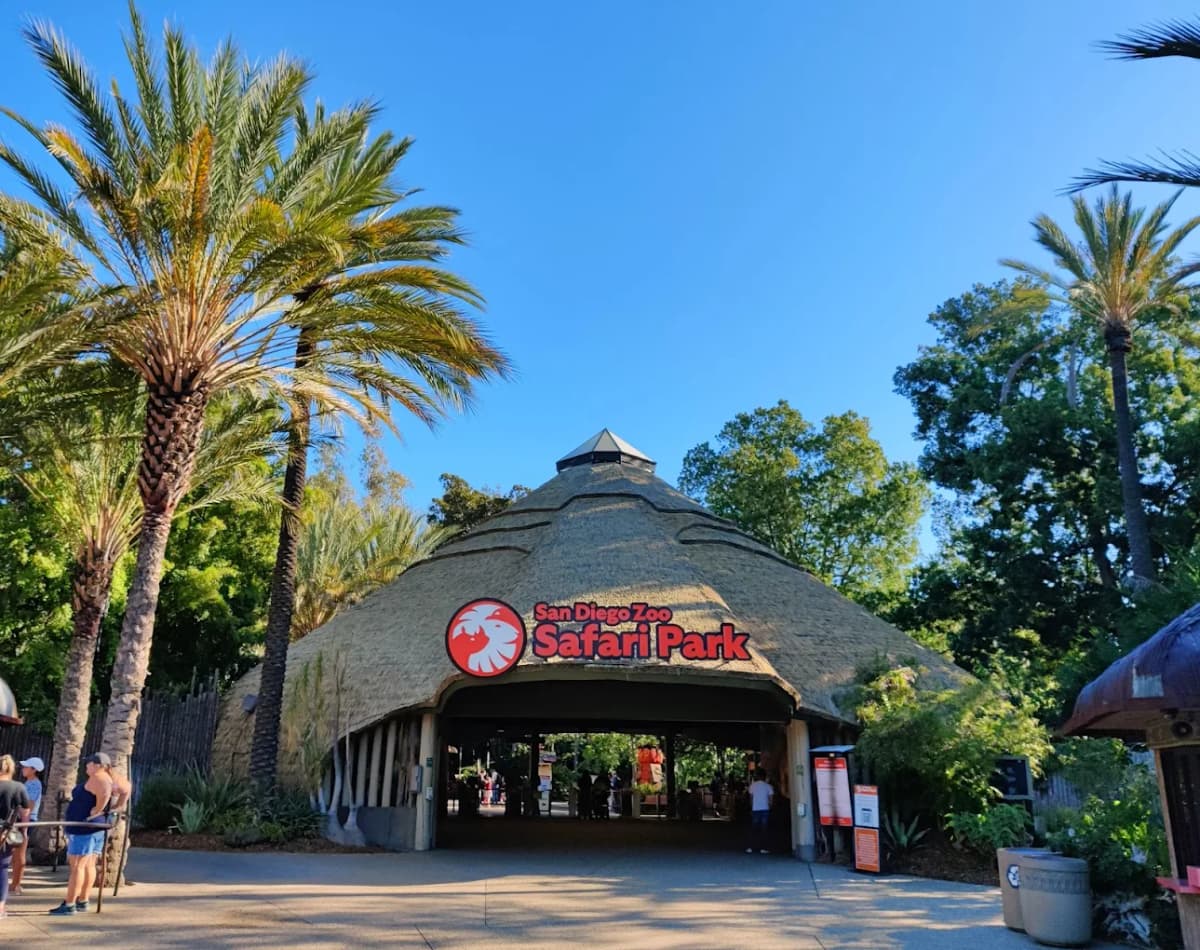
San Diego Zoo Safari Park
Complete 2026 Visitor Guide — Africa Tram, Elephant Valley & Tips
San Diego Zoo Safari Park is a different animal than a traditional zoo — literally. Spread across 1,800 acres of San Pasqual Valley in Escondido, the park puts 3,500+ animals from 300+ species into open-range habitats that more closely resemble Africa and Asia than any city zoo enclosure. The defining experience is the included Africa Tram: an open-air safari ride past free-roaming giraffes, rhinos, Cape buffalo, and antelope. In 2026, the park opened Denny Sanford Elephant Valley — the largest single expansion in San Diego Zoo Wildlife Alliance's 109-year history — making this the best year yet to visit. This guide covers everything: tickets, hours, parking, animals, the new Elephant Valley, premium safaris, and a proven full-day strategy.
📍 Address: 15500 San Pasqual Valley Rd, Escondido, CA 92027 (35 miles north of downtown San Diego)
💰 Cost: $78 adults, $68 children (3–11) online; children under 3 free
⏱ Time needed: Full day (6–8 hours)
🕐 Hours: 9am–5pm daily
🚗 Parking: $20 per vehicle (free for SDZWA members as of January 2026)
📞 Phone: (760) 747-8702
🌤 Best time: Weekday mornings; arrive by 9am (8:40am on summer weekends)
🐘 New in 2026: Denny Sanford Elephant Valley opened March 5 — included with admission
Elephant Valley 2026 — Safari Park's Historic New Expansion
Opened March 5, 2026
Denny Sanford Elephant Valley is the largest single project in San Diego Zoo Wildlife Alliance's 109-year history. It is included with general Safari Park admission — no extra fee.
Elephant Valley transforms how visitors experience the park's resident elephant herd. Rather than a traditional enclosed habitat, the valley puts guests at ground level alongside the elephants — walking paths offer multi-sided viewing from terrain that mimics the African savanna. The eight-member herd roams across an environment designed to keep them cognitively and physically engaged: random water source relocation, puzzle feeders, and a 250,000-gallon pool large enough for full elephant submersion.
What to Expect Inside Elephant Valley
- Two watering holes: The main pool (250,000 gallons) is the centerpiece — when elephants wade and swim, it creates some of the most striking wildlife viewing in Southern California. A second, smaller watering hole provides additional habitat variety.
- Multi-sided viewing platforms: Unlike a single fence-line view, Elephant Valley's path design lets visitors observe the herd from multiple angles as they move through the landscape. Morning is best — the herd is most active before midday heat.
- Mkutano House restaurant: A two-story dining destination with three distinct options (Mkutano, Ona Lounge, and Tu Grill) positioned directly overlooking one of the watering holes. This is the best lunch spot in the park — views of elephants while eating are genuinely extraordinary.
- Conservation storytelling: Elephant Valley spotlights SDZWA's elephant conservation work in Kenya and celebrates the communities where people and elephants coexist. Educational kiosks throughout explain the research happening both in San Diego and across the African savanna.
Visit Elephant Valley in the morning:
The elephant herd is most active in the morning hours — you'll have the best chance of seeing pool activity, herd movement, and keeper interactions before midday. Elephant Valley should be your second stop after the Africa Tram.
San Diego Zoo Safari Park Hours 2026
| Period | Opening | Closing | Notes |
|---|---|---|---|
| Year-round standard | 9:00am | 5:00pm | Africa Tram begins 9:30am |
| Summer (peak) | 9:00am | Extended (check site) | Arrive 8:40am on weekends |
| Holidays | 9:00am | Verify before visiting | Hours may vary |
Always verify current hours at sdzsafaripark.org before your visit — seasonal hours change without advance notice.
San Diego Zoo Safari Park Ticket Prices 2026
| Ticket Type | Online Price | Notes |
|---|---|---|
| Adult (12+) | $78 | Buy online for lowest price |
| Child (3–11) | $68 | Gate prices higher |
| Under 3 | Free | Always free |
| 2-Visit Pass | Varies | One Zoo + one Safari Park visit |
| San Diego 3-for-1 Pass | Varies | Zoo + Safari Park + SeaWorld |
| Annual Member | $130–$250/yr | Unlimited visits + free parking |
Safari Park Discounts 2026
- Active military (Waves of Honor): Free admission year-round with CAC or Uniformed Services ID at the ticket window. Military spouses and dependents receive 10% off.
- Seniors 65+ (February only): Free admission during February with valid photo ID — presented at park turnstiles.
- CityPASS Southern California: Bundled pass covering the Zoo or Safari Park plus other attractions at a reduced combined rate.
- Go City San Diego Explorer Pass: Covers Safari Park admission as part of a multi-attraction pass; worthwhile if visiting 3+ paid attractions.
- Membership: Pays off after two visits for most families. As of January 2026, includes free parking at both parks — a $20/visit saving that accelerates the break-even point.
Safari Park Parking and Getting There
Parking Costs
| Type | Cost |
|---|---|
| Standard vehicle | $20/day |
| Oversized vehicle | $55/day |
| Preferred parking (weekends/holidays) | $38/day ($20 + $18) |
| SDZWA Members (as of Jan 2026) | Free |
Driving from San Diego
Safari Park is in Escondido — 35 miles north of downtown San Diego, a 40–60 minute drive depending on traffic. From downtown or Mission Valley, take I-15 North and exit at Via Rancho Parkway (Exit 27). Head east and follow the signs to the park. GPS address: 15500 San Pasqual Valley Rd, Escondido, CA 92027.
Temperature difference — pack layers:
Escondido runs 5–10°F warmer than coastal San Diego. It can be overcast and 65°F in downtown while it's sunny and 80°F at the Safari Park. Dress in layers you can remove. Sunscreen is essential — the park has less shade than you expect from an 1,800-acre preserve.
Public Transportation
Transit from downtown San Diego: take an MTS Express bus (routes 235, 280, or 290) to Escondido Transit Center, then board the NCTD FLEX 371 bus to the Safari Park. Note: FLEX 371 does not run on weekends and stops at the park's outer gate, a short walk from the entrance. For weekend visits, driving or rideshare is the practical option. Rideshare from central San Diego runs approximately $35–55 each way.
Africa Tram — Included, Board It First
The Africa Tram is Safari Park's defining experience and is included with general admission at no extra charge. It is a 25-minute open-air guided safari ride through 2.5 miles of African savanna habitat — the vehicles are soft-wheeled, open-sided trams designed after classic African safari trains.
During the ride, you pass through free-roaming herds of giraffes, white rhinos, Cape buffalo, ostriches, Arabian oryx, gazelles, and multiple species of African antelope — all in open terrain with no fencing between vehicle and animals. Animals regularly approach the trams. This is the experience most Safari Park visitors cite as their highlight.
Board the Africa Tram first:
The Tram begins running 30 minutes after park opening (around 9:30am). Board it as your very first move after entry — it provides orientation across the full park terrain and the animals are most active in the morning. By 11am, Tram queues build significantly. The Tram operates first-come, first-served — no reservations.
Safari Park Animals and Exhibits
San Diego Zoo Safari Park houses over 3,500 animals representing 300+ species across 1,800 acres. The park is also an accredited arboretum with 1.3 million plants from 3,700+ species — the landscape itself is worth attention between animal zones.
Denny Sanford Elephant Valley (NEW 2026)
The park's eight-member elephant herd now lives in the most expansive, naturalistic elephant habitat in California. The valley features two watering holes — including a 250,000-gallon pool for full-body submersion — multi-sided viewing paths, and Mkutano House restaurant overlooking the water. Included with admission. See the full Elephant Valley section above for details.
African Savanna
The largest zone, best experienced on the Africa Tram. Over 300 acres of open-range habitat supporting free-roaming giraffes (the park's most iconic animals and tallest residents), white rhinos (one of the world's largest white rhino herds in managed care), Cape buffalo, ostriches, impalas, gazelles, and Arabian oryx. The scale of this zone — animals visible across open terrain, not behind glass — is what makes Safari Park unlike any traditional zoo in the region.
Asian Savanna
60-acre open-range habitat for Asian wildlife: Indian rhinoceros (greater one-horned rhino, distinct from African white rhinos), Bactrian camels, banteng, gaur (the world's largest wild cattle), and several species of Asian deer and antelope. Also viewable on the Africa Tram as it passes through both savanna zones.
Gorilla Forest
A multi-group western lowland gorilla habitat, one of the largest gorilla collections in the US. The naturalistic forest design — dense vegetation, elevated climbing structures, and ground-level viewing glass — creates close encounters when the troop approaches the windows. Morning is the best time for gorilla activity before the midday heat drives the troop into shade.
Tiger Trail
Sumatran tigers in three interconnected exhibits featuring glass viewing windows for close-range viewing. Sumatran tigers are critically endangered (fewer than 400 remaining in the wild) — the Safari Park participates in the Species Survival Plan for this subspecies. Tiger activity is highest in morning and late afternoon.
Walkabout Australia
The park's 3.6-acre Australia zone where western grey kangaroos and red-necked wallabies roam a walk-through yard — visitors can enter the yard and observe kangaroos at close range. Also in the zone: Australian brushturkeys and waterbirds. One of the most interactive sections in the park, particularly popular with children.
Cheetah Run
A dedicated area where cheetahs demonstrate full-speed sprints in a specially designed run. Watching the world's fastest land animal reach speeds of 70+ mph in person is a viscerally different experience than observing a resting animal in an enclosure. Cheetah Run demonstrations run on a set daily schedule — check the board at the entrance for times on your visit day.
Rhino Centre
Opened in 2019, the Nikhita Khan Rhino Centre houses six white rhinos and serves as a conservation research facility for one of Africa's most threatened large mammals. The centre is particularly relevant given the Safari Park's history with the northern white rhino — the facility has participated in breeding programs for both white and black rhino subspecies.
Lions, Cheetahs, and Carnivore Zone
Beyond the savanna zones and Cheetah Run, the park houses African lions, leopards, and a range of smaller African carnivores in dedicated habitats with elevated viewing platforms. Lion viewing is best in morning and late afternoon when the cats are most active.
Premium Safari Experiences (Add-On)
Beyond the included Africa Tram, Safari Park offers a range of premium safari experiences that go deeper into animal habitats. These are sold separately from general admission and should be booked in advance — they sell out regularly during holidays and school breaks.
Caravan Safari
The most popular premium experience. A 1-hour guided tour in an open-sided caravan vehicle that enters the African savanna habitats directly — giraffes, rhinos, and other animals approach the vehicle, and guests can feed and touch some species under keeper guidance. This is hands-on in a way the standard Africa Tram is not. Regularly cited as the single best experience at Safari Park by repeat visitors. Book well in advance for peak season.
Wildlife Safari
A 90-minute deep-access safari into both the Africa and Asia habitat zones. More comprehensive than the Caravan Safari and covers more terrain. Includes narration from a professional wildlife guide and offers closer animal access than the standard Tram. Recommended for visitors who want a full immersive safari experience beyond the included Tram.
Flightline Safari (Zipline)
A zipline experience that runs 130 feet above the African savanna — guests glide over the open range where giraffes, rhinos, and antelope roam below. The combination of speed and aerial wildlife perspective is unlike anything else at the park. Pricing starts around $79–120 per person (add-on to admission). Age, weight, and dress code restrictions apply — check requirements before booking. A second flight can be purchased at a discount.
Cheetah Run Experience
A premium close-access version of the Cheetah Run demonstration, including closer viewing positions and keeper Q&A. For anyone with a particular interest in big cats, this is worth the add-on over the standard demonstration viewing.
Tethered Hot Air Balloon
A tethered hot air balloon ride that rises above the park for aerial views across the savanna and San Pasqual Valley. Unlike the Flightline (which is directional and fast), the balloon floats slowly and provides a panoramic perspective. Subject to weather cancellation — check availability on the day of your visit.
Premium safari booking tip:
Book Caravan Safari and Wildlife Safari online before your visit — both sell out during spring break, summer, and holiday weekends. Flightline and balloon rides are often available day-of on weekdays but should also be reserved in advance for peak dates.
San Diego Zoo vs. Safari Park — Which Should You Visit?
| Category | San Diego Zoo | Safari Park |
|---|---|---|
| Location | Balboa Park, downtown San Diego | Escondido (35 mi north) |
| Size | 100 acres | 1,800 acres |
| Animal Style | Traditional habitats, close-up viewing | Open-range savanna, tram safari |
| Species | 650+ species, 4,000+ animals | 300+ species, 3,500+ animals |
| Included Transport | Bus tour + Skyfari gondola | Africa Tram |
| Parking | Free | $20 (free for members) |
| 2026 Highlight | Giant pandas (returned 2024) | Elephant Valley (opened Mar 2026) |
| Best For | First visit, city-based trip, species variety | Open-range experience, repeat visitors, elephants |
For a first San Diego visit: The Zoo is the more convenient choice — easier to slot into a city itinerary, more species, free parking, and the 2024 pandas. Safari Park requires a dedicated half-day commitment including the drive.
For a second visit, or if elephants are your priority: Safari Park wins in 2026. Elephant Valley's March opening makes this the most compelling year in the park's history to visit. The open-range savanna experience is also fundamentally different from what the Zoo offers — it's not one being better, it's two genuinely distinct experiences.
For more detail, see the full San Diego Zoo guide — the comparison section there covers day-planning logic for doing both parks on a multi-day trip.
Best Time to Visit Safari Park
Weekday mornings in spring (March–May) or fall (September–November) are the ideal combination. Animals are most active in the morning hours before midday heat drives them into shade. Weekday crowds run significantly lighter than weekend — 40–60% lighter on typical days.
Arrive at 9am opening regardless of season. Arriving at 8:40am on busy days lets you park, clear security, and be among the first through the gates. The busiest period is 11am–3pm — if you board the Africa Tram at 9:30am and visit Elephant Valley before 10:30am, you experience both flagship attractions with minimal queuing.
Winter (November–early March) offers lighter crowds and comfortable temperatures (Escondido winters are mild), but days are shorter and the park closes at 5pm. Animal activity is actually excellent in winter — cooler temperatures keep animals moving longer through the day rather than retreating to shade.
Avoid summer Saturday and Sunday afternoons. July and August weekends are Safari Park at maximum capacity. The Africa Tram queue can exceed 45 minutes by 11am. If visiting in summer, a 9am arrival is non-negotiable for a quality experience.
Safari Park Full-Day Strategy
Safari Park is large and spread out — without a plan, you'll spend time backtracking and miss key exhibits. This sequence is built around the 2026 park layout including Elephant Valley:
- 8:40–9:00am — Park and enter: Arrive before opening on busy days. Parking is at the main lot off San Pasqual Valley Rd. Gates open at 9am — being in the first wave in gives you Africa Tram seating without a wait.
- 9:00–9:30am — Orient and check schedules: Pick up a map, check the daily schedule board for Cheetah Run times, keeper talks, and any special programming. Download the app if you haven't already — the interactive map saves significant time in the field.
- 9:30–10:00am — Africa Tram (first priority): Board as soon as the Tram begins operating (30 minutes after opening). First-come, first-served — no reservation. The 25-minute ride covers the full African savanna and provides spatial orientation for the rest of your day.
- 10:00–11:30am — Elephant Valley: Head directly from the Tram to Elephant Valley while the herd is most active. Budget 90 minutes to properly explore the walking paths, observe both watering holes, and eat at Mkutano House if you want the elephant-view dining experience.
- 11:30am–12:30pm — Gorilla Forest + Tiger Trail: Morning remains best for gorilla activity at the glass. Tiger Trail is adjacent. These two exhibits together take about an hour.
- 12:30–1:30pm — Lunch: Mkutano House at Elephant Valley for a view, or pack your own lunch and use the picnic areas to save $15–25 per person. This is the peak crowd hour — use it for food rather than top exhibits.
- 1:30–3:00pm — Walkabout Australia + Rhino Centre: The kangaroo walk-through is the most hands-on experience in the park for families. Rhino Centre offers context on the park's conservation mission and rhino breeding program.
- 3:00–4:30pm — Cheetah Run + remaining zones: Check the schedule for afternoon Cheetah Run demonstration timing. Afternoon crowds thin as families with young children leave, making this the best time for remaining exhibits.
- If you booked a premium safari: Caravan and Wildlife safaris typically run in morning and early afternoon slots. Book the premium safari for 10am–noon and adjust the above sequence accordingly.
Footwear and sun protection:
Safari Park is hillier and more spread out than it appears on the map — expect 3–5 miles of walking with significant elevation change. Wear comfortable walking or hiking shoes. Sunscreen is essential: the park has far less tree cover than the San Diego Zoo, and Escondido's sun is intense. A hat and water bottle are not optional — pack both.
Safari Park with Kids
Safari Park is excellent for families with children ages 4–14. The open-range format — animals visible at scale, moving freely — creates a more memorable experience for children than traditional zoo viewing. Key family planning points:
- Stroller rental: Available at the park entrance (limited quantities). The Safari Park is stroller-friendly but very spread out — a stroller or carrier is essential for children under 4. The terrain includes hills, so umbrella strollers work less well than standard frames.
- Walkabout Australia (kangaroos): The walk-through kangaroo enclosure is the single best activity for young children — observing free-roaming kangaroos and wallabies at ground level is more engaging than any enclosed habitat viewing.
- Africa Tram: Works well for all ages and provides a rest from walking. Young children who might fatigue on a long walking route benefit from the 25-minute seated tram experience.
- Cheetah Run: The full-speed cheetah demonstration is one of the most universally impressive moments in the park — suitable for children old enough to appreciate speed (ages 5+).
- Elephant Valley: The scale of the elephant herd at ground level — especially if the pool is active — creates a profound experience for children that no enclosure viewing can replicate.
- Pack your own food: In-park food is expensive ($15–25/meal). A packed lunch with snacks saves $40–80 for a family of four. Picnic tables are distributed throughout the park.
For full family San Diego planning, see the things to do in San Diego with kids guide.
Safari Park Membership — Is It Worth It?
San Diego Zoo Wildlife Alliance membership covers both the Zoo and Safari Park. As of January 2026, all adult members also receive free parking at both parks — a $20/visit saving that significantly accelerates the break-even point.
Membership Benefits
- Unlimited admission to San Diego Zoo and Safari Park for one year from purchase
- Free parking at both parks (as of January 2026) — $20 savings per Safari Park visit
- 5–15% off dining at park restaurants depending on membership tier
- 10–15% off merchandise at park retail shops
- Early access on select days for Premium and above tiers (one hour before general opening)
- Reciprocal admission at 150+ AZA-accredited zoos and aquariums nationwide (varies by tier)
- Discounts on premium safaris — members typically receive reduced pricing on Caravan Safari, Wildlife Safari, and Flightline add-ons
Break-Even Math
Individual membership starts at ~$130/year. One adult visiting both parks once: $78 (Zoo) + $78 (Safari Park) + $20 parking (Safari Park) = $176 in single-visit costs versus $130 membership. The membership pays off after a single two-park trip for one adult. For families, the math shifts even more favorably — a family plan covering two adults and all children typically runs $195–250/year versus $292+ for a single two-adult two-park visit.
Safari Park Conservation Work
San Diego Zoo Wildlife Alliance operates one of the world's most active zoo-based conservation programs. Safari Park's conservation contributions are distinct from the Zoo and worth understanding as context for the visit.
- African elephant conservation: Elephant Valley's 2026 opening connects directly to SDZWA's field conservation work in Kenya, where researchers study elephant population dynamics and human-elephant conflict mitigation in communities bordering Amboseli and Tsavo.
- Southern white rhino breeding: Safari Park maintains one of the world's most successful white rhino breeding programs. The Rhino Centre supports both white and black rhino conservation, with animals from this facility contributing to wild population recovery programs in southern Africa.
- Condor recovery: Like the San Diego Zoo, Safari Park participates in the California condor captive breeding program that brought the species back from 27 individuals in 1987 to 500+ today — the most successful large-bird recovery in US history.
- Cheetah conservation: Safari Park's cheetah program is one of the most active in North America, with breeding successes contributing to the species' managed population. SDZWA operates cheetah field conservation programs in Namibia, Botswana, and Kenya.
- San Diego Frozen Zoo: The world's largest cryopreserved animal genetic library (10,000+ samples from 1,000+ species) is housed at the San Diego Zoo campus and supports long-term conservation science for species including the northern white rhino.
San Diego Zoo Safari Park FAQ
How much do Safari Park tickets cost in 2026?
$78/adult (12+) and $68/child (3–11) online. Children under 3 are always free. Gate prices are higher — buy online. A 2-Visit Pass (Zoo + Safari Park) and a 3-for-1 Pass (Zoo + Safari Park + SeaWorld) are also available.
Is Elephant Valley open in 2026?
Yes. Denny Sanford Elephant Valley opened March 5, 2026 — the park's largest-ever expansion. It is included with general Safari Park admission at no extra charge. Visit in the morning when the elephant herd is most active.
Is the Africa Tram included with admission?
Yes. The Africa Tram is included with general admission and runs on a first-come, first-served basis. It begins 30 minutes after park opening (~9:30am). Board it as your first activity for shortest waits and most active animals.
How much is parking at Safari Park?
$20 per standard vehicle per day. Preferred parking (weekends and holidays) adds $18 ($38 total). SDZWA adult members park free as of January 2026. There is no public transit alternative on weekends.
How far is Safari Park from San Diego?
35 miles north of downtown San Diego in Escondido — a 40–60 minute drive. Take I-15 North, exit Via Rancho Parkway (Exit 27), go east and follow signs. Escondido runs 5–10°F warmer than coastal San Diego — pack layers.
What is the Caravan Safari and is it worth it?
The Caravan Safari is a 1-hour premium add-on where an open-sided vehicle enters the African savanna and animals (including giraffes and rhinos) approach directly. It is consistently rated the highlight experience by repeat Safari Park visitors. Book in advance — it sells out on peak days.
Can you bring food to Safari Park?
Yes. Outside food and non-alcoholic drinks are allowed, including coolers. The new Mkutano House at Elephant Valley is worth the in-park dining experience for the elephant views. Otherwise, packing lunch saves $40–80 per family.
San Diego Zoo or Safari Park — which should I visit first?
Visit the Zoo first for a first San Diego trip — more convenient, more species, free parking, and the pandas. Add Safari Park as a second-day excursion, or make it the primary destination if elephants, open-range safari viewing, or the 2026 Elephant Valley expansion are your specific interest.
Related San Diego Guides
- San Diego Zoo Guide 2026 — tickets, giant pandas, Africa Rocks, and full-day planning
- San Diego Zoo Tickets — Prices, Discounts & Booking — CityPASS, Costco, military, Kids Free October
- SeaWorld San Diego — marine wildlife, new Shark Encounter, and coasters
- Things to Do in San Diego with Kids — full family planning guide
- San Diego Day Trips — Safari Park as part of a wider Escondido or North County excursion
- 3-Day San Diego Itinerary — where Safari Park fits in a multi-day trip
- Best Things to Do in San Diego — full top-41 attraction rankings