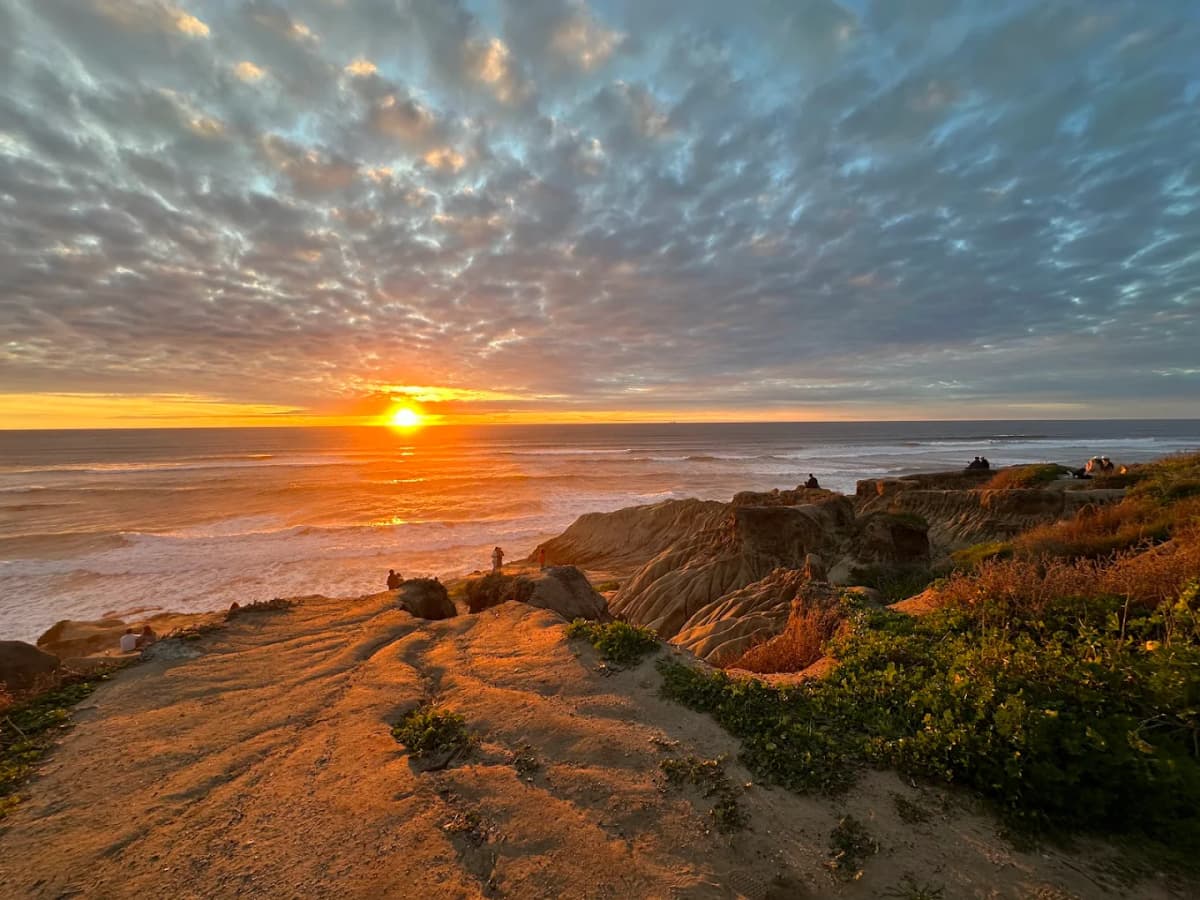
Sunset Cliffs Natural Park
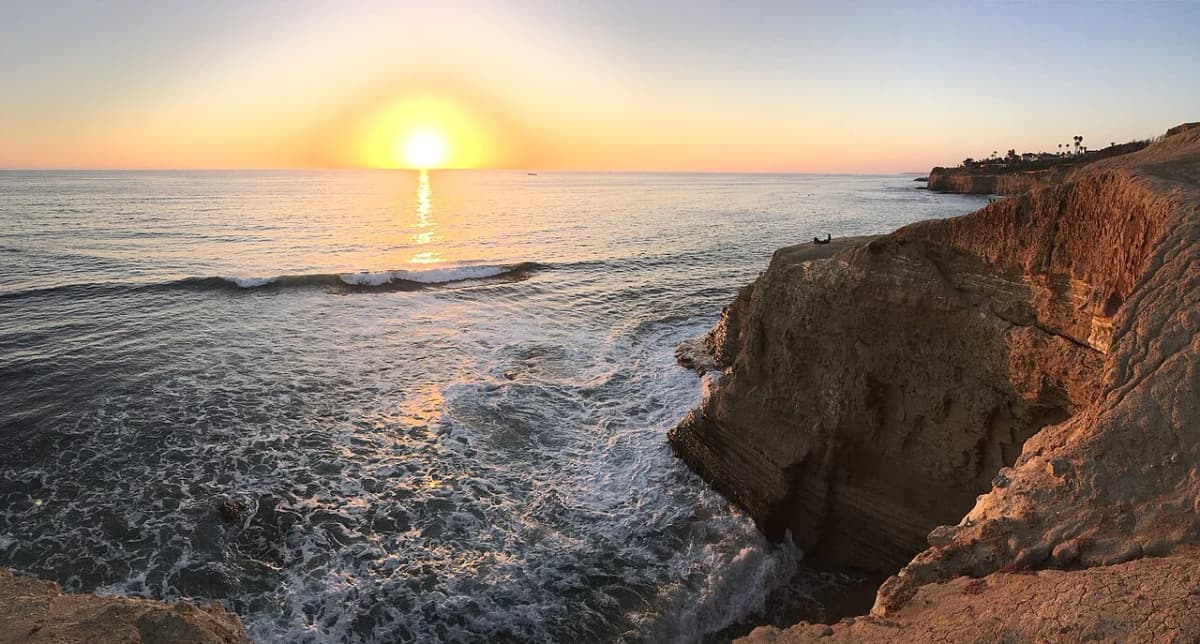
San Diego's most dramatic free coastal experience — 68 acres of ancient sandstone cliffs, sea caves, tide pools, whale watching, and the most iconic sunset views on the California coast.
| Address | 1253 Sunset Cliffs Blvd, San Diego, CA 92107 |
| Neighborhood | Point Loma / adjacent to Ocean Beach |
| Admission | Free — always |
| Parking | Free — Ladera St & Cornish Dr, 3980 Lomaland Dr, Froude St, Osprey St lot, street parking on Sunset Cliffs Blvd |
| Park Hours | 24 hours, 7 days a week |
| Parking Lot Hours | Closed 2 AM – 4 AM daily |
| Dogs | Not permitted 9 AM – 6 PM; leash required all other hours |
| Restrooms | No permanent restrooms; limited portable toilets near some lots |
| Lifeguards | None — no swimming |
| Wheelchair Access | Not accessible; sidewalk on Sunset Cliffs Blvd most manageable |
| Main Trail | 2.1 miles, 75 ft elevation gain, Easy |
| Distance from Downtown | ~9 miles west, 15–25 min drive |
| Latest 2026 Sunset | 8:01 PM on June 22, 2026 |
Sunset Cliffs Natural Park: San Diego's Most Iconic Free Attraction
Sunset Cliffs Natural Park is where San Diego's coastline earns its reputation. Stretching 1.5 miles along the western edge of the Point Loma peninsula, this free 68-acre natural park delivers dramatic sandstone cliffs dropping straight into the Pacific, hidden sea caves you can walk through at low tide, wild tide pools teeming with marine life, and the kind of sunset views that stop traffic every single evening.
Unlike the Zoo or Balboa Park, there are no tickets, no lines, and no entrance gates — just show up, walk the blufftop path, and experience one of the most naturally spectacular stretches of coastline in Southern California. The park is open 24 hours and admission has always been, and will always be, free.
What makes Sunset Cliffs genuinely special is the layering of experiences. The geology here is 120,000 years old on top and 75 million years old below — and it is actively sculpting itself, with waves carving new caves and arches every season. In winter, gray whales pass just offshore. At any minus tide, you can walk through sea caves that feel entirely otherworldly. At golden hour every evening, the cliffs turn amber and photographers line the bluffs. For a comparison of San Diego's top coastal spots, see our guide to the best beaches in San Diego.
Getting There & Parking at Sunset Cliffs
Sunset Cliffs is approximately 9 miles west of downtown San Diego — about a 15–25 minute drive. GPS to 1253 Sunset Cliffs Blvd, San Diego, CA 92107. All parking is free.
🅿️ Ladera St & Cornish Dr Dirt Lot
Best for tide poolsThe main dirt lot near the Ladera Street Stairs — your best access point for the famous tide pools. Free, no time limit. Fills quickly on weekend evenings. Arrive 45–60 min before sunset on Fri/Sat.
🅿️ 3980 Lomaland Dr Lot
Quieter optionA paved lot at the southern end of the park near Luscomb's Point. Typically less crowded than the Ladera St lot. Good access to the southern blufftop trail and surf spots.
🅿️ Froude St Lot
Best for sea cavesThe departure point for guided sea cave tours. Best access for Gaia's Gate and other central caves. Street parking on Froude St nearby if the lot is full.
🚗 Sunset Cliffs Blvd Street Parking
Most spots overallFree street parking runs the length of Sunset Cliffs Blvd. Osprey St lot also available. Walking the boulevard is a legitimate way to explore the park — pull over wherever a view calls you.
Sunset Arrival Timing Tip
On Friday and Saturday evenings from April through October, parking along Sunset Cliffs fills completely 45–60 minutes before sunset. Locals know this — visitors often don't. Arrive at least 45 minutes early, park wherever you find a spot, and walk the boulevard toward your preferred viewpoint. Spending the extra time walking the cliffs before the main color show is never wasted.
Getting There Without a Car
MTS Bus: Several MTS routes serve the Sunset Cliffs Blvd corridor — check the MTS app for current routes and schedules from downtown or Ocean Beach.
Rideshare: Uber/Lyft from downtown Gaslamp Quarter is approximately $20–35 and takes 15–25 minutes. Drop-off at the Ladera St lot or anywhere along Sunset Cliffs Blvd.
From Ocean Beach: Sunset Cliffs is walking distance from the Ocean Beach neighborhood — head south on Sunset Cliffs Blvd from the OB Pier area.
Best Time to Visit Sunset Cliffs
Sunset Cliffs is worth visiting at almost any hour and any season — but certain combinations of timing, season, and tide produce experiences that are dramatically better than the baseline.
Sunset Times by Season (2026)
Golden Hour Guide
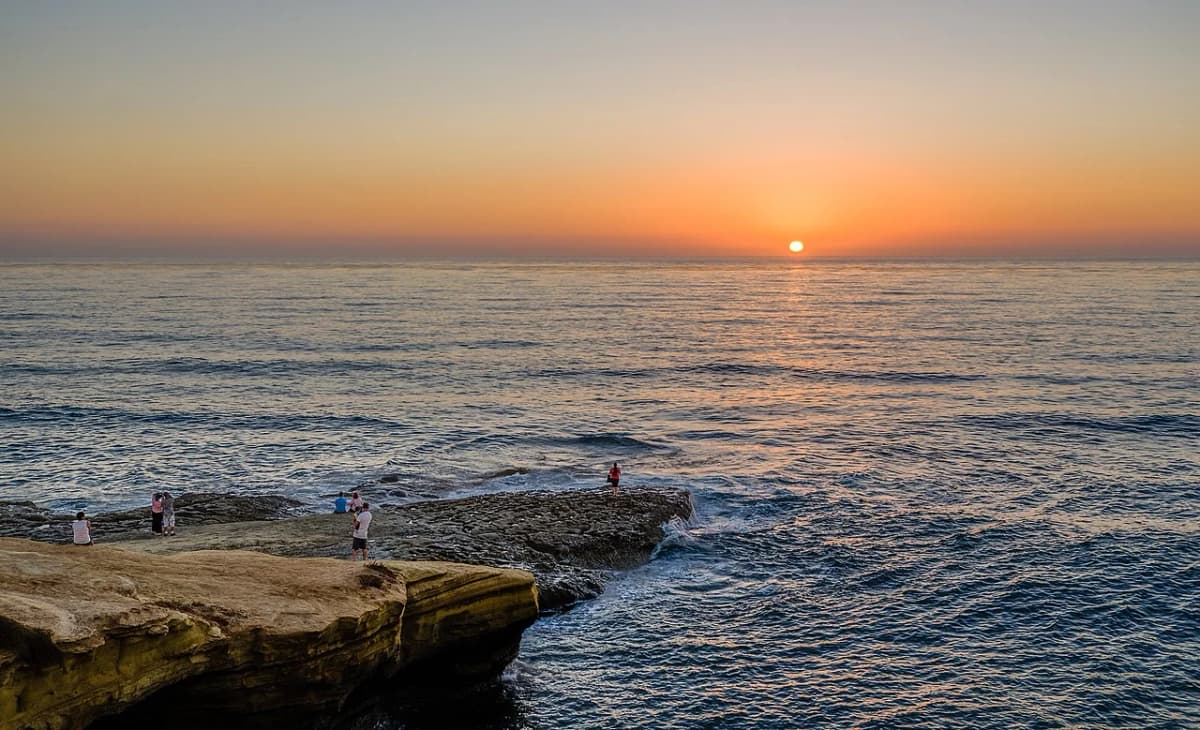
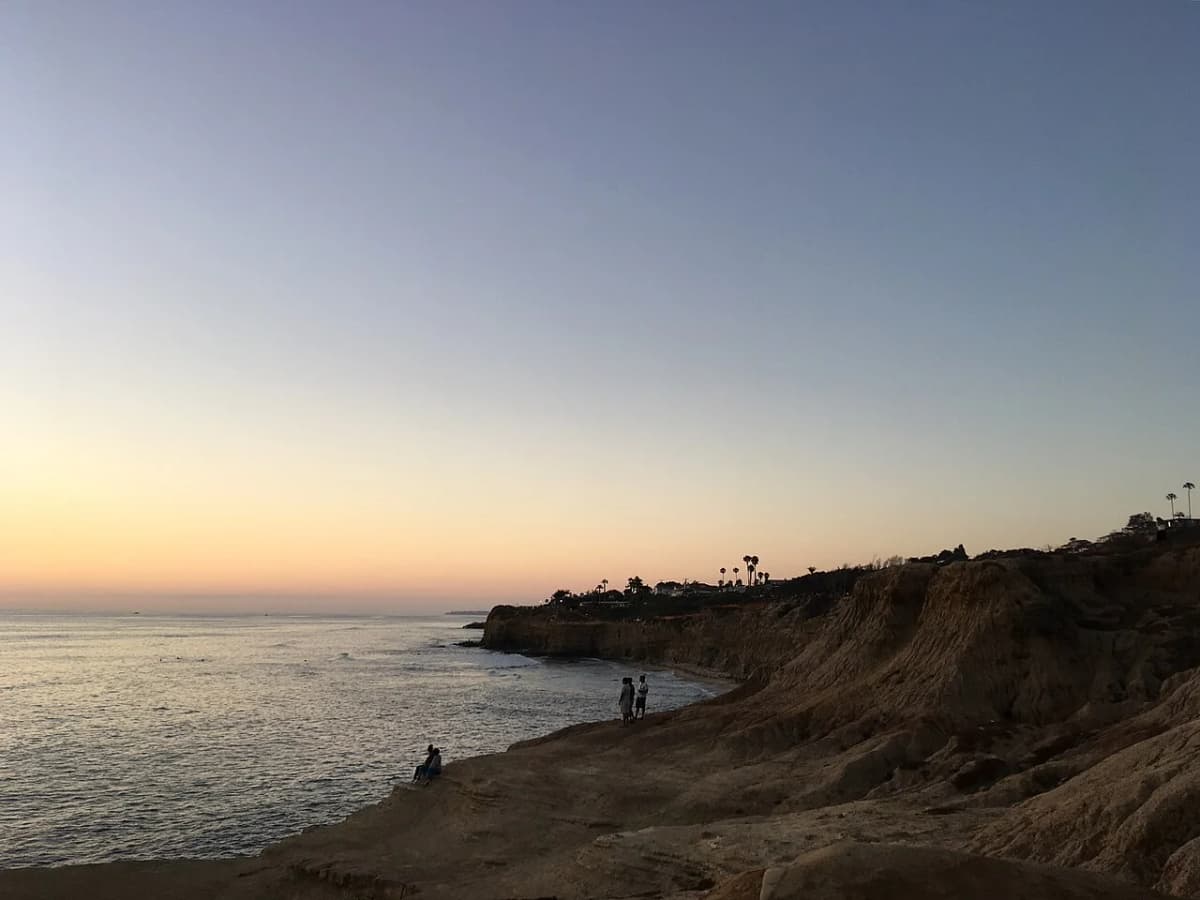
Arrive 30–45 minutes before sunset for golden hour — when the cliffs and ocean turn warm amber. The best color intensity typically comes in the final 10–15 minutes before the sun drops below the horizon. Stay for at least 5 minutes after sunset for the blue-to-pink afterglow, which can be as dramatic as the golden hour itself.
Fewest Crowds
- ✓ Tuesday or Wednesday evenings — markedly lighter than weekends
- ✓ November through February — winter months bring cold wind but empty parking lots
- ✓ Weekday mornings — best for tide pools; entire park to yourself
- ✓ Sunrise — stunning from the east-facing upper trail; almost no one here
Tide Pools at Sunset Cliffs
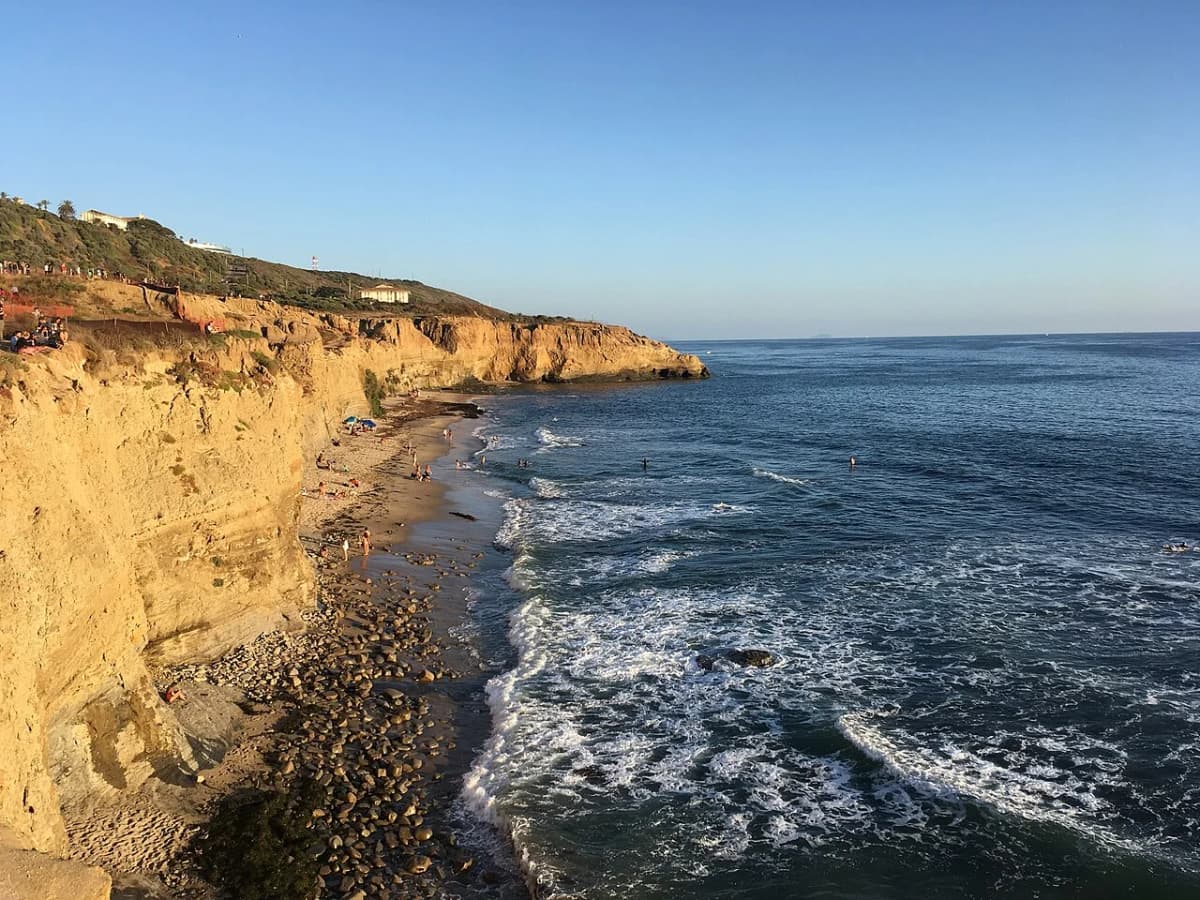
The tide pools at Sunset Cliffs rank among the most biologically rich in San Diego County — partly because of the rock composition and partly because they are far enough from heavy beach foot traffic that the ecosystems remain healthy. At a proper low tide, you can spend an hour just in one section of rock and not see the same creature twice.
What You'll Find
- ·Hermit crabs and shore crabs in every crevice
- ·Purple and ochre sea urchins in deeper pools
- ·Bright orange and purple sea stars
- ·California moray eels tucked under ledges
- ·Shore birds — black oystercatchers, surf scoters, western grebes
- ·Acorn barnacles, mussels, and limpets on exposed rock
- ·Turban snails and chiton on reef surfaces
- ·Anemones in shaded pools — green and purple varieties
- ·Occasionally: octopus, garibaldi in deeper channels
Best Access: Ladera Street Stairs
The Ladera Street Stairs provide the safest and most consistent access to the tide pool level. Located near the Ladera St & Cornish Dr parking area, these stairs descend to a large rock platform that exposes extensive pools at low tide.
Tide Timing
- ✓ Visit within 2 hours of low tide for best pool exposure
- ✓ Best conditions at 0.7 ft tide height or lower
- ✓ Minus tides (below 0.0 ft) expose the deepest pools
- ✓ Recommended apps: Tides Near Me, My Tide Times
Tide Pool Etiquette: Never remove any animals or shells. Step only on bare rock, never on barnacles or mussels. Watching is fine — touching should be minimal. Tide pools are a living ecosystem protected under California law.
Sea Caves at Sunset Cliffs
Sunset Cliffs is home to one of the most impressive collections of sea caves on the California coast — and unlike La Jolla's caves (which require a kayak or rental), several Sunset Cliffs caves can be walked into directly at the right tide. The experience of standing inside a cave carved by millions of years of Pacific wave action, looking up through an open ceiling to the sky, is difficult to describe and impossible to forget.
Gaia's Gate
Accessible: minus 1 ft or lowerThe most famous cave at Sunset Cliffs — an open-ceiling cave (also called a sea tunnel or pothole cave) where wave action has collapsed the roof, creating a dramatic natural skylight. Accessed via Froude St at very low tide. The chamber fills and empties with each wave surge.
Granger Cave
Accessible: 0.5 ft tide or lowerA classic sea cave with a long horizontal tunnel accessible at low tide. Walk in from the beach side with a headlamp for the full experience. The cave extends further than it appears from the entrance — approximately 60 feet of walkable depth.
Wonderland
Accessible: minus 1 ft or lowerA series of interconnected chambers and passages near the central section of the park. Named for the disorienting experience of moving between chambers with different light conditions — some fully illuminated by skylights, others completely dark.
The Hand of Nature
Accessible: 0.3 ft tide or lowerA smaller cave notable for its geological features — you can clearly see the boundary between the lighter Bay Point sandstone and the darker Cretaceous formation below. Named by local regulars for the layered wave-carved formations resembling fingers.
Luscomb's Point Cave
Accessible: minus 1 ft or lowerLocated at the southern end of the park near the famous surf break. A long sea cave that opens on both ends during low tide — walk through from one side to emerge on the other. The cave is also a vantage point for watching experienced surfers at Luscomb's.
Guided Cave Tours
Scheduled around tide windowsFor the caves only accessible at extreme low tides, guided cave tours depart from the Froude St lot. Tours are listed on TripAdvisor and run approximately 0.25–0.5 miles in ankle-to-waist deep water. A guide ensures you hit the right caves at the right tide window — strongly recommended for first-time cave visitors.
Safety Warnings — Read Before You Visit
Sunset Cliffs has serious, active hazards that injure and kill visitors each year
Actively Eroding Cliffs — April 2026 Collapse
The sandstone cliffs at Sunset Cliffs are actively eroding. In April 2026, a significant bluff section collapsed near The Arch, reminding visitors that the cliff edge is never stable. A $32 million seawall plan was announced in May 2026 to address long-term erosion, but construction is not yet complete. The ground near cliff edges can give way without warning — even areas that appear solid.
Never Do These Things
- ✗Never stand on or near cliff edges
- ✗Never climb down cliff faces — no handholds
- ✗Never cliff dive — it is illegal and fatal
- ✗Never swim here — there are no lifeguards
- ✗Never ignore fencing — it exists for erosion reasons
- ✗Never turn your back on waves on lower rocks
- ✗Never take children near unsealed cliff edges
Wave Sweep Risk
Rogue waves and surge regularly sweep people off lower rocks at Sunset Cliffs. Waves here arrive from deep Pacific swells and can surge 10–15 feet higher than surrounding water with no warning. People have been swept to their deaths.
- ✗ Never sit on rocks at wave level
- ✗ Never turn your back to the ocean
- ✓ Stay on the blufftop path or designated stairs
- ✓ Keep children and pets well back from edges
The blufftop path along Sunset Cliffs Blvd is completely safe when you stay on it and respect the fencing. The danger is entirely concentrated at cliff edges and low rock areas near water. Stay on the path, use designated stairways, and the park is a wonderful, risk-free experience.
Surfing at Sunset Cliffs
Sunset Cliffs produces some of the best reef break surf in San Diego — but it is emphatically not a beginner surfing destination. The breaks here require paddling out through surging channels, reading powerful Pacific swells, and navigating sharp reef. Experienced local surfers treat this stretch of coast as sacred and expect visitors to know what they're doing before paddling out.
Luscomb's Point
The premier surf break at Sunset Cliffs, located at the southern end of the park near the 3980 Lomaland Dr lot. Luscomb's is a powerful reef break that works best on west and northwest swells during winter months. It produces long right-hand waves with hollow sections that attract experienced shortboarders.
Other Breaks Along the Cliffs
Several other reef breaks are scattered along the full 1.5-mile stretch of Sunset Cliffs, each with different swell directions and access challenges. Local surfers know these spots well — if you see people surfing a spot you don't recognize, watch carefully before paddling out to understand the channel and exit.
For beginner or intermediate surfers, nearby Ocean Beach (Dog Beach area) and Mission Beach offer more forgiving beach breaks with gentler conditions and lifeguard coverage.
Spectating surfers from the Luscomb's Point blufftop overlook is one of the best free spectator sports in San Diego — especially on a solid winter swell. No experience required to watch.
Whale Watching from Sunset Cliffs
From December through April, the gray whale migration brings thousands of whales past the San Diego coast — and Sunset Cliffs's elevated blufftop position makes it one of the best free land-based whale watching spots in Southern California. The park sits on a prominent headland that juts into the Pacific, offering unobstructed sightlines north and south along the migration corridor.
Sunset Cliffs San Diego: Caves & Sunset Guide
Peak gray whale migration: mid-December through mid-April. Southbound migration (December–January) sees more whale activity close to shore. Northbound return (February–April) with calves follows. Occasional blue and humpback whales July–October.
Sunset Cliffs San Diego: Caves & Sunset Guide
Any elevated blufftop overlook works, but Luscomb's Point at the southern end and the central Osprey St area offer the widest unobstructed ocean views. Bring binoculars — whales typically pass 0.25–1 mile offshore.
Sunset Cliffs San Diego: Caves & Sunset Guide
Watch for spouts (white puffs of mist up to 15 feet high), flukes (tail fins raised before deep dives), and the grey mottled backs breaking the surface. Morning hours are typically best — flat-light conditions make spouts easier to spot against the horizon.
For a more guaranteed whale sighting experience, combine your Sunset Cliffs visit with a boat tour — our San Diego whale watching guide covers all the options for boat tours departing from downtown, Point Loma, and Mission Bay.
Hiking the Cliffs
The main trail at Sunset Cliffs runs 2.1 miles along the blufftop with only 75 feet of elevation gain — it is rated Easy and is genuinely accessible to almost anyone who can walk a few miles. But "easy" doesn't mean unremarkable: every hundred yards brings a different view, a different cave below, a different tide pool formation.
| Trail | Distance | Elevation | Difficulty | Highlight |
|---|---|---|---|---|
| Main Blufftop Trail | 2.1 mi (out & back) | 75 ft | Easy | Full cliff coastline, cave overlooks, sunset views |
| Ladera St to Osprey St | 0.8 mi | 40 ft | Easy | Best central section — most cave access points |
| Osprey St to Luscomb's Point | 0.7 mi | 35 ft | Easy | Surf watching, southern caves, quieter section |
| Lomaland Dr to The Arch | 0.4 mi | 20 ft | Easy | The Arch natural bridge (from blufftop only) |
Sunset vs. Sunrise Hiking
Sunset: The classic — the entire trail faces west, so every step is lit by golden hour. Busy on weekends but the social atmosphere at popular overlooks is part of the experience. Park fills up; arrive early.
Sunrise: The underrated option. The trail is nearly empty, the morning light picks out the cliff texture from the east, and the ocean is glass-flat in the calm morning air. Tide pools are most accessible early. Often the best photographs of the day come at sunrise here.
Trail Tips
- ·Wear shoes with grip — the blufftop path is paved but the cave access areas are rocky
- ·Bring water — no water fountains anywhere in the park
- ·Bring a jacket — wind off the Pacific is strong year-round, even on warm days
- ·The trail is not officially lit at night — bring a flashlight for post-sunset walks
- ·Leash dogs before 9 AM and after 6 PM — no dogs allowed 9 AM to 6 PM
- ·Cell service is reliable along the whole trail
Best Photography Spots at Sunset Cliffs
Sunset Cliffs is one of the most photographed locations in San Diego — and for good reason. The combination of cliffs, ocean, caves, and that west-facing orientation for sunset creates conditions that produce exceptional images without much effort. These are the spots locals go to for their best shots.
Luscomb's Point
Park at 3980 Lomaland Dr lot — short walk to the overlook
The premier photography overlook at Sunset Cliffs. The point juts further into the ocean than most of the blufftop, creating foreground cliff texture with wide ocean background. At low tide, the cave below is accessible and creates dramatic interior/exterior compositions. Best: 30 min before sunset.
Osprey Point / Osprey St
Park on Osprey St or Sunset Cliffs Blvd — walk a few steps to the cliff
Central location with several good overlook rocks and a view down the cliff face to the wave channel below. This area is famous for long-exposure photography of waves surging through channels. The angle here catches sun reflection on the water during golden hour. Best: last 15 min of golden hour.
The Arch
Access from Lomaland Dr area — stay behind all fencing
A natural sandstone arch formed by wave erosion — visible from the blufftop looking down. Note: after the April 2026 bluff collapse near this area, photograph from behind the safety fencing only. The arch is most dramatic when a wave surges through it at medium-low tide. Best: mid-morning or golden hour.
Ladera St Stairs Area
Ladera St & Cornish Dr parking — stairs directly accessible
The best location for tide pool photography. At low tide, the staircase descent reveals wide rock platforms with pools full of color — purple urchins, orange sea stars, green anemones — all lit beautifully in side-light at sunrise or the warm overhead light of midday.
Photography Gear Tips
Ocean Beach — What to Do After Sunset Cliffs
Sunset Cliffs sits right on the doorstep of Ocean Beach — one of San Diego's most distinctive and genuinely local neighborhoods. After the sunset, OB is where you go. It's an easy 5-minute drive or 15-minute walk north along the coast.
Hodad's
Legendary Burger JointThe most famous restaurant in Ocean Beach and one of the most famous burgers in San Diego. The original Ocean Beach location on Newport Ave has been feeding locals since 1969. Cash only at this location. Expect a line on weekends — it's worth it. Order the double bacon with fries.
5010 Newport Ave, OB — open until 10 PM
Newport Avenue
Main StreetOB's main commercial strip is lined with vintage shops, surf stores, independent restaurants, bars, and the kind of character that gets pushed out of most beach neighborhoods by development. A two-block walk covers most of it — plan 30–60 minutes to browse.
Just north of Sunset Cliffs Blvd
Ocean Beach Pier
Free Public PierOne of the longest municipal fishing piers in California at 1,971 feet. Free to walk — no fishing license needed to fish from the pier (California exemption). At the end, look back at the OB coastline for a great perspective photo. Open to midnight most nights.
Abbott St at the end of Newport Ave
Dog Beach
Off-Leash BeachSan Diego's original off-leash beach — dogs can run free on the sand at the northern end of OB beach. One of the best free people-watching spots in the city, especially on weekend mornings when dozens of dogs and owners pack the sand. Dogs must be leashed before entering the main beach area.
North end of Ocean Beach, just south of the San Diego River
Ocean Beach is also within easy reach of Cabrillo National Monument — located at the southern tip of the same Point Loma peninsula. Cabrillo is one of San Diego's most underrated spots with panoramic bay views, its own tide pools, and a historic lighthouse. Combine Cabrillo (morning), Sunset Cliffs (golden hour), and Hodad's (dinner) for one of the best San Diego day itineraries that costs almost nothing.
History & Geology of Sunset Cliffs
The cliffs you walk along were forming millions of years before San Diego existed — and the history written into the rock here is genuinely extraordinary.
Geological Layers
Bay Point Sandstone — Upper Cliffs
The tan, buff-colored sandstone that forms the top of the cliffs is approximately 120,000 years old — deposited during the last interglacial period when sea levels were higher. This is the softer, more rapidly eroding layer responsible for the caves and arches. You can see the layered structure clearly in cliff cross-sections.
Point Loma Formation — Base Rock
Below the sandstone, exposed at low tide and in cave walls, is the dramatically darker Point Loma Formation — Cretaceous-era marine sediments 70–75 million years old. This rock was on the seafloor when dinosaurs still walked the earth. The boundary between the two formations is visible at several cliff exposures.
Mosasaur Fossils
Fossils of mosasaurs — large predatory marine reptiles that dominated Cretaceous seas — have been recovered from the Point Loma Formation at Sunset Cliffs. Specimens are displayed at the San Diego Natural History Museum in Balboa Park.
Human History
Kumeyaay Sacred Land
The Point Loma peninsula, including Sunset Cliffs, was home to the Kumeyaay people for thousands of years before European contact. The coastal cliffs and tide pools were a primary food source — shell middens (ancient refuse mounds of shellfish remains) have been found throughout the area. The Kumeyaay are the indigenous people of the San Diego region and maintain cultural connections to this land today.
1915 — Albert Spalding Development
In 1915, real estate developer Albert Spalding began ambitious plans to transform the cliffs into an upscale resort destination — carving access roads, building viewing platforms, and developing the area as a tourist attraction. The infrastructure he built is still partly visible in the staircases and access paths.
1983 — Natural Park Designation
Community advocacy preserved the cliffs from further development. In 1983, the City of San Diego formally dedicated the 68-acre area as a natural park — protecting the coastline and designating it for passive recreation only. No commercial development has been permitted since.
Sunset Cliffs Natural Park — Frequently Asked Questions
Is Sunset Cliffs Natural Park free?+
Yes. Admission to Sunset Cliffs Natural Park is completely free. Parking along Sunset Cliffs Blvd, at the Ladera St & Cornish Dr dirt lot, the 3980 Lomaland Dr lot, and street parking throughout is also free. The park is open 24 hours; parking lots close from 2 AM to 4 AM.
What are the hours at Sunset Cliffs?+
The park is open 24 hours a day, 7 days a week. There are no gates or fences. Parking lots are closed from 2 AM to 4 AM daily. No entry fee at any hour.
Where do I park at Sunset Cliffs Natural Park?+
Free parking is available at: the dirt lot at Ladera St & Cornish Dr (best for tide pools), the lot at 3980 Lomaland Dr, Froude St (best for sea caves), the Osprey St lot, and street parking along Sunset Cliffs Blvd. On Friday and Saturday evenings during spring through fall, arrive 45–60 minutes before sunset — spots fill completely.
Are dogs allowed at Sunset Cliffs?+
Dogs are NOT permitted in Sunset Cliffs Natural Park between 9 AM and 6 PM. Outside those hours, dogs are allowed but must remain on a leash at all times. The rugged, uneven terrain requires close attention to pets near cliff areas. Never let dogs near cliff edges.
What is the best time to visit Sunset Cliffs for sunsets?+
Tuesday or Wednesday evenings have the lightest crowds. Winter (November–February) is significantly less crowded than summer. Arrive 30–45 minutes before sunset for golden hour, and stay for the final 10–15 minutes for peak color. The latest 2026 sunset is 8:01 PM on June 22.
How do I access the tide pools at Sunset Cliffs?+
The Ladera Street Stairs (near the Ladera St & Cornish Dr parking area) provide the best tide pool access. Visit within 2 hours of a low tide of 0.7 ft or lower for the best pool exposure. Use apps like Tides Near Me or My Tide Times to check before heading out. Always be aware of incoming waves.
What sea caves can I visit at Sunset Cliffs and how do I get there?+
Sunset Cliffs has multiple caves: Gaia's Gate (open-ceiling cave), Granger Cave, Wonderland, The Hand of Nature, and Luscomb's Point cave. Many require a minus 1 ft tide to access safely. Guided cave tours departing from the Froude St lot are listed on TripAdvisor — about 0.25–0.5 miles in ankle-to-waist deep water. Highly recommended for first-time visitors.
Is it safe to visit Sunset Cliffs?+
The blufftop path is safe when you stay on it and respect fencing. The serious hazards are cliff edges (actively eroding — a section collapsed near The Arch in April 2026) and wave sweep on lower rocks. Never climb cliff faces, never cliff dive, never swim here (no lifeguards), and never stand near unsecured cliff edges. Stay behind fencing at all times.
Can I watch whales from Sunset Cliffs?+
Yes. From December through April, gray whales migrate past the cliffs. The elevated blufftop vantage points offer unobstructed Pacific views. Bring binoculars — whales typically pass 0.25–1 mile offshore. Morning calm-water conditions produce the best sightings.
Is Sunset Cliffs wheelchair accessible?+
No. Sunset Cliffs Natural Park is not wheelchair accessible due to rough, uneven terrain. The sidewalk along Sunset Cliffs Blvd is the most manageable surface for those with limited mobility and still provides ocean and cliff views without descending to rocky areas.
Are there restrooms at Sunset Cliffs Natural Park?+
No permanent restrooms exist in the park. Limited portable toilets are placed near some parking lots. Plan a restroom stop before arriving — the Ocean Beach neighborhood a few minutes away has public and restaurant restrooms.
What is the geology of Sunset Cliffs?+
The upper cliffs are Bay Point sandstone approximately 120,000 years old. Below that is the Point Loma Formation — Cretaceous-era bedrock 70–75 million years old. Mosasaur fossils from this formation are on display at the San Diego Natural History Museum in Balboa Park.
What is the history of Sunset Cliffs Natural Park?+
Sunset Cliffs was sacred Kumeyaay land for thousands of years. In 1915, developer Albert Spalding began developing it as a resort destination. The City of San Diego formally dedicated the 68-acre area as a natural park in 1983, protecting it from further development.
How far is Sunset Cliffs from downtown San Diego?+
Sunset Cliffs Natural Park is approximately 9 miles west of downtown San Diego — a 15–25 minute drive depending on traffic. MTS bus service runs along the Sunset Cliffs Blvd corridor for those without a car.
More San Diego Coastal Guides
Ready to Visit Sunset Cliffs?
It's free, it's 24 hours, and no two visits are the same. Check the tide chart before you go and arrive 45 minutes before sunset on your first visit.