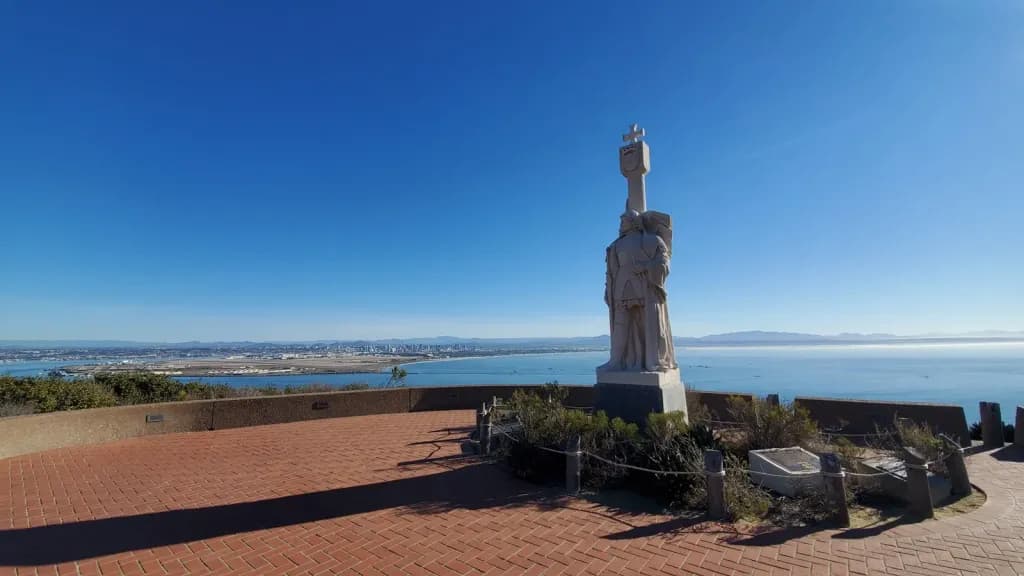
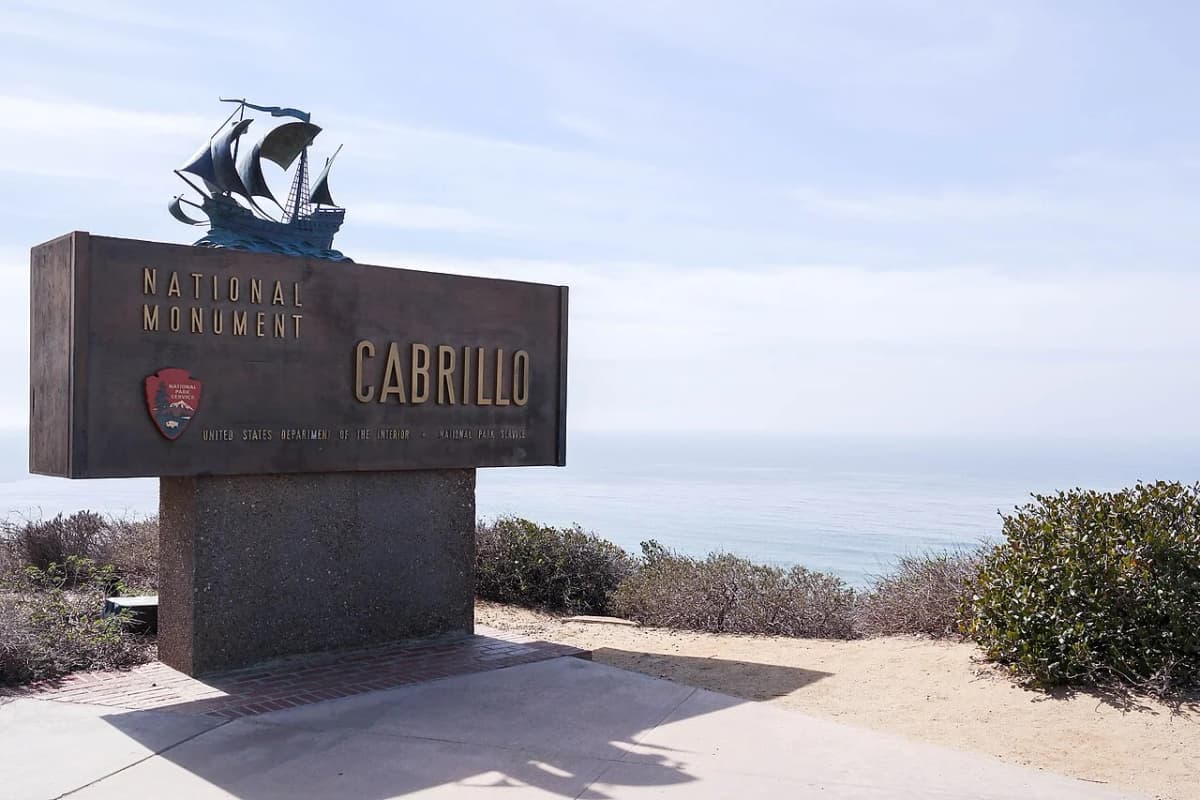
Cabrillo National Monument
Complete Visitor Guide — Tide Pools, Lighthouse, Whale Watching & History
| Address | 1800 Cabrillo Memorial Drive, San Diego, CA 92106 |
| Hours | Daily 9 AM–5 PM · Tide pool area & lower lot close 4:30 PM |
| Entry Fee | $20/vehicle (7-day) · $10 walk-in/bike · America the Beautiful passes accepted |
| Military | FREE with CAC or DD Form 1173 |
| 4th Graders | FREE year-round via Every Kid Outdoors program |
| Phone | (619) 523-4285 |
| Transit | MTS Route 84 from Old Town Transit Center |
| Last Updated | May 2026 |
Why Cabrillo National Monument Stands Apart
Perched 422 feet above sea level at the very tip of the Point Loma Peninsula, Cabrillo National Monument delivers an experience that is genuinely rare in any American city: a federally protected park where you can walk in the footsteps of the first European to reach the US West Coast, explore a lighthouse that guided ships into San Diego Bay in 1855, watch gray whales migrate from the world's first public whale-watching station, and discover marine life in some of the finest accessible tide pools on the Pacific coast — all within 20 minutes of downtown San Diego.
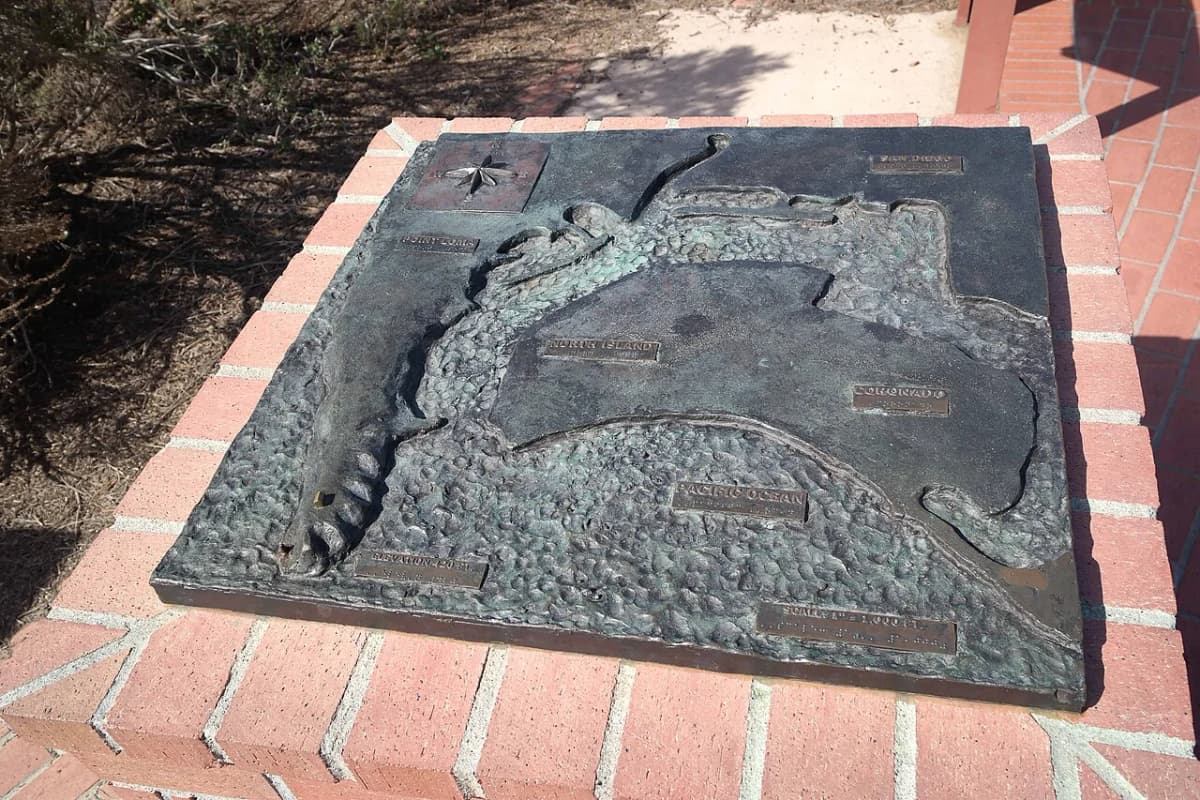
The monument covers approximately 160 acres on a peninsula that juts into the Pacific at the mouth of San Diego Bay. From its highest points, the views encompass downtown San Diego, San Diego Bay, Coronado Island, the Pacific Ocean stretching to the horizon, the Tijuana coastline, Mexico's Coronado Islands, and — on clear winter days — snow-dusted peaks of the Laguna and Cuyamaca mountains to the east. Few urban parks in the United States can match this combination of history, natural beauty, and panoramic scope.
With roughly 845,000 visitors annually, Cabrillo is one of the most visited units in the entire National Park System — and consistently one of the most underrated by first-time San Diego visitors who prioritize the beaches and the Zoo. Anyone spending more than two days in San Diego should make the drive to Point Loma.
Hours, Entry Fees & Passes
Cabrillo National Monument is operated by the National Park Service. No advance ticket purchase is required — pay at the entrance gate on arrival. The fee covers all occupants of the vehicle for seven days.
| Admission Type | Price | Notes |
|---|---|---|
| Vehicle (up to all occupants) | $20 | 7-day pass — covers return visits within 7 days |
| Walk-in / Bicycle | $10 per person | 7-day pass; individual, not per vehicle |
| Motorcycle | $15 | 7-day pass |
| Active Military with CAC | FREE | CAC card or DD Form 1173 required |
| Military Dependents (DD Form 1173) | FREE | Covers accompanying dependents |
| 4th-Grade Students | FREE | Every Kid Outdoors program; valid voucher required |
| America the Beautiful Annual Pass | FREE | $80/year; covers all National Parks — best value for frequent visitors |
| America the Beautiful Senior Pass (62+) | FREE admission | $20 lifetime pass; outstanding value for seniors |
| America the Beautiful Access Pass | FREE | For permanent disability; free at any NPS fee station |
| America the Beautiful Military Pass | FREE | For current active duty military and dependents |
America the Beautiful Pass — Best Value
If you plan to visit any other National Parks within the year — Zion, Grand Canyon, Joshua Tree, or any of the 400+ NPS sites — the America the Beautiful Annual Pass pays for itself with just two park visits at $20 each. Purchase at the Cabrillo entrance gate or online at nps.gov before you go.
- ✓Annual Pass: $80 — covers all NPS sites for 12 months for all vehicle occupants
- ✓Senior Pass (62+): $20 lifetime — the single best deal in American recreation
- ✓Access Pass: Free for permanent disabilities — inquire at the gate
- ✓Military Pass: Free for active duty; also covers certain federal recreation sites
Hours at a Glance
How to Get There & Parking
Driving Directions from Downtown
~10 miles · 15–20 minutes
- Head south on Harbor Drive from downtown
- Turn right on Rosecrans Street (west)
- Turn left on Canon Street
- Continue onto Catalina Boulevard / Cabrillo Memorial Drive
- Follow signs to the park entrance gate at the tip of Point Loma
GPS address: 1800 Cabrillo Memorial Drive, San Diego, CA 92106
Transit & Parking Tips
The most practical option. From I-8 west, merge onto Sports Arena Blvd, then Nimitz Blvd, Chatsworth Blvd, and Cabrillo Memorial Drive. From I-5, exit via Rosecrans St heading west. The drive along Point Loma is scenic — residential streets give way to Fort Rosecrans National Cemetery and then the park entrance.
MTS Route 84 connects Old Town Transit Center to Cabrillo National Monument. The Old Town Transit Center is served by the Trolley (Blue and Green lines) and multiple bus routes, making it accessible from most of San Diego without a car. Check sdmts.com for current frequency — service is limited.
While no ferry goes directly to Point Loma, the Coronado Ferry offers a scenic approach to the general area. Combine a ferry crossing with a rideshare from Coronado Ferry Landing for a memorable scenic arrival. About 20–25 minutes total from downtown via this route.
Experienced cyclists can ride the 10-mile route from downtown San Diego along Harbor Drive and up through Point Loma. Walk-in/bicycle entry is $10. Note that Cabrillo Memorial Drive is a steep uphill climb for the final portion — plan your energy accordingly for the return descent.
Old Point Loma Lighthouse — History & Inside Tour
The Old Point Loma Lighthouse is one of the oldest lighthouses on the US West Coast, completed in 1855 and operational until 1891. It stands 422 feet above sea level — which was precisely the problem. At that elevation, coastal fog regularly swallowed the lighthouse completely, making the light invisible to ships at sea. After 36 years of service, the lighthouse was decommissioned and replaced by a lower lighthouse (the New Point Loma Lighthouse, still operational today) positioned at the waterline where it could cut through the fog rather than sit above it.
Today, the original lighthouse is open to visitors as part of Cabrillo National Monument. The keeper's quarters have been carefully restored and furnished to reflect life in the 1880s — the period when a lighthouse keeper and family would have lived in this remote outpost at the tip of Point Loma, watching over one of the West Coast's most important harbor entrances.
Lighthouse Fast Facts
What to Expect Inside the Lighthouse
- →The original 3rd-order Fresnel lens is displayed inside — a masterpiece of 19th-century optical engineering with hundreds of hand-ground glass prisms that amplified a single oil lamp into a beam visible for miles at sea.
- →The keeper's quarters are furnished as a living museum: period kitchen, bedroom, parlor, and everyday objects of an 1880s lighthouse family's life on the isolated Point Loma tip.
- →The lighthouse itself is a compact two-story structure attached directly to the keeper's dwelling — you walk through the living quarters to reach the tower base.
- →Rangers and interpretive signage explain the transition from the original lighthouse to the current New Point Loma Lighthouse, and why the fog problem was so costly to shipping.
- →Photography is allowed throughout — the Fresnel lens makes for exceptional close-up photographs.
Tide Pools at Point Loma
The rocky shoreline at the base of Point Loma hosts some of the most accessible and biologically rich tide pools in Southern California. Unlike many California tide pool areas that have been picked over by decades of unregulated visitors, Cabrillo's pools are protected within the monument boundary and managed by the National Park Service — which means the wildlife populations here are genuinely healthy and diverse.
Best Timing for Tide Pools
October through March is the optimal season. Tidal patterns during these months produce the lowest low tides during park open hours, exposing the most rocky reef habitat.
Target a tide of 0.7 feet or lower. At this level, the lower tidal zone — home to the most diverse species including sea stars, anemones, and nudibranches — becomes accessible without getting wet.
Arrive 2 hours before low tide. Arriving as the tide ebbs maximizes your time in the lowest accessible zones before the water returns. Use a tide app (Tides Near Me or the NOAA Tides app) to time your visit precisely.
Spring and summer caution: Tidal patterns during these months often mean the lowest tides occur at night or early morning — before the park opens. During park hours in summer, the pools are frequently submerged or only partially accessible. Check tide tables before making the trip specifically for tide pools.
What You'll Find in the Pools
Tide Pool Rules — Follow These to Protect the Ecosystem
- →Look, don't touch (and never collect). Taking any animal, plant, rock, or shell is a federal offense in a National Park. Even dead shells provide habitat for hermit crabs.
- →Watch your step. Stay on bare rock and avoid stepping on any organisms, especially barnacles and anemones which look like rocks when closed.
- →Never turn over rocks without replacing them gently — animals on the underside die quickly when exposed to sun and air.
- →Wear non-slip shoes. Algae-covered rocks are extremely slippery. Water shoes or hiking sandals with grip are essential.
Whale Watching at Cabrillo — The World's First Public Station
The Cabrillo Whale Overlook — Est. 1950
The Cabrillo Whale Overlook, established in 1950, is recognized as the world's first public whale-watching station. Long before whale watching became an industry of commercial boat tours, Cabrillo National Monument created a designated overlook where members of the public could watch Pacific gray whale migrations from land. Today it remains one of the best free land-based whale watching vantage points in the United States.
Whale Watching Season & Tips
Season: December through mid-March. Gray whales migrate south from Arctic feeding grounds to Baja California lagoons (to calve), then return north. The southbound migration peaks in December–January; the northbound return in February–March.
Peak timing: Mid-January typically brings the highest density of migrating whales within viewing range of Point Loma.
What you'll see: Gray whales travel relatively close to shore — often within one to three miles of Point Loma. Look for spouts (blows), flukes as they dive, and the dark gray mass of a surfacing whale. Groups of two or three are common.
Best viewing spots: The Cabrillo Whale Overlook and the area adjacent to the Old Point Loma Lighthouse both offer expansive westward views of the Pacific migration corridor.
Practical Whale Watching Advice
- Bring binoculars10x42 binoculars significantly improve spotting success from the overlook. Spotting scopes are even better if you have one.
- Best hoursMid-morning hours (10am–1pm) when sea conditions are typically calmest and light is best for spotting spouts.
- What to look for firstSpouts — the misty blow from a whale exhaling at the surface is visible from a much greater distance than the whale's body. Scan the horizon for puffs of mist.
- Cold and windyPoint Loma is exposed and can be significantly colder than downtown. Dress in layers even on sunny January days.
- Park ranger talksDuring peak whale season, NPS rangers offer interpretive talks at the overlook — check the NPS website for current schedules.
For a closer encounter, combine your Cabrillo visit with a San Diego whale watching boat tour — departing from Point Loma Sportfishing and Flagship Cruises on the Embarcadero, these tours get you among the whales rather than watching from a distance.
Hiking Trails at Cabrillo National Monument
Bayside Trail
The Bayside Trail descends from the upper monument area through coastal sage scrub habitat on the eastern (bay) side of Point Loma, offering continuously expanding views of San Diego Bay, downtown San Diego, Coronado Island, and Naval Air Station North Island as you descend. The trail is paved initially then transitions to a packed dirt path through native chaparral. Watch for ravens, hawks, and Anna's hummingbirds year-round. The trail terminates at a lower viewpoint before climbing back to the trailhead. It is the most popular hiking option in the park.
Coastal Trail
The Coastal Trail connects the upper monument area to the tide pool zone on the rocky Pacific-facing shoreline below. This is the only trail at Cabrillo National Monument where leashed dogs are permitted — a 6-foot leash and collar are required. The trail provides access to the tide pool parking area and the rocky shoreline for those who prefer hiking down rather than driving to the lower lot. Note that the lower lot and tide pool area close at 4:30 PM.
Panoramic Views — What You'll See from 400 Feet
The views from Cabrillo National Monument are among the most comprehensive urban panoramas in the American West. At 422 feet above sea level on a peninsula projecting into the Pacific, you have unobstructed sight lines in nearly every direction. Here is what you will see on a clear day:
North & Northeast — San Diego
- •Downtown San Diego skyline — recognizable individual skyscrapers including One America Plaza and the Marriott Marquis
- •San Diego International Airport and the flight paths of arriving aircraft
- •San Diego Bay in its entirety — one of the few spots where the full bay is visible
- •Old Town San Diego and Mission Hills neighborhoods
- •Mission Bay and the Pacific Beach coastline in the far distance
East — Coronado & Mountains
- •Coronado Island and the iconic Hotel del Coronado (red-roofed Victorian resort)
- •Naval Air Station North Island — where naval carrier aviation began in 1917
- •The Coronado Bridge arching across the bay
- •On clear winter days: snow-capped peaks of the Laguna Mountains (~6,500 ft) and Cuyamaca Peak
- •The Silver Strand State Beach connecting Coronado to Imperial Beach
West — Pacific Ocean
- •The open Pacific Ocean to the horizon — roughly 30–40 miles of unobstructed ocean view on a clear day
- •Gray whale spouts during migration season (December–March)
- •Commercial shipping lanes entering San Diego Bay
- •Navy vessels and submarines transiting the channel entrance
- •Point Loma kelp forests visible as dark patches offshore in the right light
South — Mexico & Islands
- •Tijuana coastline and the Tijuana River Estuary
- •Mexico's Coronado Islands (Islas Coronado) — four rocky islands 15 miles offshore in Mexican waters
- •The US–Mexico border fence where it meets the Pacific at Border Field State Park
- •On very clear days: the northern Baja California coastline stretching southward
- →Golden hour is exceptional: The hour after sunrise and before sunset bathe the downtown skyline and bay in warm light while the ocean glows behind you.
- →Winter mornings for mountains: Snow on eastern peaks is visible only in winter, and morning clarity is best before marine layer burns off.
- →Wide-angle lens recommended: The panorama spans nearly 360 degrees — a single wide frame can capture the bay, downtown, and ocean simultaneously.
- →Avoid midday haze: June Gloom (May–June) and afternoon haze can significantly reduce visibility. Late October through early March offers the clearest air.
WWII Military History & Free Bunker Tours
Long before it became a national monument open to the public, Point Loma was a critical military installation. During World War II, the entire peninsula was part of Fort Rosecrans — a major coastal artillery defense system tasked with protecting San Diego Bay (and the Pacific Fleet anchored within it) from enemy naval attack. Twenty-one of those military structures have been preserved within Cabrillo National Monument, making it an unexpected but significant WWII history site.
The Fort Rosecrans Coastal Defense System
Fort Rosecrans was part of the Harbor Defenses of San Diego, a system of coastal artillery batteries positioned to engage enemy warships attempting to enter San Diego Bay. The batteries were armed with large-caliber guns capable of firing shells several miles out to sea. Battery Ashburn — one of the batteries preserved within Cabrillo — was equipped with two 16-inch guns, among the largest coastal artillery pieces ever deployed in the United States.
The batteries were built into the hillsides of Point Loma to provide protection from counter-battery fire and aerial attack. Many structures were buried under earth berms that made them nearly invisible from aircraft. This camouflage is still visible today — you can walk along what appears to be a grassy hillside and realize the hill is actually a concrete bunker.
WWII Site Facts
Saturday Volunteer Bunker Tours
Every Saturday from 9 AM to 2:30 PM, volunteer guides lead free tours of the WWII military bunkers at Cabrillo National Monument. These tours are the only public access to the park's WWII fortifications — the bunkers are otherwise closed to unsupervised visitors.
- ✓Tours are free — included with park admission (entry fee still applies)
- ✓No advance reservation required — join a tour group at the meeting point in the park
- ✓Guides are typically military history enthusiasts with deep knowledge of the Fort Rosecrans defense system
- ✓Tours enter bunker interiors and walk along the original gun emplacements
- ✓Photography is allowed inside the bunkers
- ✓Tours last approximately 45–60 minutes
Juan Rodriguez Cabrillo — The Explorer's Story
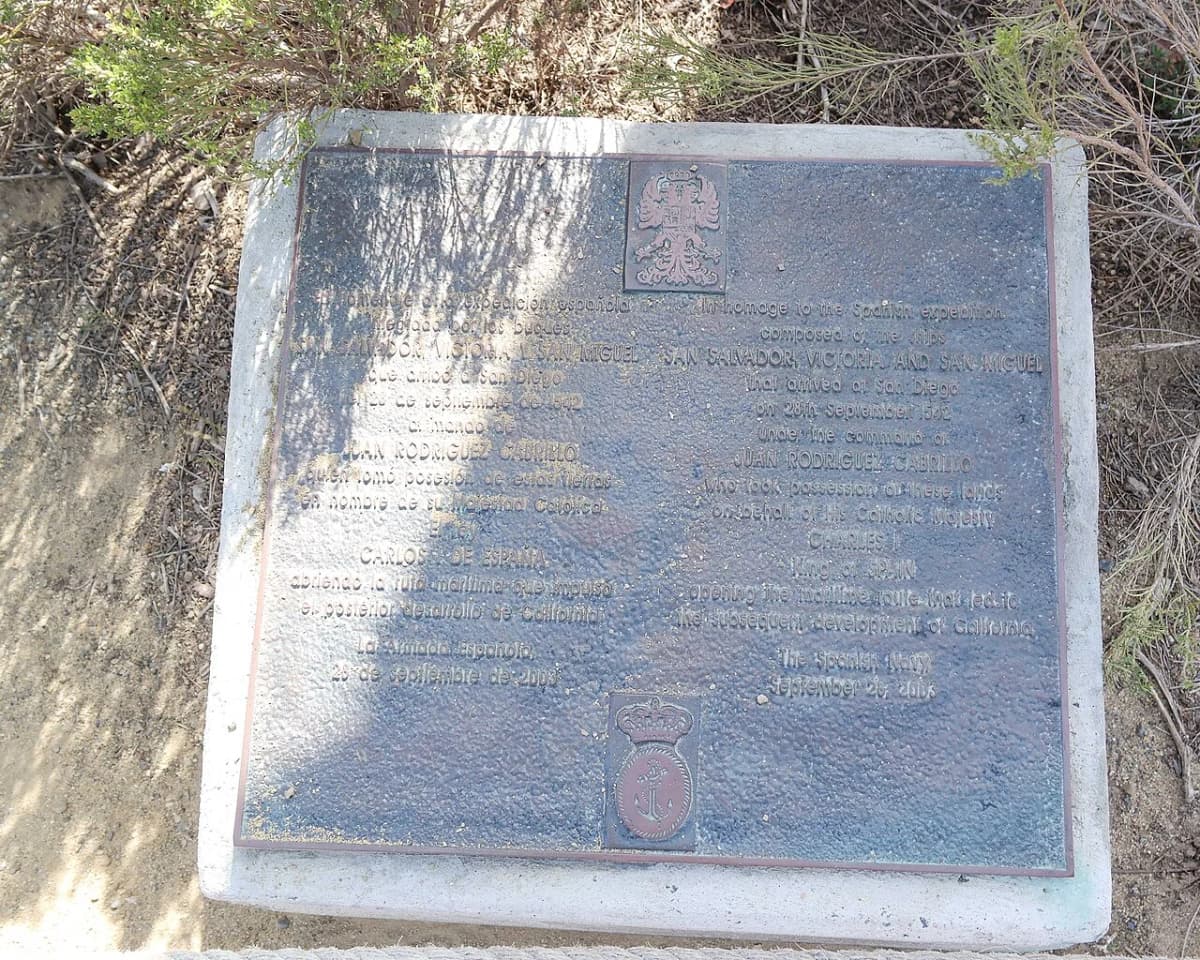
On September 28, 1542, three Spanish ships commanded by Juan Rodriguez Cabrillo sailed into a broad, sheltered harbor on the California coast. Cabrillo named it Puerto de San Miguel — the Port of Saint Michael. His crew became the first Europeans to set foot on the land that would eventually become the western United States. It was one of the most consequential landings in the history of the Americas.
Cabrillo himself was Portuguese — born João Rodrigues Cabrilho, likely in Portugal or possibly in Spain — but sailed under the flag of the Spanish crown as part of New Spain's relentless push to map and claim the Pacific Coast. His expedition of three vessels was charged with exploring northward from Mexico, finding the Pacific entrance to the (mythical) Northwest Passage, and claiming new territories.
After anchoring for six days in Puerto de San Miguel (modern San Diego Bay), Cabrillo continued north along the coast, encountering the Santa Barbara Channel Islands and possibly reaching as far as Oregon — accounts vary. His expedition produced the first substantial geographic record of the California coast. He encountered multiple indigenous groups along the way, including the Kumeyaay people who had lived in the San Diego region for thousands of years.
The Death of Cabrillo — An Unsolved Mystery
Juan Rodriguez Cabrillo never returned to Spain. In late 1542, during his expedition along the California coast, he fell — accounts say he slipped on rocky terrain, possibly on San Miguel Island (the northernmost of the Channel Islands chain). The fall broke either his arm or his leg. The wound became infected. Cabrillo died from the infection in January 1543.
His crew, commanded by his chief pilot Bartolomé Ferrelo, continued the expedition north after Cabrillo's death. Ferrelo may have reached the Oregon coast before weather forced the ships south and back to Mexico.
Cabrillo's burial site has never been found. He was buried somewhere on the Channel Islands — possibly San Miguel Island — but no grave, marker, or confirmed skeletal remains have ever been located. The precise location of the last resting place of the first European to reach the US West Coast remains one of California history's enduring mysteries.
The Cabrillo Statue
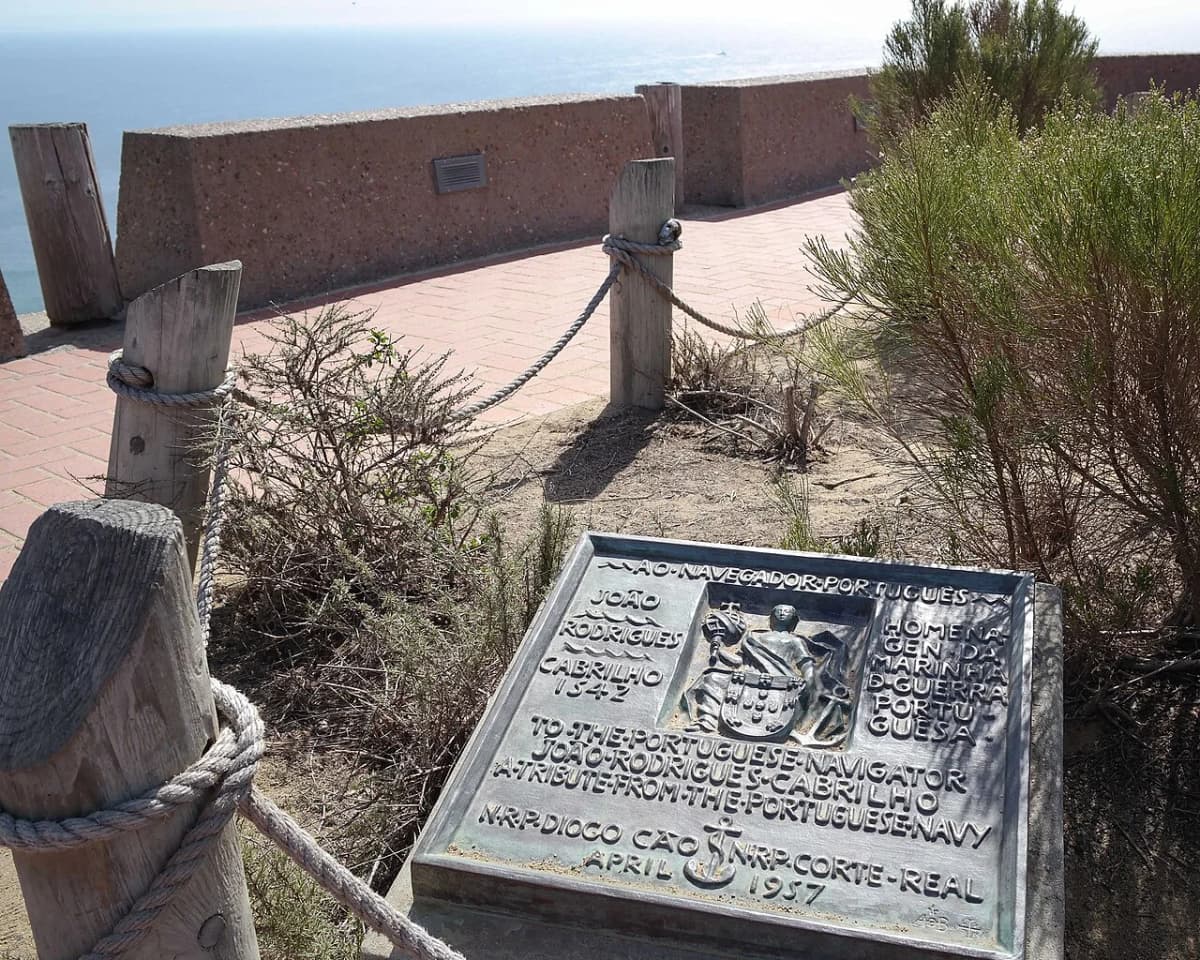
A large bronze statue of Juan Rodriguez Cabrillo stands prominently at the monument. The original statue (installed when the monument was established) was replaced with the current sculpture — created by Portuguese sculptor João Charters de Almeida and gifted by Portugal — which stands today as the visual centerpiece of the monument. Portugal's contribution acknowledges Cabrillo's likely Portuguese heritage, a detail that remained contested among historians for generations.
| Date | Event |
|---|---|
| Sept 28, 1542 | Juan Rodriguez Cabrillo's fleet enters San Diego Bay — first European contact with the US West Coast |
| Sept 28–Oct 3, 1542 | Cabrillo anchors at Puerto de San Miguel (San Diego Bay); crews explore ashore; contact with Kumeyaay people |
| October 1542 | Expedition continues north along California coast; charts Channel Islands and Santa Barbara |
| January 3, 1543 | Cabrillo dies from an infected wound on the Channel Islands; buried at unknown location |
| Feb–March 1543 | Chief pilot Ferrelo continues north — possibly to Oregon — before returning to Mexico |
| October 14, 1913 | President Woodrow Wilson establishes Cabrillo National Monument by proclamation |
| 1855 | Old Point Loma Lighthouse completed and first lit — one of the West Coast's oldest lighthouses |
| 1891 | Old Point Loma Lighthouse decommissioned; replaced by lower lighthouse at sea level |
| WWII (1941–1945) | Point Loma fortified as Fort Rosecrans coastal defense system; 21 military structures built |
| 1950 | Cabrillo Whale Overlook established — world's first public whale-watching station |
Visitor Center, Exhibits & Junior Ranger Program
Visitor Center
The visitor center is the recommended first stop for any visit to Cabrillo National Monument. Rangers on staff can advise on current tide pool conditions, whale sighting reports, trail conditions, and tour schedules. The center includes:
- →Exhibits on Juan Rodriguez Cabrillo and the 1542 expedition — historical context for the monument
- →Natural history displays covering Point Loma ecology: coastal sage scrub, marine intertidal zones, and Pacific gray whales
- →WWII coastal defense history exhibits with maps of the Fort Rosecrans battery system
- →A bookstore with NPS-approved publications, trail guides, and field identification books
- →Restrooms (accessible) and a shaded breezeway with vending machines
- →Current tide charts posted daily — essential for planning tide pool timing
Junior Ranger Program
The NPS Junior Ranger program at Cabrillo is one of the best activity options for children ages 5–13 visiting the monument. Kids pick up a free Junior Ranger booklet at the visitor center and complete age-appropriate activities throughout the park — nature observations, historical questions, drawings, and exploration tasks tied to the park's themes of marine ecology, history, and conservation.
- ✓Free booklet available at the visitor center
- ✓Activities tied to the tide pools, lighthouse, and Cabrillo history
- ✓Upon completion: children are sworn in as Junior Rangers by an NPS ranger and receive an official badge
- ✓Works across all ability levels — rangers tailor the ceremony to the child
- ✓Available at any time during visitor center hours
Practical Tips for Your Visit
There is no restaurant or café at Cabrillo National Monument. Vending machines in the breezeway provide snacks and drinks, but for a full day visit — especially if hiking and tide pooling — bring a packed lunch, snacks, and at least 2 liters of water per person. Picnicking is allowed in designated areas with tables.
At 400+ feet elevation on an exposed peninsula, Cabrillo is frequently windier and cooler than downtown San Diego. Even on a warm San Diego afternoon, bring a light jacket or sweatshirt. In January during whale watching season, a warm coat is essential — it can be genuinely cold and blustery at the overlook.
If tide pools are a priority for your visit, check tide tables before leaving your hotel. The best tide pooling requires a low tide of 0.7 feet or lower, and those conditions don't always align with park hours — especially in spring and summer. Apps: Tides Near Me (iOS/Android) or NOAA Tides website.
Cabrillo's small main parking lot can fill on busy weekends and during January whale watching season. Arrive before 10 AM on weekends to secure parking. Weekdays are consistently less crowded — if you have flexibility, a Tuesday or Wednesday morning visit will be quieter and more peaceful.
Sunrise from Cabrillo looks east over downtown San Diego — the city lights transition to warm morning gold light with the bay reflecting below. Sunset looks west over the Pacific with silhouetted cliffs. Both are exceptional. The lighthouse and the statue photograph beautifully in the hour before sunset with warm sidelight.
The visitor center, lighthouse, restrooms, and overlook areas are wheelchair accessible with paved paths. The tide pool area has a paved pathway to the main viewing level but the rocky intertidal zones themselves are not accessible. The Bayside Trail is unpaved and not recommended for wheelchairs on the lower sections.
Non-slip water shoes (algae-covered rocks are extremely slippery), reef-safe sunscreen (required in the reserve area by California law), and a small waterproof bag for your phone. A tide pool field guide (available at the visitor center bookstore) is highly recommended for identifying species.
Sunset Cliffs Natural Park is only 1.5 miles from Cabrillo National Monument — the closest major attraction on the same Point Loma peninsula. The combination of Cabrillo (morning) and Sunset Cliffs (late afternoon/sunset) makes an exceptional full-day Point Loma itinerary requiring only one drive to the peninsula.
Nearby Attractions
Dramatic sea cliffs on the Pacific, tide pools, and one of San Diego's finest sunset viewpoints. Same peninsula — perfectly paired with Cabrillo in a single day.
Former Naval Training Center turned arts, dining, and retail complex. Excellent restaurants, the NTC Arts District, and a farmers market.
San Diego's most famous fish market and casual restaurant. Legendary fish tacos and clam chowder — a local institution since 1963, perfect post-Cabrillo lunch.
Hotel del Coronado, Coronado Beach (rated among America's best), and village dining. Visible from the monument — an easy extension of your Point Loma day.
Coronado Beach — visible from Cabrillo's overlook — is consistently rated among America's finest. See the full guide for beaches across San Diego County.
Where Cabrillo fits into a multi-day San Diego trip. Typically paired with Balboa Park, the Gaslamp Quarter, or a harbor cruise on day two or three.
Cabrillo National Monument FAQ
How much does it cost to enter Cabrillo National Monument?+
What are the hours for Cabrillo National Monument?+
Is Cabrillo National Monument free with the America the Beautiful Pass?+
When is the best time to see tide pools at Cabrillo?+
When is whale watching season at Cabrillo National Monument?+
What trails are at Cabrillo National Monument?+
Are dogs allowed at Cabrillo National Monument?+
Can you go inside the Old Point Loma Lighthouse?+
What views can you see from Cabrillo National Monument?+
Is there parking at Cabrillo National Monument?+
Is there food at Cabrillo National Monument?+
What WWII history is at Cabrillo National Monument?+
Who was Juan Rodriguez Cabrillo?+
How far is Cabrillo National Monument from downtown San Diego?+
Related San Diego Guides
Ready to Visit Cabrillo National Monument?
No advance tickets required — pay $20 per vehicle at the gate. Active military enter free with CAC. Bring water, a jacket for Point Loma's wind, and check tide tables if tide pools are your priority. Arrive early on weekends to secure parking.