Anza-Borrego Desert State Park
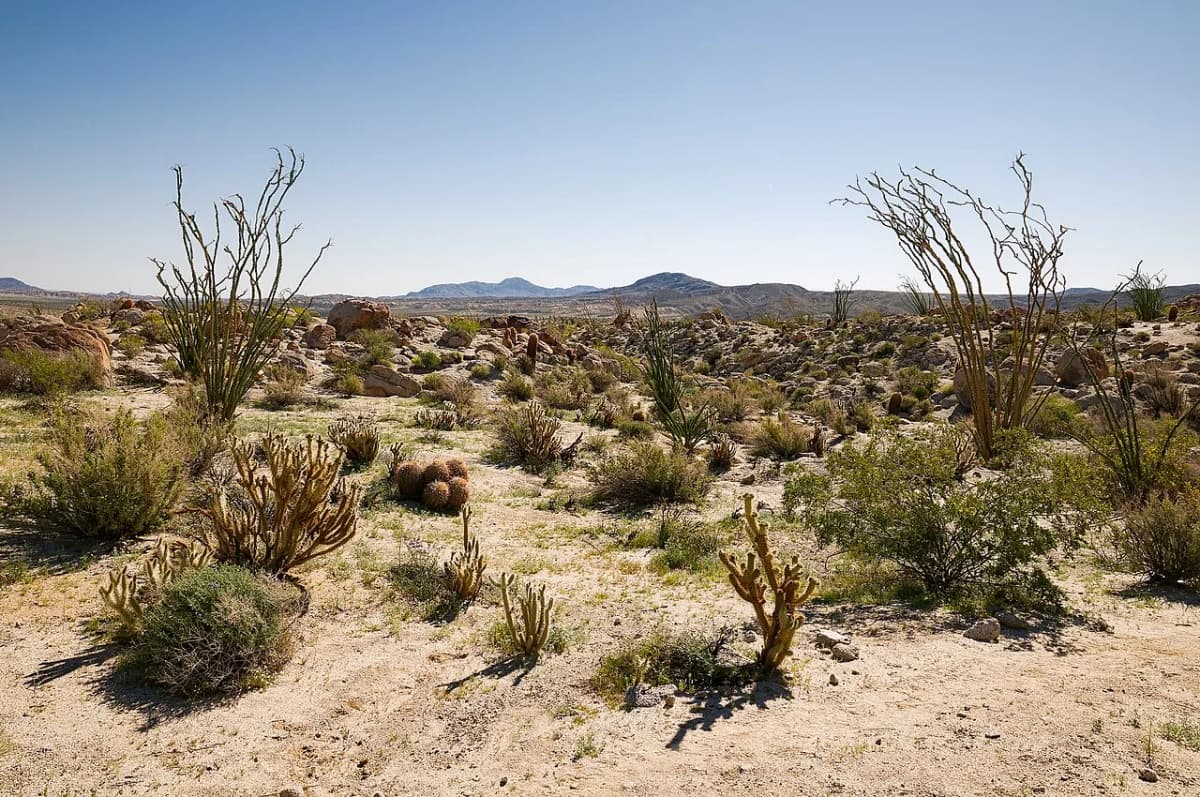
California's largest state park sits just 2 hours from San Diego — 650,000 acres of slot canyons, wildflowers that stop traffic, 130 metal dinosaurs, and some of the darkest skies in Southern California.
| Address | 200 Palm Canyon Drive, Borrego Springs, CA 92004 |
| Visitor Center Phone | (760) 767-4205 |
| Wildflower Hotline | (760) 767-4684 |
| Entry Fee | FREE for most of park; $10/vehicle at Visitor Center lot & key trailheads |
| Visitor Center Hours (Oct–May) | Daily 9:00 AM – 5:00 PM |
| Visitor Center Hours (Jun–Sep) | Saturday, Sunday & holidays only 9:00 AM – 5:00 PM |
| Best Time to Visit | October–April; February–March for wildflowers |
| Avoid | May–September (regularly 100–115°F+) |
| Cell Service | Extremely limited / nonexistent throughout most of park |
| Nearest Town | Borrego Springs (inside park boundaries) |
| Camping | Free dispersed; Borrego Palm Canyon $35–$45/night; reserve at ReserveCalifornia.com |
What Makes Anza-Borrego Worth the Drive
Anza-Borrego Desert State Park is California's largest state park — a 650,000-acre desert wilderness that most San Diegans have never visited, despite it being less than 2 hours from downtown. That oversight is genuinely puzzling once you have been there. The park combines things you cannot find anywhere else in the region: a slot canyon with 40-foot siltstone walls, a natural palm oasis reachable on a family-friendly trail, a badlands overlook that makes you feel like you are on another planet, and desert wildflower blooms so dense they make national news.
Then there are the metal sculptures — more than 130 life-size and larger-than-life steel animals scattered across Galleta Meadows along Borrego Springs Road. A 350-foot sea serpent undulates through the desert floor. Full-size dinosaurs stand in the open. A saber-tooth cat mid-leap. A mammoth herd. All free, always open, no sign-up required. They are the strangest and most delightful thing you will encounter on any desert road trip.
At night, the skies above Anza-Borrego are among the darkest in Southern California. Borrego Springs became the first International Dark Sky Community in California in 2009, and the park received International Dark Sky Park status in 2018. On a clear new moon night, the Milky Way is visible to the naked eye from the campground — something impossible from virtually anywhere in San Diego County.
The catch — and it is a real one — is summer. From May through September, daytime temperatures regularly reach 100–115°F, and the park becomes genuinely dangerous for hiking. This is strictly an October-through-April destination for most visitors. But during those cooler months, especially during wildflower season, it ranks among the best outdoor experiences in all of California. See our best time to visit San Diego guide for seasonal context across the region.
2026 Anza-Borrego Wildflower Super Bloom
Following above-average winter storms, NBC San Diego and NBC LA both confirmed a moderate-to-strong super bloom for Anza-Borrego in spring 2026. This is one of the most-anticipated desert wildflower events in years — the kind of bloom that draws visitors from across the country and fills every hotel room within 60 miles of Borrego Springs.
What's Blooming in 2026
- ●Desert sunflower — carpets of vivid yellow across open flats
- ●Sand verbena — dense pink-purple clusters in sandy washes
- ●Dune evening primrose — white blooms that open at dusk
- ●Brown-eyed primrose — delicate white flowers with dark centers
- ●Desert lily — tall stalks with white trumpet flowers, rare in most years
Best Viewing Spots
- ✓Henderson Canyon Road — Consistently the #1 spot — between Borrego Valley Rd and S-2
- ✓Borrego Palm Canyon — Along the trail and wash — excellent variety
- ✓Coyote Canyon — Open Oct–May only; 4WD required beyond first crossing
- ✓Arroyo Salado — Remote and less crowded; accessible via Henderson Canyon Rd area
Before You Go — Super Bloom Logistics
Check conditions first
Call the wildflower hotline at (760) 767-4684 — updated regularly during bloom season. Do not drive 2 hours without confirming conditions.
Arrive near sunrise
Henderson Canyon Road can back up for miles by 9 AM during peak bloom weekends. Plan to be at the viewing area by 7–7:30 AM for the best light and manageable crowds.
Go on a weekday
Bloom weekends during a superbloom year bring traffic jams and parking chaos unlike anything seen in normal years. A Tuesday or Wednesday visit is a completely different experience.
Getting to Anza-Borrego from San Diego
Two routes, two very different experiences. Both deliver you to Borrego Springs in roughly the same time under normal conditions.
Route 1: Via Julian (Hwy 78 East + S-3)
Take I-8 East to El Cajon, then Highway 78 East through Lakeside and Ramona into the mountain town of Julian (4,200 ft elevation). Stop for apple pie if timing allows. Continue east on Hwy 78, then turn south on Highway S-3 (Yaqui Pass Road) down the dramatic descent into Borrego Springs.
The Yaqui Pass descent offers sweeping desert panoramic views — one of the best scenic drives in Southern California. Worth the extra few minutes over the southern route.
Route 2: Via Ocotillo (I-8 East + S-2)
Take I-8 East to the Ocotillo exit, then drive north on Highway S-2 through the desert flatlands, connecting east on Highway 78 into Borrego Springs. Fewer mountain curves, slightly easier driving in winter. Less dramatic scenery than the Julian route.
Good option for the return trip to vary the experience — or if Highway 78 through Julian has winter snow conditions.
Before You Leave San Diego — Critical Preparation
- ⚠Download offline maps now. Google Maps and Apple Maps both support offline area downloads. Cell service drops to zero within miles of entering the park — GPS navigation will not work without offline maps pre-loaded.
- ⚠Fill up gas before leaving civilization. The last reliable gas station options are in Ramona (Route 1) or Ocotillo (Route 2). Borrego Springs has gas but at significantly higher prices.
- ⚠Check weather for the entire watershed. Rain anywhere in the mountains draining into the desert can cause flash floods in slot canyons. Never enter The Slot if there is any chance of precipitation.
Entry Fees & Visitor Center Hours
Understanding what costs money and what does not — the fee structure is more nuanced than a single park entry fee.
Always FREE
- ✓Driving through the park on paved roads
- ✓Galleta Meadows metal sculptures (130+) — always open
- ✓Roadside wildflower viewing and pull-outs
- ✓Dispersed / primitive camping throughout backcountry
- ✓Most hiking trailheads accessible from roadside
- ✓Fonts Point (the drive itself — 4WD required)
- ✓Wildlife viewing and photography
$10 Day-Use Fee Applies
- $Visitor Center parking lot (200 Palm Canyon Drive)
- $The Slot canyon trailhead parking area
- $Palm Canyon Trail (Borrego Palm Canyon Campground area)
- $Some developed picnic areas with restroom facilities
California State Parks annual pass ($125) covers the day-use fee if you visit state parks regularly.
Visitor Center Hours by Season
| Season | Days Open | Hours |
|---|---|---|
| October through May | Daily (7 days/week) | 9:00 AM – 5:00 PM |
| June through September | Saturdays, Sundays & holidays only | 9:00 AM – 5:00 PM |
Phone: (760) 767-4205 | Wildflower hotline: (760) 767-4684
When to Visit: Weather & Crowds by Season
More than almost any other destination near San Diego, timing matters enormously at Anza-Borrego.
February – March
Peak Season (Wildflowers)The best and busiest time. Wildflower season peaks late February through mid-March. Desert sunflower, sand verbena, and desert lily can carpet the floor. Henderson Canyon Road becomes a parking lot on bloom weekends. Go on a weekday, arrive at sunrise. Book any lodging in Borrego Springs months in advance during confirmed bloom years.
October – January
Best for Hiking & SolitudeIdeal for hiking without heat stress. The Slot, Palm Canyon, and Wind Caves are all comfortable from first light until late afternoon. New moon nights in October through January offer the best stargazing conditions of the year. Coyote Canyon reopens October 1 after summer closure. Fewer visitors means parking is easy and trailheads are not crowded.
April – Early May
Good (Late Bloom & Warmth)Wildflowers begin fading but later-blooming species may still be visible. Temperatures are rising but still tolerable for early morning and late afternoon hikes. A good shoulder season window if you miss the February–March peak. Plan hikes before 10 AM to avoid the worst heat.
May – September
Avoid for Day HikingGenuinely dangerous conditions for day hiking. Multiple people require rescue or die in the desert each summer from heat exposure and dehydration. The Visitor Center reduces to weekend-only hours. If you must visit in summer, stay in an air-conditioned vehicle, visit only in the first and last hour of daylight, and carry multiple liters of water per person. The sculptures and roadside viewing are still accessible from a car.
Wildflower Guide: Where & When to See Them
Anza-Borrego produces the most famous wildflower displays in California — but knowing where to go makes the difference between a life-changing morning and a frustrating drive on a dirt road.
Henderson Canyon Road
#1 SpotThe single best wildflower viewing location in Anza-Borrego, especially for superbloom years. The dirt road runs between Borrego Valley Road and Highway S-2, creating a corridor where sand verbena, desert sunflower, and evening primrose bloom in thick, photogenic drifts. Arrive near sunrise — this road can have stop-and-go traffic by 8:30 AM during peak bloom. Standard 2WD is fine in dry conditions.
Tip: Park at the south end off S-2 and walk north — better light in the morning.
Borrego Palm Canyon Trail
Family-FriendlyThe park's most accessible trail also offers excellent wildflower viewing along the wash and canyon walls in season. The 3-mile round-trip leads to a natural palm oasis with bighorn sheep sightings — combine the wildflowers with the hike for a complete morning. The trail is paved parking lot to trailhead with a $10 day-use fee.
Tip: Look low along the wash edges — sand verbena and primrose concentrate in sandy stream beds.
Coyote Canyon
Remote & RewardingOne of the most botanically diverse areas in the park with wildflowers running from the mouth of the canyon deep into the backcountry. IMPORTANT: Coyote Canyon is closed June 1 through September 30 to protect bighorn sheep during watering season. 4WD required beyond the first water crossing. Check for storm washout closures before the drive — the canyon road floods.
Tip: Open October 1 — but the best wildflower timing is late February through mid-March.
Arroyo Salado
Less CrowdedA remote desert wash accessible from Henderson Canyon Road area with excellent wildflower displays but fewer visitors than the main Henderson Canyon corridor. Better option during peak bloom weekends when Henderson Canyon is overwhelmed. Requires some navigation — download an offline map with the specific turnoff marked before leaving San Diego.
Tip: Good backup when Henderson Canyon has traffic jams during superbloom weekends.
Wildflower Viewing Tips
Top Hikes at Anza-Borrego
Four hikes covering the full range of what the park offers — from a beginner slot canyon loop to a 4WD-only badlands overlook.
FLASH FLOOD SAFETY WARNING — The Slot Canyon
Flash floods in slot canyons can arrive as a wall of water with zero warning — even when skies above you are clear. Water from storms miles away in the mountains drains into the same narrow canyon with no escape route. Multiple deaths have occurred in slot canyons throughout the Southwest from exactly this scenario.
NEVER enter The Slot if: (1) rain is forecast anywhere in the regional watershed, (2) dark clouds are visible in any direction, or (3) a flash flood watch or warning is in effect for any part of San Diego or Imperial County. Check weather for the entire region, not just Borrego Springs.
The Slot
Easy2.3 miles loop · Beginner-friendly · $10 fee
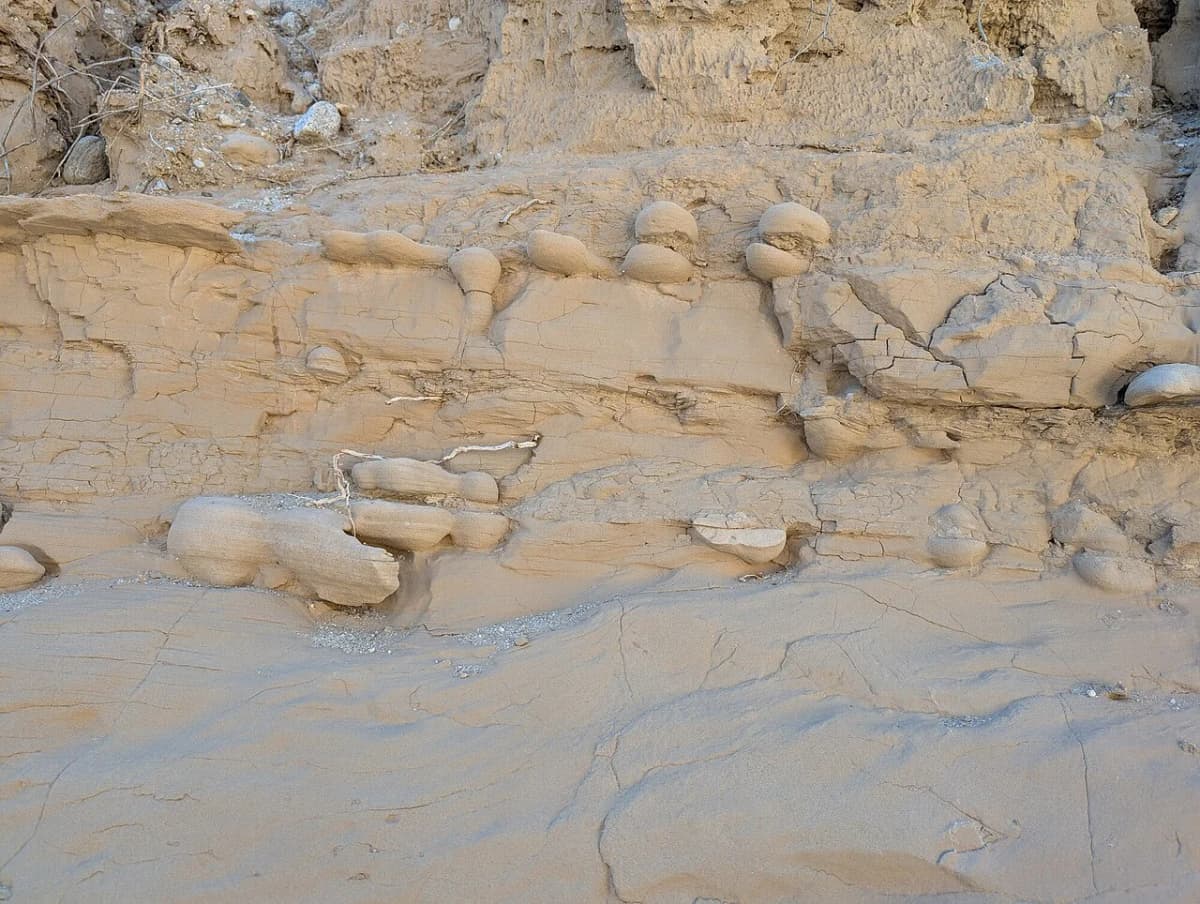
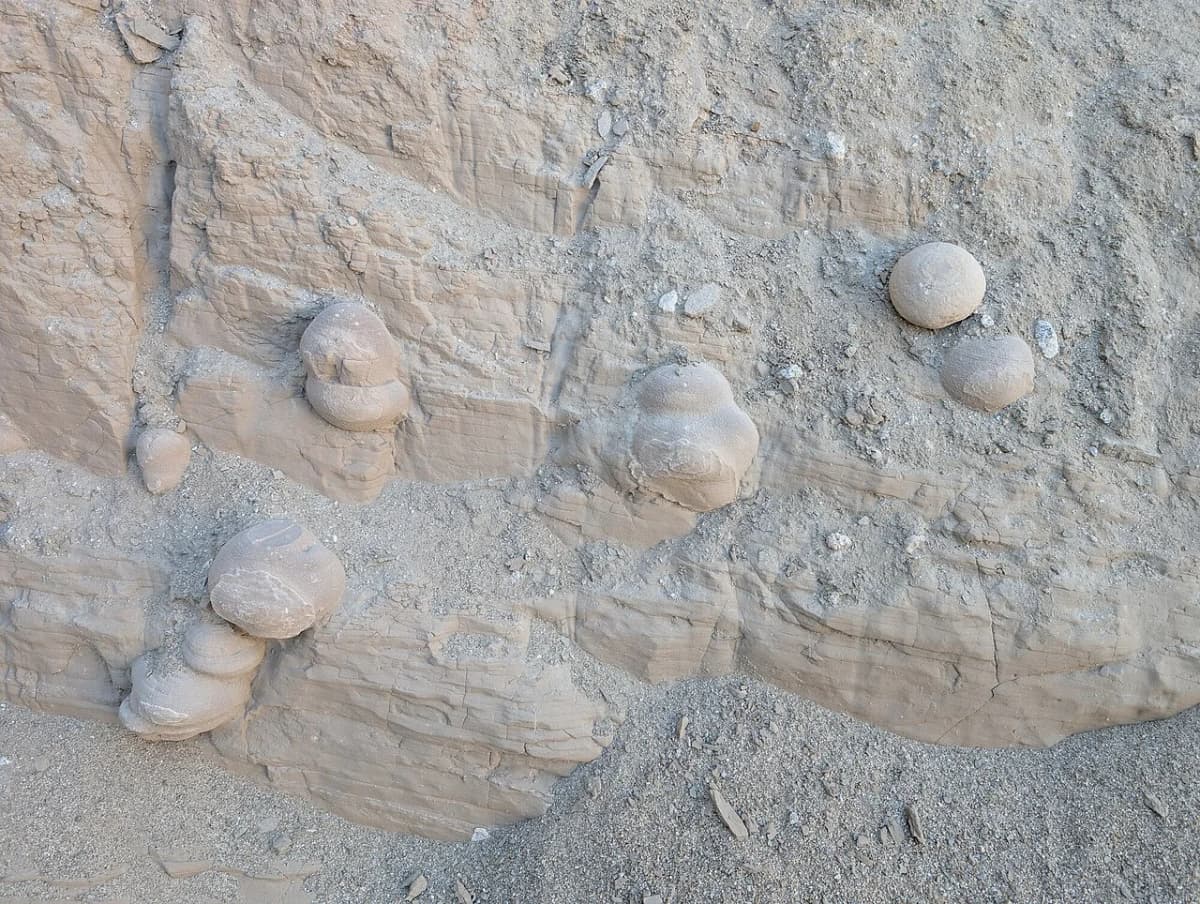
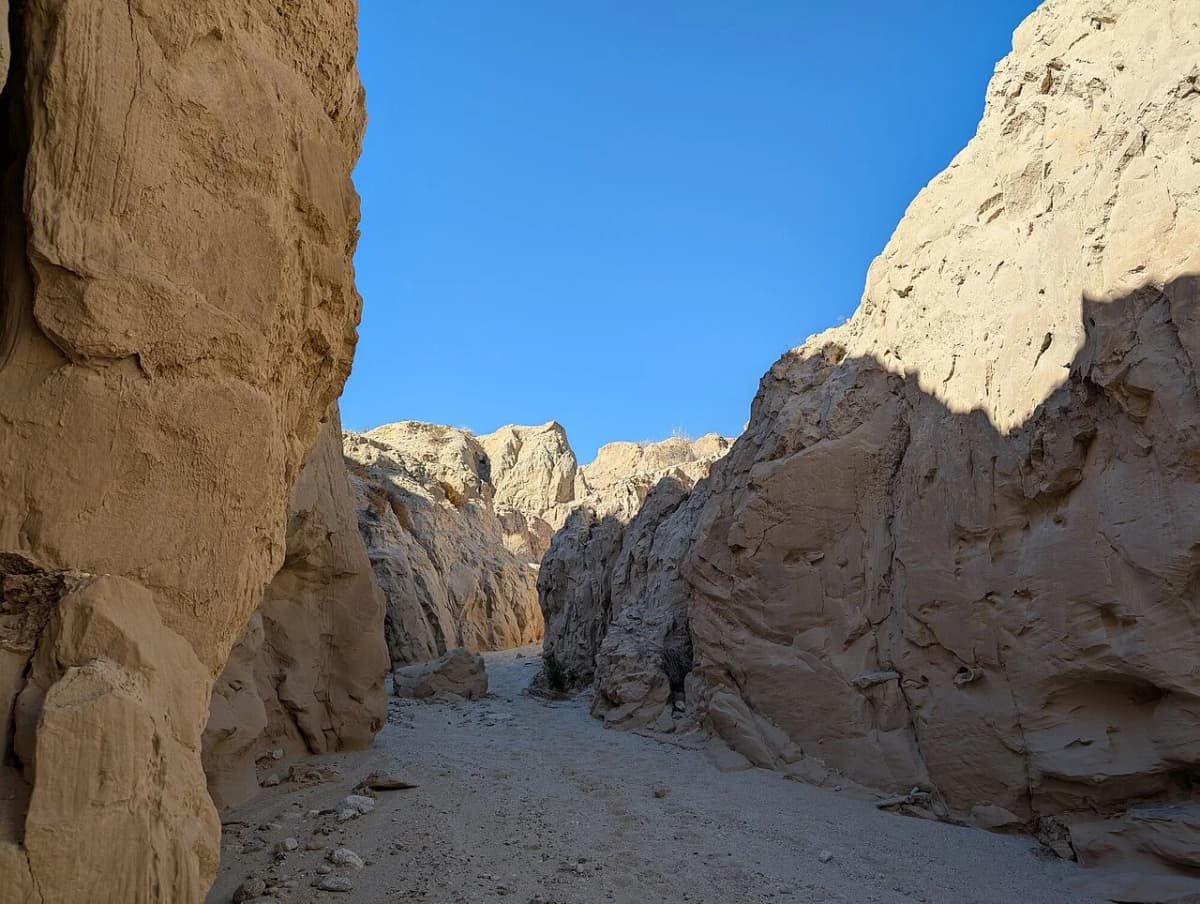
The single most visually dramatic short hike in Anza-Borrego — and one of the most photogenic slot canyons in Southern California. The trail winds through a siltstone canyon with walls rising up to 40 feet high and passageways narrow enough that you can touch both sides simultaneously. The loop is well-marked, requires no technical skills, and is appropriate for most fitness levels and older children. Geological note: the canyon walls are sculpted siltstone, not granite — softer and more intricately textured than rock slot canyons.
Palm Canyon Trail
Easy3 miles round-trip · 1.5–2 hrs · Family-friendly
The park's most popular trail and the best introduction to Anza-Borrego for first-time visitors. The trail follows Borrego Palm Canyon wash to a natural palm oasis — a genuine surprise in the middle of the desert. California fan palms cluster around a reliable spring, creating a microhabitat that supports wildlife including bighorn sheep. Sightings of Peninsular bighorn sheep (an endangered subspecies) are common here — watch the canyon walls and ridge lines, especially in the morning. $10 day-use fee applies at the Borrego Palm Canyon Campground trailhead.
Tip: Arrive at the trailhead by 7:30 AM for the best bighorn sheep sighting chances and the most pleasant temperatures.
Wind Caves
Easy–Moderate1.25 miles round-trip · Short & accessible
A short trail leading to a series of naturally wind-eroded sandstone caves in the Carrizo Badlands. The formations are genuinely interesting — smooth-walled hollows large enough to sit inside, shaped by thousands of years of wind and sand abrasion. The area has an otherworldly quality distinct from the rest of the park. High clearance is recommended for the dirt road approach but a careful 2WD driver can usually manage in dry conditions. Check conditions after rain.
Tip: Combine with a Fonts Point drive on the same trip — both are in the southern section of the park.
Coyote Canyon
Moderate–DifficultVariable — up to 12+ miles one-way · 4WD required beyond first crossing
The most botanically diverse and ecologically rich canyon in the park, running from the desert floor up into the Santa Rosa Mountains. Coyote Canyon contains year-round water — rare in Anza-Borrego — which supports extraordinary plant variety and wildlife. 4WD is required beyond the first water crossing. The canyon can close unexpectedly due to storm damage washing out the road. Closed June 1 through September 30 annually to protect bighorn sheep during their primary watering period.
The Metal Sculptures of Galleta Meadows
130+ rust-colored steel animals scattered across the desert — free, always open, genuinely unlike anything else you will see on a day trip from San Diego.
The Story Behind the Sculptures
In 2008, Borrego Springs landowner Dennis Avery commissioned sculptor Ricardo Breceda to create a series of large-scale metal animals for his property along Borrego Springs Road. What began as a few pieces grew into an extraordinary outdoor gallery. Breceda worked from historical and paleontological references to create anatomically detailed creatures — horses mid-gallop, a mammoth with curved tusks, predators in motion.
The sculptures are made from welded steel and intentionally left to rust — the oxidized patina blends with the desert color palette and will continue deepening for decades. Avery donated the land to the Anza-Borrego Foundation, ensuring the sculptures remain publicly accessible indefinitely.
Practical Information
Highlights of the Collection
350-Foot Sea Serpent
The most iconic piece — an enormous prehistoric sea creature undulating across the desert floor. Visible from Borrego Springs Road and genuinely breathtaking in scale.
Mammoth Herd
Multiple full-size woolly mammoths with curved tusks, frozen in motion. The paleontological accuracy makes them particularly striking.
Saber-Tooth Cat
A Smilodon mid-leap — one of the most dynamic poses in the collection, capturing the predatory speed of the extinct cat.
Wild Horse Herd
Multiple horses running in formation, manes and tails extended. The movement captured in static metal is technically impressive.
Full-Size Dinosaurs
Including a massive long-neck sauropod that towers over surrounding desert scrub — visible from hundreds of feet away on the road.
Desert Wildlife
Roadrunners, eagles, tortoises, and other animals native to the Anza-Borrego ecosystem, rendered in the same oxidized steel as the prehistoric megafauna.
Pick up the free sculpture map at the Desert Nature Center at 652 Palm Canyon Drive in Borrego Springs. The map shows all 130+ sculpture locations with GPS coordinates — without it, you will only find a fraction of the collection while driving.
Fonts Point & the Borrego Badlands
The best view in the entire park — and possibly the most underrated desert panorama in Southern California.
Fonts Point is a badlands overlook on the south side of the Borrego Valley, reached via a 4-mile sandy road that branches off the S-22 (Borrego Salton Seaway). The view from the edge drops into a vast expanse of eroded badlands — layered sediment carved by millennia of flash flooding into pinnacles, ridges, and canyon systems that stretch to the horizon in saturated shades of ochre, cream, and burnt orange.
Sunrise and sunset are the two times to be here. At golden hour, the angled light catches the badlands ridgelines and creates a depth and color that photographs cannot fully capture. At sunrise, the first light hits the eastern faces of the formations before anything else in the park — arriving 30 minutes before dawn means watching the landscape emerge from darkness as the sky turns orange.
Fonts Point — Essential Information
Planning a Sunrise at Fonts Point
If you are staying overnight in Borrego Springs, a Fonts Point sunrise is the single best experience the park offers. Leave your lodging 45 minutes before civil twilight (check a sunrise calculator for the date). Drive S-22 east, turn south on the Fonts Point wash road, and park at the overlook. Bring warm layers — desert nights drop to 35–50°F October through March. Set up before the sky shows any color and watch the badlands materialize out of darkness.
This experience requires an overnight stay and a 4WD vehicle. It is not achievable on a same-day round trip from San Diego.
International Dark Sky Park: Stargazing
Designated 2018Anza-Borrego is one of the best places in Southern California to see the Milky Way with the naked eye — and the infrastructure for stargazing is built into the park's mission.
Dark Sky Credentials
- 2009Borrego Springs designated first International Dark Sky Community in California by IDA
- 2018Anza-Borrego Desert State Park designated International Dark Sky Park (Silver tier)
- OngoingMonthly public stargazing programs hosted at the park — check park website for schedule
What You Can See
- ★Milky Way core visible to the naked eye on clear new moon nights
- ★Thousands of stars including the Andromeda Galaxy (naked eye)
- ★Jupiter, Saturn, and Venus visible in high detail with binoculars
- ★Meteors during Perseid (Aug) and Leonid (Nov) showers — particularly vivid
- ★No light dome from San Diego or the Coachella Valley from most of the park
Stargazing Planning Guide
Best months
October through April — cooler temperatures, less dust, more comfortable for extended night observation. Avoid summer (June–September) for daytime heat even if you only plan to be out at night.
Moon phase is everything
New moon nights (and 3 days either side) produce the darkest skies. A full moon washes out faint deep-sky objects. Plan around the lunar calendar — apps like Clear Outside or Star Walk show moon phase and transparency forecasts.
Best viewing locations
Borrego Palm Canyon Campground offers a designated stargazing area. Fonts Point (4WD) provides an unobstructed 360-degree horizon. Tamarisk Grove is another accessible option from the campground.
Gear recommendation
A red headlamp (not white — preserves night vision), a reclining camp chair, and a basic sky map app used in airplane mode. A 7x50 or 10x50 binocular dramatically expands what you can see without a telescope.
Stargazing at Anza-Borrego is not just a footnote to the day trip experience — for many visitors who stay overnight, it is the primary reason to come back. If you are planning an overnight, orient it around a new moon night between October and April for the best possible conditions.
Borrego Springs: Town, Food & Supplies
Borrego Springs is a small desert town of roughly 3,500 permanent residents located entirely within the park boundaries — the only community in a California state park. It has just enough infrastructure for a day trip or overnight stay.
Red Ocotillo
Farm-to-Table Cuisine
The most acclaimed restaurant in Borrego Springs — a farm-to-table spot focused on local and seasonal ingredients in a warm desert setting. The menu changes regularly. Best for dinner. Reservations recommended during bloom season.
Call ahead — seasonal hours
Carlee's Place
Comfort Food Since 1997
A Borrego Springs institution with nearly 30 years of loyal local clientele. Comfort food done well — burgers, sandwiches, solid breakfasts, cold drinks. The kind of place where the staff knows regulars by name. Open most days but call first.
Local institution since 1997
Carmelita's Mexican Grill
Family-Run Mexican
A family-run Mexican restaurant in the heart of Borrego Springs with straightforward, reliable traditional Mexican food. Good for lunch after a morning hike. Portions are generous and prices are fair by desert town standards.
Call ahead for seasonal hours
Supplies & Services in Borrego Springs
- •Center Market — full grocery store, the main supply point for the area
- •Gas stations — Borrego Springs has gas but at significantly higher prices than San Diego; fill up before leaving
- •Borrego Springs Resort & Spa — the main hotel with a pool and golf course
- •La Casa del Zorro Desert Resort — boutique resort option inside the park
- •Desert Nature Center (652 Palm Canyon Dr) — free sculpture map pickup point
- •ATM — limited availability; bring sufficient cash before arriving
Important Borrego Springs Reality Check
- ⚠This is a small town — most businesses keep limited hours and some are closed on weekdays
- ⚠Cell service is extremely limited throughout the town and essentially nonexistent in the park
- ⚠Many restaurants close or reduce hours in summer (May–September) when tourist traffic drops dramatically
- ⚠Always call restaurants ahead — especially if visiting outside peak season
- ⚠The town has no hospital — the nearest emergency room is in El Centro or Hemet, 45+ minutes away
- ⚠Lodging books out completely during confirmed superbloom weekends — reserve months in advance
Camping at Anza-Borrego Desert State Park
Anza-Borrego offers one of the most unique camping situations in California — vast areas of free backcountry camping right alongside developed campgrounds with full hookups.
Free Dispersed Camping
FREEMost of Anza-Borrego Desert State Park allows primitive/dispersed camping at no charge. You can park your vehicle off-road (on existing tracks, not on vegetation) and camp virtually anywhere within the park that is not a designated day-use area, campground, or posted closure. No permit required for most areas. Maximum 30-day cumulative stay per year.
- ✓Pack in everything — pack out everything
- ✓No fires during high-wind or fire danger days
- ✓No facilities — no water, no toilets, no trash service
- ✓Camp at least 200 feet from any water source
- ✓Download offline maps to find suitable camping areas before arriving
Developed Campgrounds
Borrego Palm Canyon Campground
Tamarisk Grove Campground
One-Day Itinerary: Perfect Day Trip from San Diego
A hour-by-hour schedule for first-time visitors that covers the park's major highlights in a single day without rushing.
Depart San Diego
DepartureLeave by 6:30 AM to arrive at Anza-Borrego before 9 AM — before the day heats up and before wildflower crowds build during bloom season. Take Highway 78 East through Julian for the scenic route. Stop in Julian for coffee if a bakery is open (Julian Pie Company opens early on weekends).
Arrive Borrego Springs — Stop at Visitor Center
ArrivalCheck in at the Visitor Center on Palm Canyon Drive (open daily 9 AM in season). Pick up a free sculpture map, confirm current conditions for The Slot or any active trail closures, and use the restroom facilities. This is also where you pay the $10 day-use fee if you are parking here.
Hike The Slot Canyon OR Palm Canyon Trail
Top PriorityChoose one for the morning: The Slot (2.3-mile loop through siltstone narrows, 1–1.5 hrs) or Palm Canyon Trail (3-mile round-trip to palm oasis with bighorn sheep, 1.5–2 hrs). Check weather conditions before entering The Slot. The Slot trailhead is about 8 miles south of Borrego Springs on Split Mountain Road.
Galleta Meadows Sculptures
Must-SeeDrive Borrego Springs Road to view the metal sculptures at Galleta Meadows. Use the free map from the Visitor Center to hit the main highlights: the 350-foot sea serpent, the mammoth herd, and the full-size dinosaurs. Allow 45–60 minutes to stop and photograph the major pieces. Completely free — park roadside and walk to each sculpture.
Lunch in Borrego Springs
LunchReturn to Borrego Springs for lunch. Carlee's Place is reliable and fast. Red Ocotillo is the better dining experience if you do not mind a slightly longer wait. Call ahead to confirm hours before leaving the sculptures — Borrego Springs restaurants keep seasonal hours.
Wildflower Viewing (Feb–Apr) OR Wind Caves / Badlands Drive
AfternoonIn wildflower season: drive Henderson Canyon Road for the best viewing. Arrive at the south end (off S-2) and walk north along the road. In non-bloom season: take S-22 east toward Fonts Point (4WD only for the final 4 miles) or explore the badlands via the Wind Caves trail (1.25 miles RT, high clearance recommended).
Head Back to San Diego
ReturnDepart Borrego Springs by 3:30–4:00 PM for a comfortable return before dark. The return via the same Julian route (Hwy S-3 to Hwy 78 west) takes 1 hr 45 min – 2 hrs. Alternatively, take the southern I-8 route for variety. You will be back in San Diego by 5:30–6:00 PM.
Overnight Add-On: Stargazing & Fonts Point Sunrise
If you extend to an overnight, add Fonts Point at sunrise (requires 4WD), stargazing from Borrego Palm Canyon Campground or a clear flat desert area, and optionally a second morning hike in the cooler air. Book lodging at Borrego Springs Resort, La Casa del Zorro, or camp at Borrego Palm Canyon Campground. Reserve months in advance for wildflower season weekends.
The Milky Way is best viewed 11 PM–2 AM on new moon nights in fall and winter. Set an alarm.
Practical Tips & What to Bring
Water — more than you think
Carry at least 1 gallon of water per person per day of hiking — and more in warm months or if hiking strenuous terrain. The desert air is extremely dry and dehydration can occur without feeling thirsty. There is no reliable water in most of the park.
Download offline maps before leaving San Diego
This is not optional. Cell service drops to zero within miles of Borrego Springs and is nonexistent throughout the backcountry. Google Maps and Apple Maps both support offline area downloads — do this at home with WiFi. Also mark the specific trailheads and sculpture locations you plan to visit.
Sun protection is critical
SPF 50+ sunscreen, a wide-brim hat, and UV-protective clothing are essential from March through October and still important in winter. Desert sun at elevation is significantly more intense than at the coast. Reapply sunscreen every 90 minutes.
Sturdy closed-toe shoes
The Slot and all backcountry trails require closed-toe shoes with ankle support. The canyon floor has loose rocks, the sandy washes can be uneven, and cacti are everywhere. Flip-flops or sandals are not appropriate for any trail in the park.
Layers for cool mornings and evenings
From October through March, mornings can be 35–50°F before the sun crests the canyon walls. The temperature swings 30–40°F between dawn and midday. Dress in layers you can remove as the day warms — do not arrive in shorts and a t-shirt at 7 AM in November.
Pay the $10 fee at the right locations
The $10 day-use fee only applies at the Visitor Center parking lot and a handful of developed trailheads. If you park roadside along Borrego Springs Road for the sculptures, or pull off for wildflower viewing, there is no fee. Bring cash or card — machines are at the self-pay stations.
Inform someone of your plans
If venturing into backcountry areas, tell someone your planned route and expected return time before leaving San Diego. With no cell service throughout most of the park, emergency rescue requests require either a satellite communicator, driving to a signal area, or waiting for a ranger to pass.
Never enter The Slot in questionable weather
This bears repeating: flash floods in slot canyons are not survivable once water enters the narrows. If there is ANY chance of rain anywhere in the regional watershed, skip The Slot and hike Palm Canyon or Wind Caves instead. The park will be there next time.
Anza-Borrego Desert State Park — Frequently Asked Questions
How far is Anza-Borrego Desert State Park from San Diego?+
Anza-Borrego is approximately 90 miles from downtown San Diego — about 1 hour 45 minutes to 2 hours by car. The most scenic route goes east on Highway 78 through Julian, then south on Highway S-3 into Borrego Springs. The southern alternative via I-8 East to Ocotillo and north on S-2 is a similar drive time.
Is there an entry fee for Anza-Borrego?+
Most of the park is free. A $10 per vehicle day-use fee applies at the Visitor Center parking lot and key developed trailheads including The Slot canyon and Borrego Palm Canyon. The metal sculptures at Galleta Meadows, wildflower roadside viewing, and dispersed camping are all free.
When is wildflower season at Anza-Borrego?+
February through April, with peak bloom typically late February through mid-March. Bloom intensity depends on winter rainfall. For 2026, NBC San Diego and NBC LA confirmed a moderate-to-strong bloom following winter storms. Call the wildflower hotline at (760) 767-4684 for real-time conditions.
Where are the best wildflowers?+
Henderson Canyon Road (between Borrego Valley Road and Highway S-2) is consistently the top spot, especially in superbloom years. Also excellent: Borrego Palm Canyon, Coyote Canyon (open Oct–May only), and Arroyo Salado. Arrive near sunrise to beat crowds.
What is The Slot canyon and is it safe?+
The Slot is a 2.3-mile loop through a siltstone slot canyon with walls up to 40 feet high. It is beginner-friendly with a $10 day-use fee. It is NOT safe to enter if rain is forecast anywhere in the regional watershed — flash floods can fill the canyon instantly with no escape route. This is a real risk, not a precautionary warning.
Who created the metal sculptures?+
Sculptor Ricardo Breceda, commissioned in 2008 by local landowner Dennis Avery. The 130+ sculptures at Galleta Meadows along Borrego Springs Road include a 350-foot sea serpent, full-size dinosaurs, a saber-tooth cat, and wild horses. Always free. Pick up a free map at 652 Palm Canyon Drive.
Is Anza-Borrego a good day trip from San Diego?+
Yes. Leave by 7–8 AM, hike The Slot or Palm Canyon Trail, see the sculptures, have lunch in Borrego Springs, and head back by 3:30–4 PM — you will be home before dark. An overnight adds Fonts Point sunrise and stargazing, both of which are exceptional.
Is it good for kids?+
Yes. The Slot is a kid favorite. The 130+ sculptures are entertaining for all ages. Palm Canyon is a manageable 3-mile round-trip to a palm oasis with bighorn sheep. Avoid visiting with children from May through September — temperatures of 100–115°F are genuinely dangerous.
Can you see the Milky Way?+
Yes. Anza-Borrego is an International Dark Sky Park (2018) and Borrego Springs is the first International Dark Sky Community in California (2009). The Milky Way is visible to the naked eye on clear new moon nights. Best October through April. Monthly stargazing programs available.
Do you need a 4WD vehicle?+
Not for most highlights. The Slot, Palm Canyon, Galleta Meadows sculptures, and most trails are accessible in a standard 2WD vehicle. Fonts Point requires 4WD for a 4-mile sandy road. Coyote Canyon requires 4WD beyond the first water crossing. Wind Caves benefits from high clearance.
What should I bring?+
At minimum: 1+ gallon water per person, sunscreen, a wide-brim hat, sturdy closed-toe shoes, and offline maps downloaded before leaving San Diego. Cell service is nonexistent throughout most of the park. Bring layers for cool mornings October through March. Carry cash or card for the $10 day-use fee.
Where should I eat in Borrego Springs?+
Red Ocotillo for farm-to-table dining. Carlee's Place for reliable comfort food since 1997. Carmelita's Mexican Grill for straightforward traditional Mexican. Call ahead before arriving — hours are seasonal and many restaurants reduce hours or close in summer.
Is camping free?+
Primitive/dispersed camping throughout most of the park is completely free. Borrego Palm Canyon Campground charges $35/night for tents and $45/night for RV hookups. Tamarisk Grove is another developed option. Reserve developed sites at ReserveCalifornia.com up to 6 months in advance.
What are the best months to visit?+
October through April. February–March for wildflowers (peak crowds during bloom years). November–January for solitude, good stargazing, and comfortable hiking. Avoid May through September — daytime highs of 100–115°F make most hiking dangerous.
Related San Diego Day Trip Guides
12 Best Day Trips from San Diego
All day trips compared — distances, costs & tips
Julian, San Diego — Mountain Town Guide
On the scenic route to Anza-Borrego via Hwy 78
Best Time to Visit San Diego
Month-by-month weather, crowds & seasonal guide
First Time in San Diego — Trip Planner
Complete planning guide for new visitors
Ready to Visit Anza-Borrego?
Download your offline maps before leaving San Diego, call the wildflower hotline in bloom season, and plan your arrival before 9 AM to make the most of the cooler morning hours.