Balboa Park San Diego: Complete Visitor Guide
Museums, Gardens, Parking & Tips — 2026
📍 Address: 1549 El Prado, San Diego, CA 92101
🌿 Park Hours: Daily 5am–10pm (grounds)
💰 Grounds Entry: Free — always
🏛 Museums: $12–$22 per person each (Timken always free)
🚗 Best Parking: Inspiration Point on Park Blvd (east side) + free tram
🌸 Best Season: March–May (peak garden bloom)
⏱ Time Needed: 3–4 hrs (garden + 1 museum) · Full day (2+ museums)
What Balboa Park Actually Is
People often describe Balboa Park as "San Diego's Central Park" but that undersells it. Central Park is green space. Balboa Park is a full cultural campus — 17 museums, multiple performing arts venues, 16 distinct gardens, the San Diego Zoo, free Sunday concerts, and 65 acres of native plant trails, all wrapped in some of the most beautiful Spanish colonial revival architecture you'll find anywhere in the United States.
The buildings alone are worth the visit. Most of them were built for the 1915 Panama-California Exposition and have held up extraordinarily well. Walking El Prado — the main pedestrian promenade — gives you the feeling of being in a European plaza without the flight.
The grounds are free to enter and always open. You only pay when you go into an individual museum or the Japanese Friendship Garden. Most of what makes Balboa Park special costs nothing.
How to Plan Your Day
| Time Available | Suggested Plan | Museums |
|---|---|---|
| 3–4 hours | Botanical Building → Alcazar Garden → 1 museum | 1 (your top pick) |
| 5–6 hours | Full garden loop + lunch at Prado + 2 museums | 2 (main + Timken free) |
| Full day (7–8 hrs) | Arrive 8:30am, all gardens, 3 museums, Sunday organ concert | 3 incl. Timken |
| With Zoo | Book Zoo on a separate day — it's a full-day commitment on its own | 0 (Zoo only) |
Tip: arrive before 9am on summer weekends. Central lots fill by 10am.
The Museums — Which Are Worth It
There are 17 museums in Balboa Park. You're not seeing 17 museums. Here's an honest breakdown sorted by value for most visitors.
| Museum | Admission | Time | Best For | Verdict |
|---|---|---|---|---|
| Museum of Us | ~$18 | 2 hrs | Adults, curious minds | Top pick |
| Timken Museum of Art | Always Free | 45 min | Art lovers, everyone | Always do it |
| Fleet Science Center | ~$20 | 2.5–3 hrs | Families, kids 3–15 | Top pick w/ kids |
| Natural History Museum | ~$22 | 1.5–2 hrs | Science fans, school-age kids | Recommended |
| Air & Space Museum | ~$20 | 1.5 hrs | Aviation enthusiasts | Niche interest |
| Museum of Photographic Arts | ~$10 | 45 min | Photography fans | Check what's on |
| Model Railroad Museum | ~$10 | 45 min | Train fans, young kids | Skip unless relevant |
🗓 February Museum Month
San Diego Public Library card holders get 50% off admission to most Balboa Park museums for all of February. Significant savings for families — check sandiego.org/museum-month.
📅 Residents Free Tuesday
San Diego County residents get rotating free museum entry every Tuesday. Schedule rotates monthly — bring ID and check balboapark.org before you go.
The Gardens — The Part Most Visitors Miss
Most visitors walk straight to the museum entrance and leave without seeing the gardens. That's a mistake — they're free, exceptional, and the reason Balboa Park feels unlike any other cultural campus in the country.
Alcazar Garden
FreeModeled on the Alcázar of Seville. Geometric tiled fountain pools, symmetrical hedgerows. Best photo spot in the park — come before 10am for the light. 20 min walk.
Botanical Building & Lily Pond
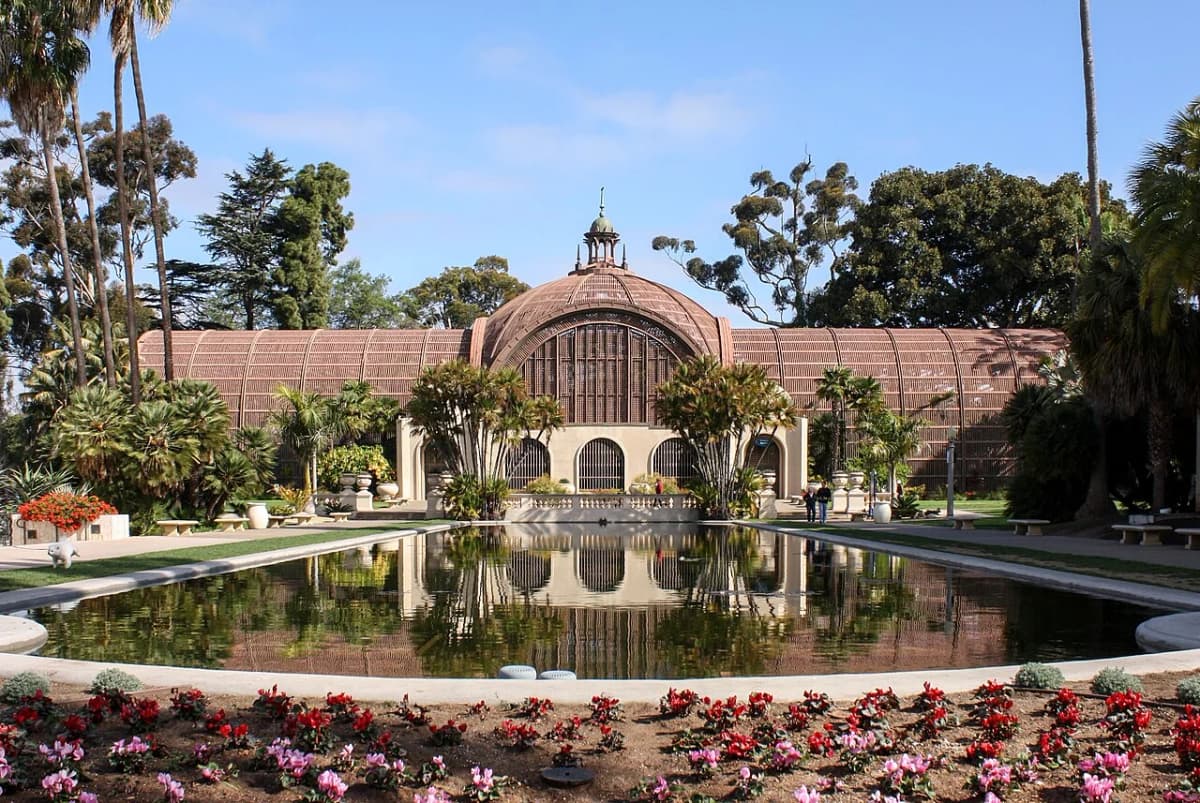
FreeOne of the most photographed structures in San Diego. Wooden lath filters light dramatically. Lily pond reflects the building. 20–30 min. Works any time of day.
Rose Garden
Free2,400 rose plants at peak from March–May. Inez Grant Parker Memorial Rose Garden — quieter than central areas, worth building time around in spring.
Desert Garden
FreeOne of the largest cacti and succulent collections in Southern California. Underappreciated even by regulars. Worth 20 min, open daily.
Japanese Friendship Garden
$12 adultsThe only paid garden — and it earns it. Tea house, koi ponds, bonsai collection, canyon views. Budget 45–60 min. The bonsai exhibit alone is worth the price.
Best Time to Visit Balboa Park
| Season | Crowds | Gardens | Best For |
|---|---|---|---|
| Spring (Mar–May) | Moderate | 🌸 Peak bloom | Gardens, photography, first visit |
| Summer (Jun–Aug) | High | ✅ Lush | Early arrivals only — park by 9am |
| Fall (Sep–Nov) | Moderate | ✅ Good | Best balance — mild weather, easier parking |
| Winter (Dec–Feb) | Low | 🌿 Quieter | December Nights festival (first weekend Dec) |
⏰ Best Time of Day
- Weekday morning (before 10am): Quiet museums, easy parking, unhurried garden walks — the park at its best.
- Weekend morning (arrive by 9am): Head to Inspiration Point, take the free tram. Parking problem avoided.
- Sunday afternoon (1–3pm): Spreckels Organ Concert at 2pm — free, outdoors, legitimately impressive. Arrive by 1:30 for seating.
- Golden hour (4–6pm in summer): El Prado in warm afternoon light is the best the park looks all day.
Balboa Park Parking — The Real Situation
Parking is the number one source of visitor frustration at Balboa Park. Here's what actually happens and how to avoid the worst of it.
| Option | Cost | Walk to Museum | Notes |
|---|---|---|---|
| Inspiration Point | Free | 5 min (free tram) | Best option — always |
| Central museum street | $2.50–3/hr | 2–5 min | 2-hr limit · fills by 10am weekends |
| Hillcrest (north) | Free | 10–15 min walk | Residential blocks, local's secret move |
| Rideshare | Trip cost | Drop at entrance | Best for summer weekend afternoons |
Parking Strategy by Visit Type
- Weekday morning: Any lot near the museums — plenty of space before 10am.
- Weekend morning (arrive by 9am): Head directly to Inspiration Point, take the tram.
- Weekend afternoon (after 10am): Skip central lots. Either Inspiration Point or Hillcrest street parking.
- Sunday Spreckels Concert: Arrive by 1pm if you want a seated space — the 2pm concert fills.
Spreckels Organ Pavilion — Free Sundays at 2pm
Every Sunday at 2pm, the Spreckels Organ Pavilion hosts a free one-hour public concert. The organ has over 4,500 pipes and is considered the world's largest outdoor pipe organ. The sound carries across the open-air amphitheater and the whole thing is legitimately impressive even if you have zero interest in organ music normally.
Bring a blanket. Arrive by 1:30pm if you want a good seat. If your visit falls on a Sunday, build your day around this. It's one of those free experiences that you'd pay for somewhere else.
🎵 Free Concert Details
Every Sunday · 2pm · Spreckels Organ Pavilion · No tickets needed · Arrive 1:30pm for seating
December holiday concerts are particularly special — check the Balboa Park events calendar.
Balboa Park With Kids
🔬
Fleet Science Center
Ages 3–15 · IMAX · Buy tickets in advance for weekends
🌿
Botanical Building
Free · Tropical plants + lily pond hold kids' attention
🛝
Free Playgrounds
Scattered throughout · Near Spanish Village Art Center
The park is stroller-accessible on main paths but some garden areas have uneven ground. Bring snacks and water — the park is large and kids burn energy fast. The free tram from Inspiration Point saves legs on the way in and out.
For more ideas across the city, see things to do in San Diego with kids.
Photography — Best Spots and Timing
El Prado Promenade
Best at golden hour — 4–6pm summer, 3–5pm winter. Warm stone + symmetry = effortless shots.
Alcazar Garden
Morning before 10am. Tiled fountain pools reflect sky best then; no crowds yet.
Botanical Building Lily Pond
Works any time of day. Building reflection in still water — the park's most reproduced image.
California Tower
200-ft bell tower visible throughout. Museum of Us observation deck gives best elevated view.
Rose Garden (Mar–May)
Peak bloom is obvious; structured rows create leading lines year-round. Overcast spring = even light.
Where to Eat Near Balboa Park
The Prado (inside the park)
California cuisine · $$
Pleasant courtyard setting, handles lunch and dinner well. Reserve for weekend lunches.
Hillcrest (10-min walk north)
Dense restaurant strip · $–$$$
Vietnamese, Thai, brunch spots, independent coffee. Best post-park meal without driving anywhere.
North Park (10-min drive east)
San Diego's best dining neighborhood · $$
Good for ending a full park day with dinner. Independent restaurants, consistently excellent.
Snack kiosks (in-park)
Quick refuel · $
Near Fleet Science Center and Zoo entrance. Good enough for a mid-day energy stop.
What to Pair With a Balboa Park Visit
Balboa Park sits in a natural triangle with two other strong San Diego destinations:
Technically inside the park but its own full-day commitment. Plan a separate day.
10-min drive south — good for evening dining and drinks after a full park day.
15-min drive west — pairs well as a slower cultural add-on if you have a half day left.
Adjacent neighborhoods for food, coffee, and an authentic local afternoon after the park.
For a full trip plan, see our 3-day San Diego itinerary.
Balboa Park FAQ
Is Balboa Park free?
Grounds, plazas, and most gardens are free, always. Individual museums charge $12–$22. Timken Museum of Art is always free. Japanese Friendship Garden is $12. Parking: $2.50–$3/hr at central meters (Inspiration Point is free).
How much time do you need at Balboa Park?
Minimum 3 hours for a garden walk and one museum. 5–6 hours for two museums plus the full garden loop. A full day for three or more museums. Don't combine with the Zoo on the same day.
What's the best museum in Balboa Park?
Museum of Us for most adults. Fleet Science Center for families with kids. Timken Museum of Art if you want excellent European masters for free. Natural History Museum for paleontology and regional science.
When do Balboa Park museums offer free admission?
Residents Free Tuesday: SD county residents get rotating free entry every Tuesday (check balboapark.org). February Museum Month: SD library card holders get 50% off. December Nights festival (first December weekend): most museums free during festival hours. Timken Museum is free every day with no exceptions.
Where should I park at Balboa Park?
Inspiration Point (east side, Park Blvd) — large free lot with free tram to Prado. Central street: $2.50–$3/hr, 2-hr limits, fills by 10am on summer weekends. Hillcrest north side: free residential street parking, 10–15 min walk. ParkMobile app covers most meters.
Can you walk to Balboa Park from downtown?
Yes — about 1.5 miles northeast, roughly 25–30 minutes on foot with some uphill sections through Bankers Hill. Most people drive or rideshare.