
The New Children's Museum San Diego
Tickets, Exhibits & Complete Visitor Guide — 2026
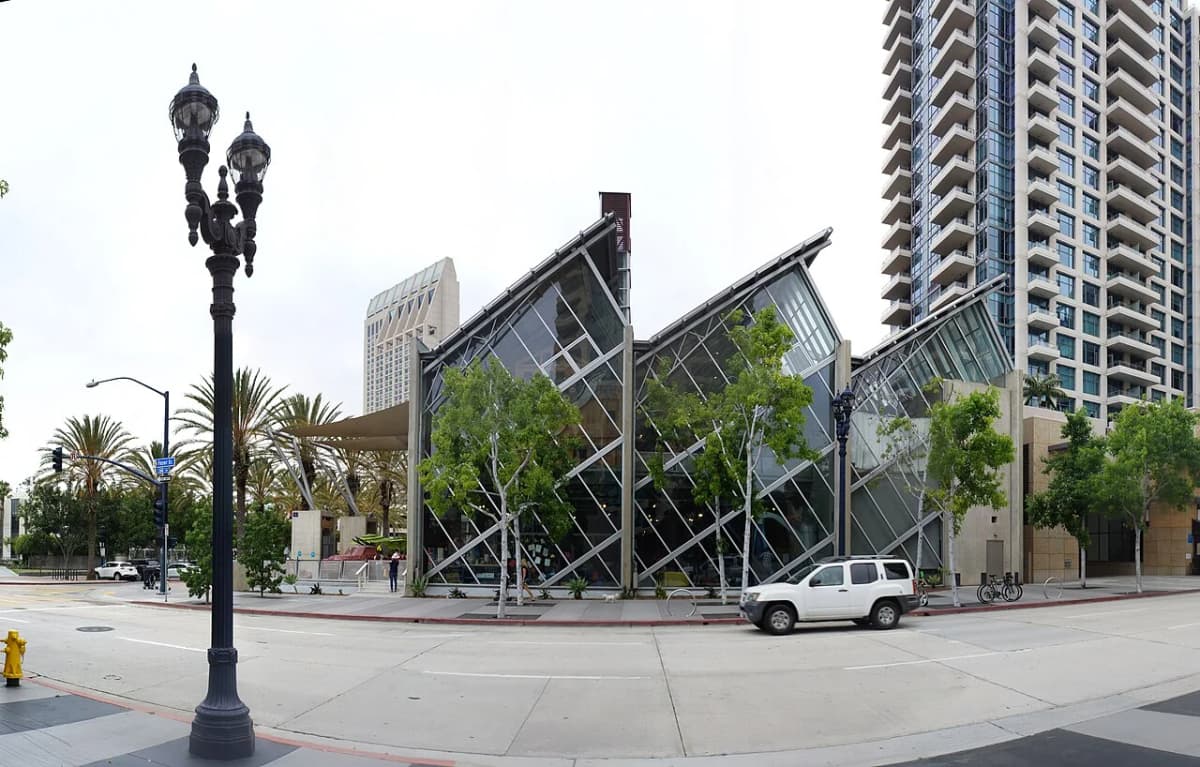
Most children's museums follow the same formula: replica grocery stores, foam building blocks, a water table, a dress-up corner. The New Children's Museum at 200 W Island Ave in downtown San Diego does not. It commissions working contemporary artists to build large-scale interactive installations specifically for children — and then rotates them out. The result is something that functions less like a museum and more like a playground that happens to be high-concept art, housed in a purpose-built three-story building a few blocks from Petco Park.
The honest version: it works exceptionally well for children from crawling age through about 8, with toddlers and preschoolers getting the most out of it. It is one of the best fully indoor options in downtown San Diego, fully stroller-accessible, and one of the few places in the city where a 2-year-old and a 6-year-old can both be genuinely absorbed for two or three hours at the same time. For older kids — say 9 and up — the installations can feel brief and abstract. That is not a reason to skip it; it is a reason to go when your kids are in the right window.
Below is everything you need to plan a visit: current exhibits, exact ticket prices, parking options, the best time to go, honest age-by-age breakdowns, and how it stacks up against other San Diego kids activities.
Quick Facts
What Makes It Different From Other Children's Museums
The defining characteristic of The New Children's Museum is the commissioning model. The museum does not buy off-the-shelf exhibits or license branded content. It hires actual contemporary artists — working professionals with gallery careers — to design and build installations with children in mind from the ground up. The brief given to artists is open-ended: create something a child can physically inhabit, explore, and interact with. The resulting pieces are big, often room-filling, and rotate over time so repeat visits look genuinely different.
This approach has real implications for what the visit feels like. You will not find a scaled-down supermarket checkout or a plastic construction zone. You will find things like the Whammock — a massive suspended hammock structure kids can climb through — food-themed crawl spaces built with the logic of an artist rather than a toy manufacturer, a treehouse installation that doubles as a theater with slides, and weaving stations. The scale is full-room. The materials are real. The physical experience is unusual in a way that most kids find immediately compelling even if they could not articulate why.
The tradeoff: some installations are abstract enough that younger children engage physically without understanding the artistic concept, while older kids who want a clear objective or competitive element may find them brief. That is an honest limitation. But for the 2–6 range especially, the open-ended quality of the installations tends to produce longer, more inventive play than the themed setups you find at conventional children's museums.
Current Exhibits in 2026
Exhibits at The New Children's Museum rotate throughout the year. Here is what is on during summer 2026 — always check thinkplaycreate.org before visiting since the lineup updates seasonally.
Woodswoman: Earthseed (Opening June 6, 2026)
The newest large-scale installation opening this summer. Themed around environmental imagination and natural world exploration, it follows the museum's pattern of giving children a fully immersive environment to inhabit rather than a single activity station. Details on the specific artist and full installation scope are being released closer to opening.
The Whammock
One of the museum's most recognized permanent-rotation pieces: a large suspended hammock structure that kids can climb into, swing through, and pile onto. It reads as simple but generates long, absorbed play — particularly for the 3–7 range. Toddlers love the sensory feel of it; older kids turn it into a group activity.
Food-Themed Crawl Spaces
A series of oversize food sculptures — a celery tunnel, tomato stacks, watermelon boat, cheese wedge — designed as crawl-through and climb-on structures for younger children. This is where babies and crawlers spend the most time. The scale is exactly right for children who are not yet steady walkers but want to move and explore.
Treehouse Theater with Slides
A multi-level treehouse structure that incorporates performance space and slides. Works for a wide age range — younger kids treat it as a climbing structure and slide; older kids use the theater element for spontaneous play scenarios. One of the most popular pieces in the building based on visitor reports.
Wind-Blown Scarves Display
A visual art installation where scarves float continuously in columns of air. Primarily visual and sensory, this is the piece that most clearly shows the museum's fine-art ambition — it is less interactive than other installations but tends to stop toddlers in their tracks and produces extended looking.
Artopia: NCM Creative Studios
The museum's dedicated art-making hub, launched as a permanent feature. Artopia runs hands-on workshops in painting, drawing, sculpting, and ceramics — including a state-of-the-art pottery studio. Programs run for toddlers through teens. The structured afterschool programs target ages 8–13 and include Youth Ceramics and Art Afterschool tracks. Drop-in workshop availability varies by day, so check the schedule online when planning. This is the area where a 10-year-old who is bored with the main floor installations will find the most engagement.
Weaving and Ceramics Stations
Ongoing art-making stations available within the main gallery space. Weaving requires enough fine motor skill that it works better for 5 and up; ceramics draws the broadest age range. These are the stations where a second shirt becomes a genuine consideration — the clay gets everywhere, which is entirely the point.
Age-by-Age Breakdown: Who Gets the Most Out of It
This is the most practical question parents ask, and the honest answer is more specific than “great for all ages.”
Babies and Crawlers (0–12 months)
Better than most parents expect. The food-themed crawl spaces use spongy textured flooring that is ideal for babies who are not yet walking. There are padded surfaces, sensory elements, and dedicated areas where you can put an infant down without worrying about them being run over by older kids. Admission is free under 1. Multiple visitors specifically note that babies “crawled for hours” in the lower-level installations. If you have a baby and older siblings, this handles the spread unusually well.
Toddlers (1–3 years)
The strongest demographic. Toddlers engage with the installations instinctively — crawling through tunnels, climbing padded structures, touching materials, watching the scarves float. The open floor plan means they can move freely without adult intervention on every step. One caveat from multiple parent reports: if you are solo with a toddler plus older children, the museum has dark curtained areas and enclosed sections where younger kids can move out of direct sightline quickly. Coming with a second adult makes supervision significantly easier.
Preschool and Early Elementary (3–6 years)
The sweet spot. Kids this age have enough coordination to use the installations as intended, enough imagination to extend the play beyond the obvious, and enough endurance to spend 2–3 hours without hitting a wall. The Whammock, treehouse slides, and art stations all work well at this stage. Toddler Time programming on Fridays is specifically designed for ages 5 and under and offers a more structured group experience.
Elementary Age (7–9 years)
Mixed, but workable. Kids at this age can feel like they have “done” the main installations within an hour. The Artopia studios are where 7–9 year olds find the most depth — ceramics and structured art workshops give them something with more craft and complexity. If your main group is in this age range, check what workshops are scheduled for your visit day, because the open-floor time alone may not hold their attention for a full visit.
10 and Up
The installations are generally not designed for this age range and reviewer feedback reflects that consistently — the museum is on the brief side for a pre-teen who wants challenge or competition. The Artopia programs targeting ages 8–13 are the exception, and if you are visiting with a range of ages the older kids can be productively occupied in the studio while younger siblings explore the main floor. But if your group is entirely 10+, the San Diego Zoo or the Fleet Science Center are stronger fits.

Tickets, Prices, and Discounts (2026)
General admission as of 2026:
- Adults (18+): $25
- Children (age 1 and up): $20
- Seniors (65+): $20
- Educators with ID: $20
- Active military with ID: $20
- Children under 1: Free
- Members: Free
For a family of two adults and two children (both over 1), that is $90 before parking — a real line item. Here are the legitimate ways to reduce it:
- Museums for All: $3–$5 per person with an EBT, SNAP, or WIC card, purchased in person, up to 4 tickets. One of the better accessibility programs among San Diego museums.
- ACM Reciprocal Program: If you hold membership at another Association of Children's Museums member institution, you receive 50% off admission. Worth checking your home city's children's museum membership before your trip.
- Blue Star Museums: Active military families get free admission during select periods — historically May through Labor Day, though confirm current dates at thinkplaycreate.org.
- Late-visit discount: Arriving approximately one hour before closing (around 3pm) sometimes offers reduced admission — ask at the door. Not guaranteed but worth inquiring.
- Membership: The NCM annual membership pays for itself in two visits for a family of four. If you are a San Diego resident with kids in the prime age range, it is straightforwardly worth it.
Tickets are available online or at the door. Advance reservations are not required, but purchasing online can save time at entry, especially on weekends.
Hours of Operation
The museum is open Monday and Wednesday through Sunday from 9am to 4pm. It is closed every Tuesday. The museum also closes early on certain dates for private events and programs — June 4 closes at 12pm, for example — so confirming hours at thinkplaycreate.org before a specific visit is worth the 30 seconds, especially if you are building a downtown day around it.
Last entry is typically 30 minutes before closing. The Artopia studios have their own program schedules that do not always align exactly with general admission hours.
Stroller Accessibility and Logistics
The New Children's Museum is about as stroller-friendly as a building gets. It was designed from the ground up for families with very young children, which means elevators on every floor, flat open spaces throughout, a stroller check-in area at the entrance so you can park your stroller and carry a small child without maneuvering a frame through the installations, and an outdoor Plaza that is fully flat and open.
The one practical friction point: elevator wait times on busy weekend mornings can run several minutes, particularly during peak hours when multiple families with strollers are trying to move between floors simultaneously. If you are there with a stroller and a toddler who wants to keep moving, plan for a bit of waiting at the elevator. This is a minor annoyance, not a dealbreaker — the building handles strollers better than almost any other major San Diego indoor attraction.
Parking at The New Children's Museum
The museum has its own parking garage directly at the building. The rate is $20 per car for general visitors, $10 for members and EBT/WIC/SNAP cardholders. The garage opens 15 minutes before museum hours and closes 15 minutes after — do not linger past 4:15pm if you parked in the museum garage.
A better value for non-members: the ABM lot at 352 2nd Ave offers 2 hours of parking for $5 using discount code 8792. Two hours is tight for a full visit but works if you park first and then decide to extend your stay using metered street parking nearby.
The single best move if you are coming from a downtown hotel or the Gaslamp Quarter: take the MTS Blue Line Trolley to the Convention Center stop. The museum is a 4-minute flat walk from there. This eliminates parking entirely, costs under $3 each way per adult (kids ride free), and removes all the downtown parking stress from your day. The downtown San Diego trolley network connects to most major hotel clusters.
If you must drive, metered street parking is available on nearby blocks and is free before 8:30am — a useful option if you plan to arrive right at opening.
Food: Bean Sprouts Café
Bean Sprouts Café operates inside the museum and serves food that is meaningfully better than the standard museum café. The smoothies in particular draw specific praise in visitor reviews — multiple parents describe them as “amazing” and worth the stop even if you would not normally pay museum café prices. The broader menu covers healthy, kid-friendly options. No strong reason to smuggle in outside food when the on-site option is this solid.
The outdoor Plaza and patio area provides space to eat outside after a session inside, which matters if you have kids who need to decompress in open air before getting back in a car or on the trolley.
Best Time to Visit
Weekday mornings — first 90 minutes after opening — are consistently the least crowded and most enjoyable times to visit. Arriving at 9am on a Monday, Wednesday, or Thursday gives you the main floor with significantly fewer other families, which matters because the installations have finite capacity and the difference between a near-empty Whammock and a packed one is real.
Saturday and Sunday mornings between 10am and 1pm are the busiest periods. Weekend afternoons taper off slightly. Summer school holidays push attendance up across all days.
Toddler Time on Fridays is a structured program specifically for children 5 and under — if your kids are in that age range and you are flexible on day, Friday mornings are a good combination of programming and manageable crowd levels.
For a rainy or overcast day in San Diego — which is more common in May through June and again in winter — The New Children's Museum is one of the strongest fully-indoor downtown options because everything is under one roof, climate-controlled, and designed for extended play rather than quick-pass exhibits.
What to Bring
- A change of shirt for younger kids — the ceramics and art stations produce real mess. This is genuinely the most-repeated tip from parent visitors and it is good advice. One extra shirt per young child eliminates a minor crisis.
- Closed-toe shoes for the climbing structures — sandals and slides work but some of the textured installations are easier with more foot support, especially for toddlers on the padded crawl areas.
- Your EBT, SNAP, or WIC card if applicable — the Museums for All discount is purchased in person and caps at 4 tickets, so have the card ready at the entrance rather than trying to handle it at the café or gift shop.
- ACM reciprocal membership card if you hold one — present at entry for the 50% discount.
- Water bottles — the café is there if you need it, but water stays are easier with your own.
- A second adult if possible — specifically for the dark maze-style and curtained sections if you have a mix of ages. Solo parents with a toddler and a 6-year-old will find the divided attention more demanding here than at museums with more open sightlines throughout.
Is The New Children's Museum Worth It? Honest Comparison
At $20–$25 per person it sits at a price point that warrants a real answer rather than a reflexive yes. Here is the honest comparison:
vs. San Diego Zoo ($69+ per person)
For families with children under 5, The New Children's Museum is often the better choice for a half-day option — significantly cheaper, no outdoor heat, no walking distances that exhaust young legs, and the installations hold toddler attention as well as most animal exhibits. The San Diego Zoo is the right call for older kids and full-day visits. The museum is the right call when your party includes children under 4 and you want a 2–3 hour manageable experience.
vs. Fleet Science Center (Balboa Park)
The Fleet Science Center skews older — its interactive exhibits engage kids from about 5 upward and it has real depth for the 8–12 range. It is the stronger choice for school-age kids interested in science, tech, or IMAX. The New Children's Museum is the stronger choice for toddlers and preschoolers, and for the art-focused, open-ended play experience.
vs. USS Midway Museum (next door)
The USS Midway is phenomenal but not designed for young children — the steep stairs, tight spaces, and primarily history-based content work best for 8 and up. The two museums are close enough in downtown that a family could do The New Children's Museum in the morning with young kids and save the Midway for a different day when older children are in town, or when the kids age into it.
The Membership Math
For San Diego residents with children in the 1–8 range, an annual membership is one of the cleaner value propositions in the city. Two visits in a year covers the membership cost for most family configurations, and members pay $10 for museum parking instead of $20. If your kids are in the prime age window, the membership pays for itself faster than almost any other San Diego cultural institution short of the Zoo.
What's Nearby: Building a Full Downtown Day
The New Children's Museum is in one of the better-positioned spots in San Diego for combining multiple stops without a car. Within easy walking distance:
- Petco Park — a 5-minute walk north. If there is a Padres home game, the combination of museum in the morning and ballgame in the afternoon makes for a complete family day in downtown San Diego.
- USS Midway Museum — about 10 minutes on foot along Harbor Drive. Not ideal for the same day with young children, but worth knowing about for return trips with older kids. Read the full USS Midway guide before deciding.
- Seaport Village — a 10-minute walk along the water. Good for a short post-museum walk with kids who have energy to burn and an ice cream stop.
- Gaslamp Quarter — 10 minutes on foot. Reasonable for a family lunch before or after the museum, with enough restaurant variety to handle different ages and preferences.
- Little Italy — a 15-minute walk or short trolley ride north. Better for dinner than lunch crowds, with kid-friendly Italian options along India Street.
For a full downtown itinerary with children, see the downtown San Diego guide. The museum anchors a half-day well; the rest of downtown fills out the afternoon.
Top Tips Before You Go
- Check thinkplaycreate.org for the current exhibit schedule — installations rotate and knowing what is up helps set expectations, especially for repeat visitors.
- Arrive at 9am on a weekday for the most space and the best experience with toddlers. The first 90 minutes after opening are noticeably calmer than midday.
- Take the trolley if you are staying anywhere near the Gaslamp Quarter or Convention Center area. Parking adds $20 and downtown traffic with a car full of children adds unnecessary stress.
- Pack a spare shirt for any child you are planning to take to the ceramics or art-making stations. This is the most specific and reliable tip repeated by parents who have done it.
- Ask about the late-arrival discount at the door if you arrive within roughly an hour of closing — 50% off is not guaranteed but some visitors have had success requesting it.
- The outdoor Plaza is accessible without museum admission. If you arrive early and the museum is not open yet, the front playground area is a legitimate warm-up option.
- Toddler Time on Fridays (ages 5 and under) adds a structured layer to the visit that works especially well for first-timers who want a guided framework rather than open exploration.
Plan More of Your San Diego Family Trip
The New Children's Museum works best as part of a broader San Diego family itinerary. For more options:
- Full San Diego kids guide — the complete breakdown of family activities across the city by age range and neighborhood.
- San Diego Zoo guide — the city's signature family attraction for a full day with older kids.
- USS Midway Museum guide — the aircraft carrier museum a short walk away, best for ages 8 and up.
- Downtown San Diego guide — how to build a full downtown itinerary around the museum visit.
Frequently Asked Questions
How much does The New Children's Museum San Diego cost?
Adults (18+) pay $25; children age 1 and up pay $20; children under 1 are free. Seniors, educators, and military with ID pay $20. Members always get in free. The Museums for All program (EBT/SNAP/WIC) reduces admission to $3–$5 per person, purchased in person, up to 4 tickets. ACM reciprocal members receive 50% off.
What are the hours for The New Children's Museum?
Open Monday and Wednesday through Sunday, 9am–4pm. Closed every Tuesday. Some dates have early closures (e.g., 12pm on certain event days). Confirm at thinkplaycreate.org before visiting.
What age is The New Children's Museum best for?
Best for crawling age through about 8 years old, with the strongest experience for ages 2–6. Babies have dedicated crawl zones; toddlers and preschoolers thrive with the full-floor interactive installations; kids 7–8 engage well with the Artopia studios. Children 9 and up may find the main floor brief.
Is parking available at The New Children's Museum?
Yes. Museum garage is $20/car ($10 for members and EBT/WIC/SNAP holders). The ABM lot at 352 2nd Ave offers 2 hours for $5 with code 8792. The MTS Convention Center Trolley stop is a 4-minute walk — recommended over driving from downtown hotels.
What exhibits are at The New Children's Museum in 2026?
Summer 2026 features Woodswoman: Earthseed (opening June 6), the Whammock large hammock installation, food-themed crawl spaces, treehouse theater with slides, weaving and ceramics stations, and Artopia: NCM Creative Studios. Exhibits rotate — check thinkplaycreate.org for current lineup.
Is The New Children's Museum worth it versus other San Diego kids options?
For families with children under 8, yes — it is fully indoor, significantly cheaper than the Zoo or SeaWorld, stroller-friendly, and designed for the toddler-to-early-elementary range specifically. For older kids, the Fleet Science Center or San Diego Zoo offer more scope. For a family with mixed ages including young children, it is often the single strongest half-day downtown option.
Is The New Children's Museum stroller-friendly?
Yes — purpose-built for young families with elevators on every floor, a stroller check-in area at entry, flat open exhibition spaces, and an accessible outdoor Plaza. Elevator wait times can run a few minutes on busy weekend mornings.
Does The New Children's Museum have food?
Bean Sprouts Café operates inside with healthier-than-average kids' food options and smoothies that parents consistently rate highly. There is also an outdoor patio connected to the Plaza for eating outside. No real need to bring outside food.