Navy SEAL Museum San Diego
Complete 2026 Visitor Guide — Exhibits, Tickets, Hours & Tips
| Address | 1001 Kettner Blvd, San Diego, CA 92101 (One America Plaza, downtown) |
| Hours | Wed–Mon 10am–5pm · Closed Tuesdays, Thanksgiving & Christmas · Last admission 4:15pm |
| Phone | (619) 566-7956 |
| Transit | American Plaza Trolley Station (Blue/Green/Orange lines) — directly adjacent to museum |
| Parking | No dedicated lot · Street meters and paid garages nearby · Trolley strongly recommended |
| Active Military | FREE with valid military ID · Reservists FREE · Veterans $10 online |
| Children 3 & Under | FREE — no ticket required |
| Last Updated | June 2026 |
What Is the Navy SEAL Museum San Diego?
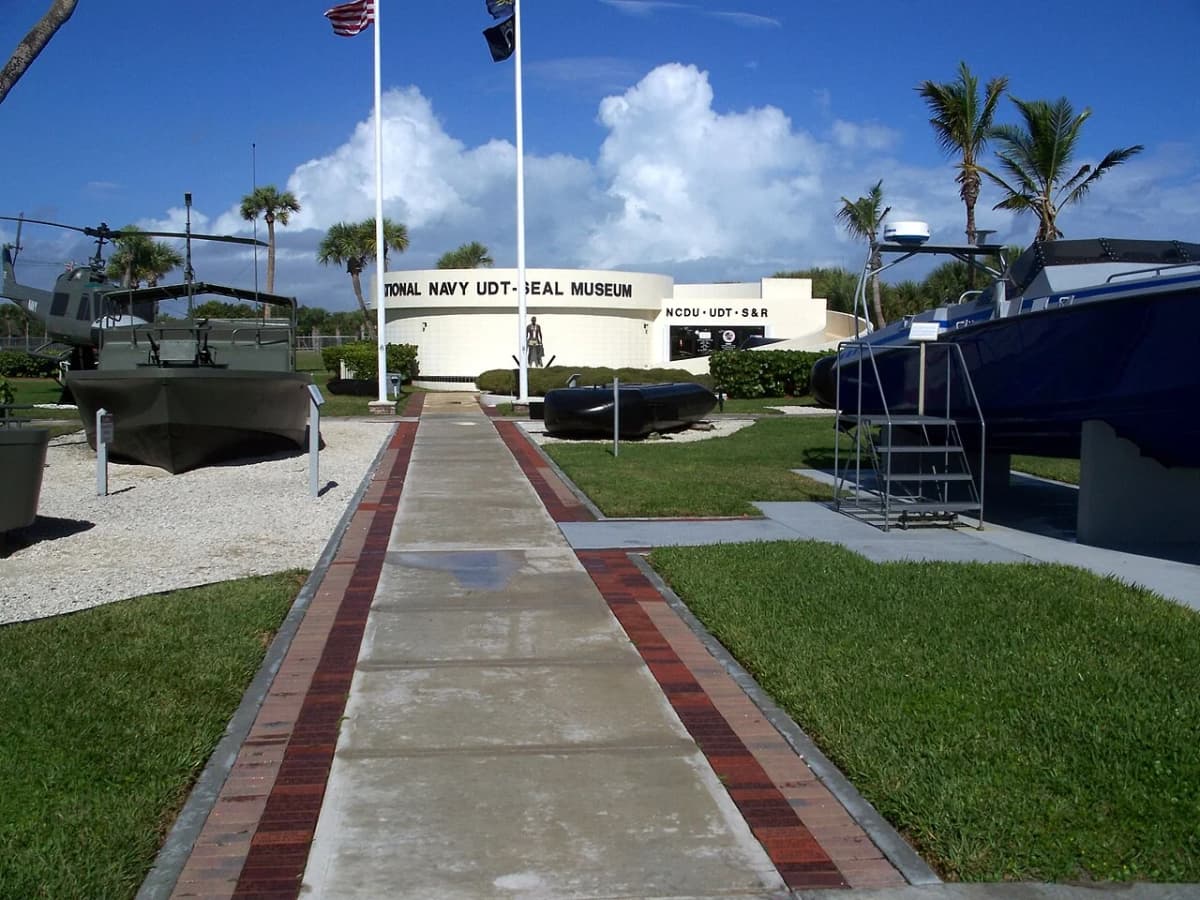
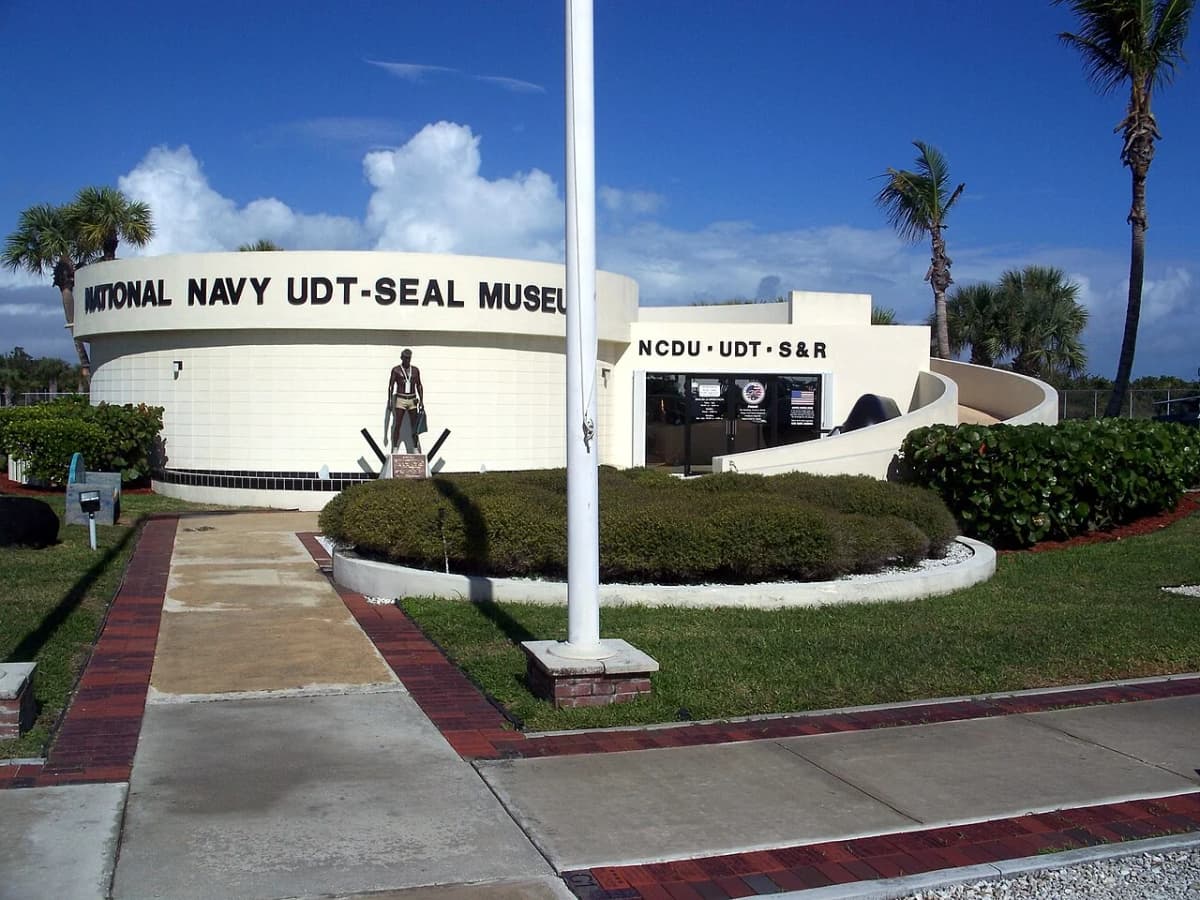
The Navy SEAL Museum San Diego opened on October 4, 2025 at 1001 Kettner Blvd — about a ten-minute walk from the USS Midway and within sight of Santa Fe Depot. It is the West Coast counterpart to the National Navy UDT-SEAL Museum in Fort Pierce, Florida, which has operated since 1985 as the home institution of the SEAL heritage. The San Diego location was a deliberate choice: Naval Special Warfare Command is stationed in Coronado, just across the bay, and every Navy SEAL in the world has trained at the Naval Special Warfare Training Center on the Silver Strand. This city is, in a literal sense, where SEALs are made.
At 10,000 square feet across two floors, this is not a massive institution. Be honest with yourself about that going in — it is not the USS Midway, which could occupy you for a full half-day. A focused visitor moves through the Navy SEAL Museum in around an hour on their own, or 90 minutes with a docent. But what it lacks in square footage it compensates for in quality of storytelling, authenticity of artifacts, and the rare presence of retired SEAL docents who actually lived this history. For military history travelers and anyone seriously interested in special operations, that combination is hard to find anywhere else on the West Coast.
The museum also forms part of what its organizers call a “Maritime Triad” experience on the downtown waterfront, alongside the Midway and the Maritime Museum of San Diego. If you are spending a day on the Embarcadero corridor, the SEAL Museum is a natural third stop — it covers a different and genuinely compelling chapter of San Diego's military identity.
What's Inside — Exhibits Floor by Floor
The museum is organized across two floors and structured roughly chronologically — from the WWII roots of Naval Special Warfare through the modern era. The exhibits use a mix of authentic artifacts, immersive display design, photography, and technology that feels more polished than many institutions of comparable size.
First Floor — Entry, Theater & Foundations
- →Immersive multi-screen theater — one of the first things you encounter after entering. Three large screens showing footage and narration of BUD/S training and what it takes to become a SEAL.
- →Biographical tributes to notable Navy SEALs — individual stories honoring decorated operators, Medal of Honor recipients, and figures who shaped the community.
- →Digital Memorial Wall — a tribute to fallen Naval Special Warfare personnel, designed to be a moment of reflection before moving into the historical narrative.
- →NASA collaboration exhibit — covering the often-overlooked role SEAL teams played in recovering NASA astronaut capsules from the ocean after splashdown, from the early Mercury missions through Apollo.
- →Extensive gift shop — occupies a meaningful portion of the ground floor; well-stocked with SEAL heritage gear, books, and memorabilia.
- →Frogman statue outside the main entrance near the trolley station — a visible landmark and a good orientation point when approaching on foot.
Second Floor — Operations History & Immersive Displays
- →WWII origins — covers beach reconnaissance units and Naval Combat Demolition Units (the UDT predecessors) who cleared obstacles at Normandy and Pacific island landings.
- →Korean and Vietnam War operations — detailed displays on early SEAL Team ONE and TWO missions, direct action raids, and the evolution of doctrine.
- →Underwater operations — two actual submersibles suspended from the ceiling are among the most visually striking artifacts in the building, contextualizing how SEALs insert and exit from the water.
- →Equipment evolution displays — how SEAL gear, diving rigs, weapons, and communications changed decade by decade, shown through authentic hardware.
- →Hostage rescue scenarios — immersive displays covering SEAL roles in counter-terrorism and personnel recovery operations.
- →Osama bin Laden operation documentation — material covering Operation Neptune Spear (2011), the highest-profile special operations mission in modern history.
- →War on Terror coverage — a broad overview of SEAL operations in Iraq and Afghanistan through the 2000s and 2010s.
Navy SEAL Xperience — VR Mission Add-On
Navy SEAL Xperience VR
+$10/person- •Format: Virtual reality hostage rescue mission — you are placed inside a simulated special operations scenario
- •Purpose: Designed to give civilians a visceral sense of the decision-making and pressure involved in a SEAL operation
- •Cost: $10 additional, not included in general admission
- •Booking: Can be added when purchasing tickets online at navysealmuseumsd.org
Retired SEAL Docents
One of the genuine differentiators of this museum is the presence of retired Navy SEAL docents on the floor. These are people who actually conducted the kinds of missions described in the exhibits — their firsthand context is something no exhibit panel can replicate.
If a docent is available and engaged with a group, stop and listen. You will hear things that are not written on any wall. Docent-led tours run about 90 minutes and can be arranged in advance.
Ticket Prices 2026
The museum uses a timed-entry system — groups of 30 are admitted every 15 minutes. Buying online in advance saves $3 per adult ticket and guarantees your entry time, which matters on weekends. Active-duty military and Reservists enter free at any time with a valid military ID — no advance booking or special code required.
| Ticket Type | Online Price | At Door | Notes |
|---|---|---|---|
| Adult (Ages 13+) | $20 | $23 | Save $3 by booking online |
| Youth (Ages 4–12) | $16 | $19 | Save $3 by booking online |
| Veteran (with ID) | $10 | $13 | Valid veteran ID or DD-214 required |
| Military Family | $10 | — | Immediate family with valid dependent ID card |
| Active Duty / Reserve | FREE | FREE | All branches · valid military ID at entry |
| Children 3 & Under | FREE | FREE | No ticket required |
| Navy SEAL Xperience VR (add-on) | +$10 | +$10 | Optional VR hostage rescue mission |
All prices approximate and subject to change. Verify current pricing at navysealmuseumsd.org before visiting.
Why San Diego? — Coronado and the Birth of the SEAL Teams
The Navy SEAL Museum chose San Diego deliberately, and understanding why makes the visit more meaningful. Naval Special Warfare Command is headquartered at Naval Amphibious Base Coronado, just across the bay from downtown. The Naval Special Warfare Training Center — where BUD/S (Basic Underwater Demolition/SEAL training) takes place — sits on the Silver Strand in Coronado. Every single Navy SEAL who has ever served went through training on that beach.
The Coronado SEAL Legacy — Key Dates
WWII-era predecessors of the SEALs — Underwater Demolition Teams (UDTs) formed in Fort Pierce, FL cleared beach obstacles ahead of amphibious landings, including Normandy and Pacific island assaults.
President Kennedy directed the establishment of Navy SEAL Teams. SEAL Team ONE was commissioned at Naval Amphibious Base Coronado on January 1, 1962 — the West Coast home of the SEAL community that remains there today.
Basic Underwater Demolition/SEAL training is a roughly 6-month pipeline that includes the infamous Hell Week — five-and-a-half days of continuous training with an average of four hours of sleep total. Every SEAL team member currently serving came through Coronado.
For the first time, civilians across the bay from Naval Special Warfare Command can access a dedicated institution telling the full story of SEAL history — from the UDT beach clearance operations of WWII through the modern era.
If you want to see where this training happens, you can sometimes observe BUD/S candidates running on the beach near Coronado Beach — they run in their brown shirts early in the morning and in the evenings. It is not a tourist attraction, and there is no public access to the training facility, but the beach itself is public. The context the museum provides makes that sight considerably more meaningful.
Honest Assessment — Who Should Visit and Who Should Know What to Expect
The Navy SEAL Museum San Diego is a well-executed, focused attraction that rewards the right visitor and may underwhelm the wrong one. Here is a direct breakdown.
Worth it for these visitors
- ✓Military history enthusiasts — particularly anyone interested in special operations, covert missions, or the evolution of Naval Special Warfare
- ✓Veterans, active-duty personnel, and military families — the depth of operational detail and the presence of SEAL docents makes this meaningful in a way that a civilian curator alone cannot replicate
- ✓Adults and older teenagers who can read exhibit content and engage with the narrative
- ✓Anyone pairing it with the USS Midway or Maritime Museum as part of a full waterfront military history day
- ✓People curious about BUD/S training and what the SEAL selection process actually involves
- ✓Fans of special operations history, SEAL memoirs, or books and films on the topic who want to see authentic artifacts
Manage expectations if you are
- !Visiting with young children — the content is sophisticated and the exhibits require reading. Under age 10, most of the narrative detail will be lost.
- !Looking for a half-day activity on its own — this is a 60–90 minute stop, not a full-day destination. Plan it as part of a broader waterfront itinerary.
- !Expecting the scale of the USS Midway — 10,000 square feet is compact. Pair these two museums rather than choosing one over the other.
- !Hoping to see the actual BUD/S training base — NAB Coronado is a working military installation with no public access. The museum tells that story, but you are not going on base.
The comparison to the USS Midway Museum is natural because they are ten minutes apart on the same waterfront and both cover Navy history. But they cover different things. The Midway is about the platform — the ship, the aircraft, the technology, the carrier battle group experience. The SEAL Museum is about the people and the missions — small units, covert operations, human endurance, and the specific culture of Naval Special Warfare. They complement each other well. If you have a full day downtown, do both.
Hours, Tickets & Getting There
Hours of Operation
Timed entry — groups of 30 admitted every 15 minutes. Book in advance at navysealmuseumsd.org to guarantee your slot, especially on weekends.
Getting There
The American Plaza Trolley Station is directly adjacent to the museum building at One America Plaza. The Blue, Green, and Orange lines all stop here. From the Old Town transit center or Mission Valley, the trolley is the easiest option.
Santa Fe Depot is the terminal for the COASTER commuter rail from Oceanside, Solana Beach, and Encinitas. It is a 5-minute walk from the depot to the museum.
From the USS Midway Museum, walk north along Harbor Drive for about 10 minutes — the museum is at the corner of Kettner and Broadway.
No dedicated lot. Use SpotHero to pre-book a nearby garage. Metered street parking is available on Kettner and surrounding blocks, but downtown meters have time limits.
The Future Flagship Museum — $256 Million on the Waterfront
What you visit today at 1001 Kettner is the museum's showcase location — impressive in its own right, but also explicitly a precursor to something far larger. In April 2026, the San Diego Unified Port District Board of Commissioners voted unanimously to advance an environmental review for a new 85,000-square-foot flagship Navy SEAL Museum at 1220 Pacific Highway on the bayfront.
ZGF Architects designed the proposed building with angular metallic volumes meant to evoke the durability and precision of the military — a deliberately striking presence on the waterfront. The site at Pacific Highway would place the new museum squarely within the Embarcadero corridor alongside the Midway and Maritime Museum, completing a genuine military history district on San Diego Bay.
In the meantime, the current Kettner location is the place to go. Visiting now also gives you something the future museum cannot: the chance to be among the early cohort of visitors to a brand-new institution, including access to the SEAL docents who are on the floor specifically because the museum is small enough that those conversations are personal.
Tips for Visiting
The museum admits 30 people every 15 minutes — weekends can fill up, especially late morning slots. Booking online also saves $3 per adult ticket. Reserve at navysealmuseumsd.org.
The American Plaza station is literally next to the building. Downtown metered parking has time limits that barely cover a 60-minute visit, let alone 90 minutes with a docent. The trolley removes all friction.
Retired SEAL docents on the floor are the most valuable thing in the building. The exhibits are strong, but a firsthand perspective from someone who actually conducted these missions is irreplaceable. Ask questions.
The Navy SEAL Xperience VR adds $10 but meaningfully extends the visit and gives a visceral sense of what a hostage rescue mission involves. It is not a gimmick — it was built in partnership with the SEAL community.
The museum closes at 5pm and stops admitting at 4:15pm. With an hour-plus visit, arriving after 3:30pm cuts the experience short. Aim for a late-morning or early-afternoon entry time.
The SEAL Museum and the Midway are about a 10-minute walk from each other along the Embarcadero. Do Midway first (it is the longer visit by far), then walk north to finish at the SEAL Museum. Budget 5–6 hours total for both.
The museum prohibits food and beverages on the premises. If you are visiting both the Midway and the SEAL Museum in one day, grab lunch between them at one of the waterfront spots near the Embarcadero before walking to the SEAL Museum.
All bags and backpacks go through screening before entry. Allow a few extra minutes on busy days. Weapons of any kind are strictly prohibited.
What's Nearby
America's most-visited naval warship museum — 30+ aircraft, 60+ exhibits, audio tour narrated by real sailors. The natural pair for a military history day.
Where SEALs train — Coronado Beach, Hotel del Coronado, and Naval Amphibious Base Coronado. Take the 10-minute ferry from Broadway Pier for a scenic crossing.
A San Diego Bay harbor cruise passes Naval Air Station North Island and gives you a water-level view of the military facilities that define this city.
The Star of India (1863) and a collection of historic vessels including a submarine — completes the waterfront military and maritime history triangle.
Historic 1915 train station adjacent to the museum — arrive by COASTER from Oceanside or North County as a practical and scenic transport option.
The strongest dining neighborhood within walking distance — good for lunch before the museum or dinner after a full waterfront day.
Navy SEAL Museum San Diego — FAQ
How much does the Navy SEAL Museum San Diego cost in 2026?+
What are the Navy SEAL Museum San Diego hours?+
Where exactly is the Navy SEAL Museum in San Diego?+
How long does a visit to the Navy SEAL Museum take?+
Is military admission free at the Navy SEAL Museum San Diego?+
What is the Navy SEAL Xperience?+
Is the Navy SEAL Museum good for families with young kids?+
Is the Navy SEAL Museum the same as the one in Fort Pierce, Florida?+
Will there be a bigger Navy SEAL Museum in San Diego in the future?+
Related San Diego Guides
Ready to Visit the Navy SEAL Museum San Diego?
Book timed-entry tickets online at navysealmuseumsd.org to save $3 per adult and secure your entry time. Active-duty military: bring your ID and walk in free. Take the trolley to America Plaza — the station is right at the door.